
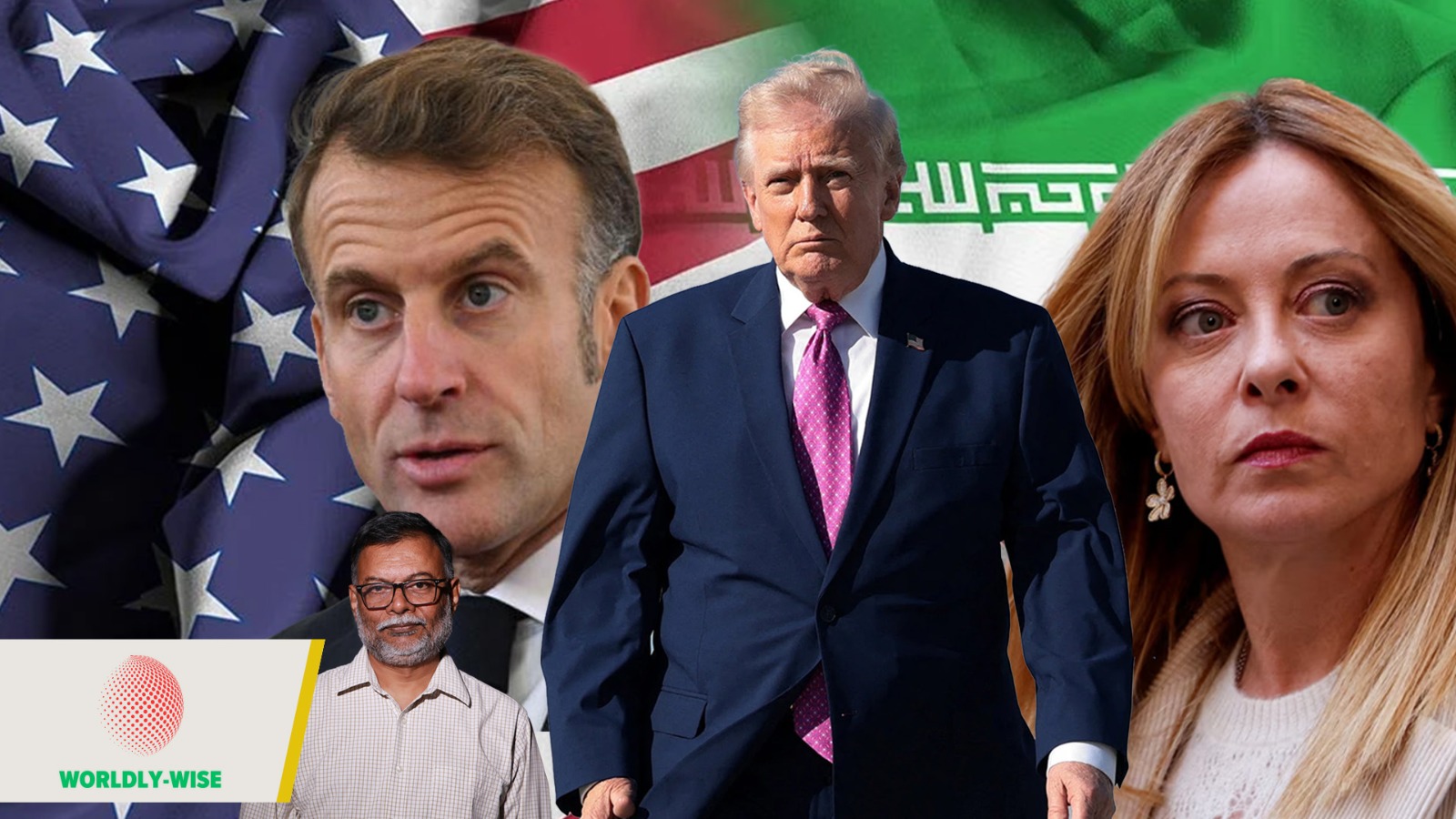

“The level of discord within the Western alliance is unprecedented—surpassing even the deep divisions of the Iraq War,” warned a global affairs expert.
As the conflict with Iran escalates, the war is doing more than just destabilising the Middle East; it is exposing a profound geopolitical schism between the United States and Europe. As the conflict widens and impacts global trade, energy, and diplomacy, questions are being raised about a shifting world order and India’s position in it.
The Federal spoke to KS Dakshina Murthy, consulting editor and world affairs specialist, for deeper insights into the geopolitical churn.
Are we witnessing an unprecedented divergence within Western alliances over the Iran war? How significant is this moment?
It is definitely extremely significant because this level of differences has not been seen before. There was some similar issue on the eve of the invasion of Iraq when the US was planning to invade Iraq. There was some difference of opinion where France and Britain opposed it, and they even said they would veto a resolution to that effect.
That was the first time something like that had happened after the Second World War and the Cold War. But, this is far more serious because the entire European Union has gone against the actions of Donald Trump and Israel.
They have categorically said this is not their war and that they will not help the US in the Strait of Hormuz. In fact, on many occasions, they have said this is an unprovoked war that is affecting the entire world.
Also read: Live: Pak PM heads to Saudi, Qatar and Turkey; US-Iran next talks soon?
To make things worse, the EU is also considering a parallel security initiative among its own members. How far this will go, whether this difference will last beyond Trump, we do not know. It depends on how Trump responds to Europe’s refusal. He has already expressed anger and frequently taunts European nations.
Italy, considered very close to Trump, has also expressed strong displeasure, especially after Israeli actions in Lebanon. That is very significant. Another major development is that the EU is now looking to review its long-standing trade agreement with Israel.
All these factors are directly affecting US-EU relations. At the same time, the Iran war has overshadowed the Russia-Ukraine conflict, which was earlier a key reason for EU dependence on the US. So, this is a major development whose future trajectory remains uncertain.
How are European nations reacting to Israel’s role in the Iran war?
Israel has been one of the key instigators. Whether it directly pushed Trump into war with Iran is something that will become clearer over time. But for the last 20 years, Benjamin Netanyahu has consistently demanded that the US strike Iran, and Trump is the first president to oblige.
Israel does not want to lose this opportunity. It has also been reported to have sabotaged negotiations with Iran, both in June 2025 and again in early 2026.
However, the EU’s strong reaction has intensified only after Israel expanded the conflict into Lebanon. After the assassination of Iran’s Supreme Leader Ali Khamenei, Hezbollah retaliated, and Israel turned its focus to Lebanon, occupying large parts of southern Lebanon and insisting on maintaining a security buffer.
The EU’s response is interesting because it did not react as strongly during Israel’s prolonged attacks on Gaza after the 2023 Hamas attack, despite the deaths of around 72,000 Palestinians.
Now, with the Iran war affecting global trade and the Strait of Hormuz, the EU has stepped in more decisively. Israeli troops targeting Italian peacekeepers further angered Italy.
Another major factor is the political shift in Hungary. Viktor Orbán, who had consistently protected Israel within the EU by vetoing resolutions, is no longer in power. This exposes Israel to stronger EU action.
Also read: Iran war: ‘There are clear red flags in ceasefire deal’
There is now a demand to review the EU-Israel trade agreement, which has been in place since 2000. Given that Europe is Israel’s biggest market, with trade worth around $50 billion annually, this is a major step.
Spain has been particularly vocal against the war, with Prime Minister Pedro Sánchez leading the criticism. Even the UK under Prime Minister Keir Starmer has taken a firm stance. Overall, there is a clear shift across Europe against both the US and Israel.
Is the blockade of the Strait of Hormuz actually working? Can it resolve the conflict?
The blockade of the Strait of Hormuz has become something of a subject of memes because Trump is effectively trying to block a strait that is already blocked.
It is unclear whether the blockade is working. The US claims it has turned back nine Iranian merchant ships, while Iran insists some ships have passed through successfully.
However, the broader impact is undeniable. It has brought China into the picture. Until now, China was operating behind the scenes, trying to facilitate peace talks involving countries like Pakistan, Turkey, and Egypt.
Now, China has openly warned the US against escalating the blockade. Trump, interestingly, has not responded strongly to China and has instead said the war will end soon. This reflects China’s growing influence, as it is one of the few countries capable of challenging the US across multiple fronts.
Trump has also postponed a planned visit to China, indicating ongoing diplomatic recalibration.
Overall, the blockade has increased global uncertainty. Oil prices have risen, although temporary ceasefire talks have brought some stability. But the situation remains volatile, and anything can happen.
How is India navigating this complex geopolitical situation?
India is in a unique position. It has friendly relations with Iran, the US, and Israel, and also maintains a working relationship with China.
However, India has missed an opportunity to act as a mediator, a role that Pakistan has stepped into.
At present, India is largely adopting a wait-and-watch approach. There was a recent 40-minute conversation between Narendra Modi and Donald Trump, but the details are not public.
India’s primary concern is its energy security. It is heavily dependent on Middle Eastern supplies, including from Iran. There are also concerns about fertilizer shortages, as India relies on raw materials from the region. Any disruption could directly impact agriculture. So, India is currently focused on crisis management rather than proactive diplomacy. It is engaging with various countries to ensure supply continuity and avoid economic disruptions.
Could this conflict reshape the global world order? What might the endgame look like?
Many leaders and analysts believe that Trump has effectively broken the existing international world order.
The global system is based on rules and institutions, where countries are expected to follow international norms. The US was traditionally a promoter of this system.
However, by attacking Iran without consulting the United Nations or its allies, and by imposing tariffs disregarding the World Trade Organization, Trump has undermined these institutions.
At the same time, by giving Israel a free hand, the US has allowed it to act without accountability. Israel has become what many would call a “loose cannon,” capable of acting independently without fear of consequences.
For instance, Israel has not only occupied parts of Lebanon but has also introduced laws imposing the death penalty on Palestinian activists, which has deeply upset the EU.
The European Union sees itself as a defender of human rights and a rules-based order. The actions of both the US and Israel have directly challenged these principles.
The United Nations, meanwhile, has been unable to act effectively, highlighting the weaknesses of the current system.
Even if the Iran war ends, its repercussions will be long-lasting. It could potentially lead to the emergence of a new global order, although what that will look like remains to be seen.
The content above has been transcribed from video using a fine-tuned AI model. To ensure accuracy, quality, and editorial integrity, we employ a Human-In-The-Loop (HITL) process. While AI assists in creating the initial draft, our experienced editorial team carefully reviews, edits, and refines the content before publication. At The Federal, we combine the efficiency of AI with the expertise of human editors to deliver reliable and insightful journalism.

Comments are closed.