
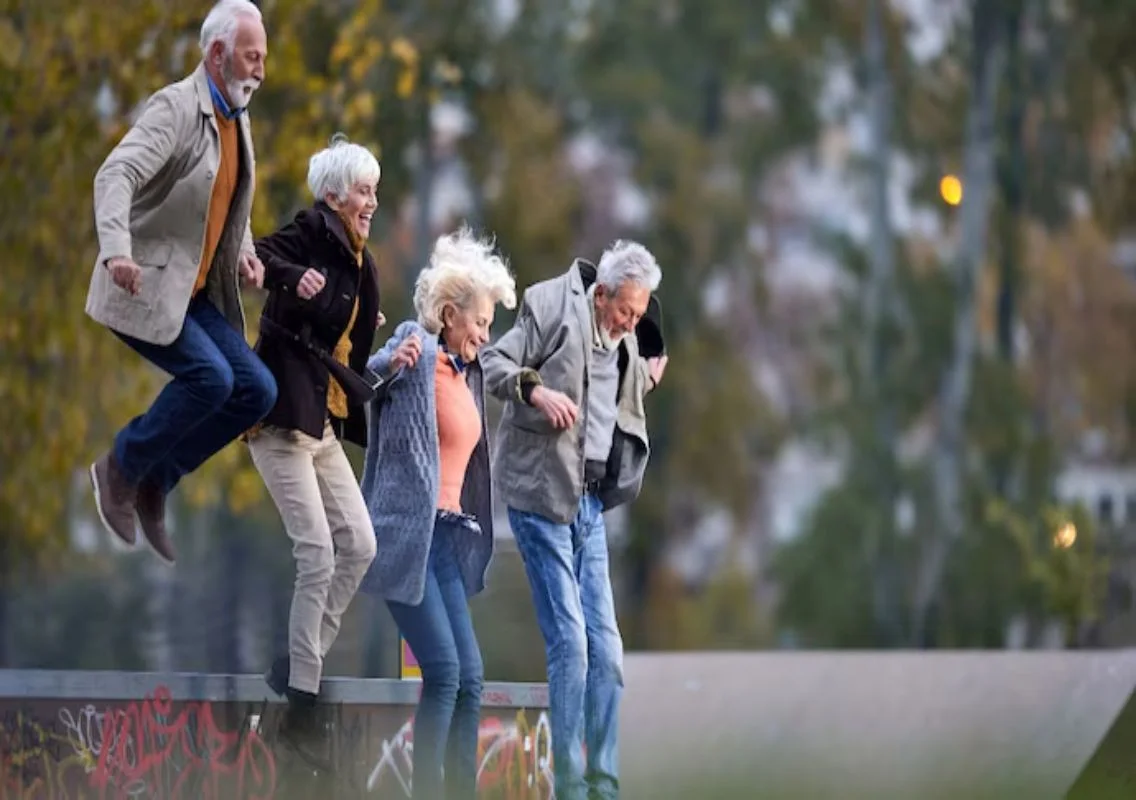

New Delhi: A new fitness trend emerging in Singapore is challenging long-held ideas about ageing gracefully—and cautiously. Called geriatric parkour, the practice adapts the high-energy urban sport of parkour into a safe, structured form designed specifically for older adults.
While traditional fitness routines for seniors in India have largely revolved around yoga, walking and light stretching, this new approach suggests that playing it too safe may actually limit how well people age.
What is geriatric parkour?
Geriatric parkour is not about jumping across rooftops or performing risky stunts. Instead, it focuses on controlled, low-impact movements that improve balance, coordination and confidence.
The concept draws from traditional parkour but removes the danger. Seniors are trained to:
- Navigate obstacles safely
- Improve balance and reflexes
- Learn how to fall safely and recover
- Build confidence in real-world environments
In Singapore, coach Tan Shie Boon has been training older adults for years, helping them rediscover movement in a safe and engaging way. Participants often report feeling more energetic, capable and confident in their daily lives.
Why this approach is gaining attention
Experts say the biggest benefit of such training lies in its functional nature. Instead of isolated exercises, it prepares the body for real-life situations—like tripping, slipping or losing balance.
According to Dr Vaibhav Bagaria, the goal is not to eliminate risk entirely but to teach the body how to respond to it. This includes adapting to instability, improving coordination and recovering from falls.
Similarly, Dr Arun Manjunatha Swamy emphasises that when done under supervision, such movement-based training can significantly benefit seniors by enhancing mobility and reducing injury risks.
A familiar concept with a modern twist
Interestingly, the idea is not entirely new to India. Traditional practices like dand-baithak, mallakhamb and akhada training have long focused on functional strength, balance and resilience.
However, with urban lifestyles and changing habits, these practices have faded. Geriatric parkour, in a way, reintroduces similar principles in a modern, structured format.
Can it work in India?
The short answer: yes—but with adaptation.
Fitness experts believe that India is ready for such a shift, especially as awareness around active ageing grows. Coaches like Prabhu Mani have already noticed curiosity among older adults.
Rather than dramatic movements, the focus is on gradual progression:
- Small, consistent movements instead of big jumps
- Outdoor training to build real-world confidence
- Structured sessions tailored to individual ability
This makes the practice accessible even to beginners in their 50s, 60s or beyond.
The science behind it
One of the biggest risks for older adults is falling—and poor balance is a major cause. When people avoid movement out of fear, their muscles weaken, flexibility reduces and reaction time slows.
Geriatric parkour addresses this by:
- Improving neuromuscular coordination
- Training the body to respond quickly to instability
- Reducing panic during slips or falls
Instead of freezing, the body learns to move fluidly, which can significantly lower the severity of injuries.
More than just fitness
Beyond physical benefits, this trend also offers social and mental advantages. Group sessions encourage interaction, reduce loneliness and give retirees a sense of routine and purpose.
It transforms exercise from a chore into an engaging activity—something many traditional routines fail to achieve.
The road ahead
As India’s elderly population continues to grow, the need for effective and engaging fitness solutions becomes more urgent. While geriatric parkour may still be in its early stages here, its core philosophy aligns well with both modern science and traditional Indian fitness principles.
The key lies in safe adaptation—guided training, gradual progression and medical supervision.
Conclusion
Singapore’s experiment with geriatric parkour highlights an important shift: ageing does not have to mean slowing down completely. Instead, it can be about moving smarter, staying agile and building confidence.
For India, the lesson is clear. With the right approach, this unconventional fitness trend could become a valuable tool in promoting healthier, more independent ageing.

Comments are closed.