
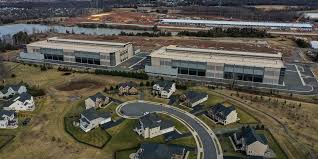

There has been a decline in public support for building new data centers in certain regions of the United States, and now the trend can no longer be ignored. For example, in Virginia, which has historically been the lifeline of global internet traffic, people’s opinions about the matter are going against the industry’s development.
According to a recent survey by The Washington Post-Schar School, only 35% of Virginians agree to build a data center near them, compared to 69% from just two years ago.
Such a significant decline is a result of the increasing conflict between local communities and modern technology that underpins cloud computing and AI.
The conflict has already manifested in Prince William County, where the board of supervisors made the final decision regarding the lawsuit filed by Microsoft in an attempt to resurrect the “Prince William Digital Gateway” project.
Unfortunately, the lawsuit will no longer take place, and the project itself will never come into life.
Balancing Hyperscale Ambition with Local Authority
The project was immense in scope. The site measured 2,100 acres and featured 37 facilities. In its entirety, the facility would have provided multi-gigawatt capacity, with 14 substations and roughly 22 million square feet of real estate.
QTS and Compass Datacenters, the project developers, sought to further strengthen their area’s leading hyperscale infrastructure market.
Northern Virginia currently processes a disproportionately large portion of global internet traffic. Their total capacity amounts to more than 4,900 megawatts. The majority of international web traffic transits via Ashburn, where its location close to fiber-optic connections and submarine cables ensures minimum latency.
Yet sheer scale is no longer enough.
Opposition to such plans locally has become increasingly fierce and coordinated. For example, when the Digital Gateway was being considered, the Oak Valley Homeowners Association and the American Battlefield Trust took legal action against the project. In this case, they claimed that there had been insufficient public notice according to the requirements of the law. The case was won, and the zoning was voided by the circuit court, and this decision was supported on appeal.
Rather than continuing the fight at the state’s Supreme Court, the local county government has chosen a more pragmatic approach.
The Rising Tide of Resistance Against Data Centers
These actions have not been unusual occurrences. Data center projects have been increasingly met with resistance across the nation. According to a tracker produced by 10a Labs, in 2025 alone, 48 different projects were halted or postponed, representing some $156 billion in potential investments. Moreover, in Virginia, 57 community-based groups are now opposing new developments more than in any other state.
Politicians are getting involved, too. In 2022, 238 state bills were filed regarding data centers, with forty passing into law. Maine passed legislation last year that bans new high-powered data centres from being constructed until 2027 if they consume more than 20 megawatts of electricity.
There are various reasons for the pushback, but they are easy to understand. Concerns include land usage, energy requirements, water use, and noise pollution. The campuses tend to be close to residential neighbourhoods or historical locations. They require additional infrastructure, including the construction of new transmission lines and substations.
The Virginia Data Center Dilemma: Connectivity, Community, and the Future of Cloud Expansion
For developers and cloud service providers, this has created an additional problem. Demand for computing capacity remains high due to artificial intelligence processing and cloud computing services. However, locating suitable facilities is becoming increasingly difficult.
When a project falls through in Northern Virginia, developers move on to other parts of the country. Areas such as Richmond and the Roanoke Valley are experiencing more interest from investors. But these regions are facing the same issues and backlash from local communities.
There is also a price for breaking out of existing clusters in terms of technology. Northern Virginia has unmatched connectivity as well, being near important fiber links and handling vital trans-Atlantic traffic. Moving processing elsewhere may incur higher latency, which matters when doing AI inference and real-time processing.
As yet, cloud giants have been willing to pay this price, but it is not necessarily an optimal tradeoff. In general, data centers perform better the closer they are to core networks.
This presents the industry with a fork in the road. Expansion remains ongoing, but its direction becomes uncertain. Site location and construction may need rethinking. Small projects, better disclosures, and more local value may help.
Meanwhile, municipal authorities find themselves in a bind as well. They provide data centers with income and employment, but they change how land is used and stress infrastructure resources. Every new project gets a second look.
Virginia continues to be an important node in the worldwide internet. This cannot happen overnight. However, the atmosphere in the region has definitely changed. The residents are demanding a more prominent say in the development of this infrastructure.
It is no longer a matter of whether there is a need for a data center, but where the data center should be placed.

Comments are closed.