

There are many drivers who often bemoan the very existence of traffic lights. Despite incurring the daily ire of commuters who are running late for work, even those haters have to acknowledge the traffic signal’s invaluable function in helping to keep our roadways safe.
Traffic signals have, of course, evolved considerably since they were first pressed into use in the late-1860s, with the first electric lights coming into play sometime around 1912. It wasn’t long until those signals started using colored lights, and have since evolved into the red, yellow, and green modes we are all too familiar with today. Even as safety remains the primary purpose of the hundreds of thousands of traffic lights currently employed throughout the United States, some theorize that the life-saving devices may one day cease to exist.
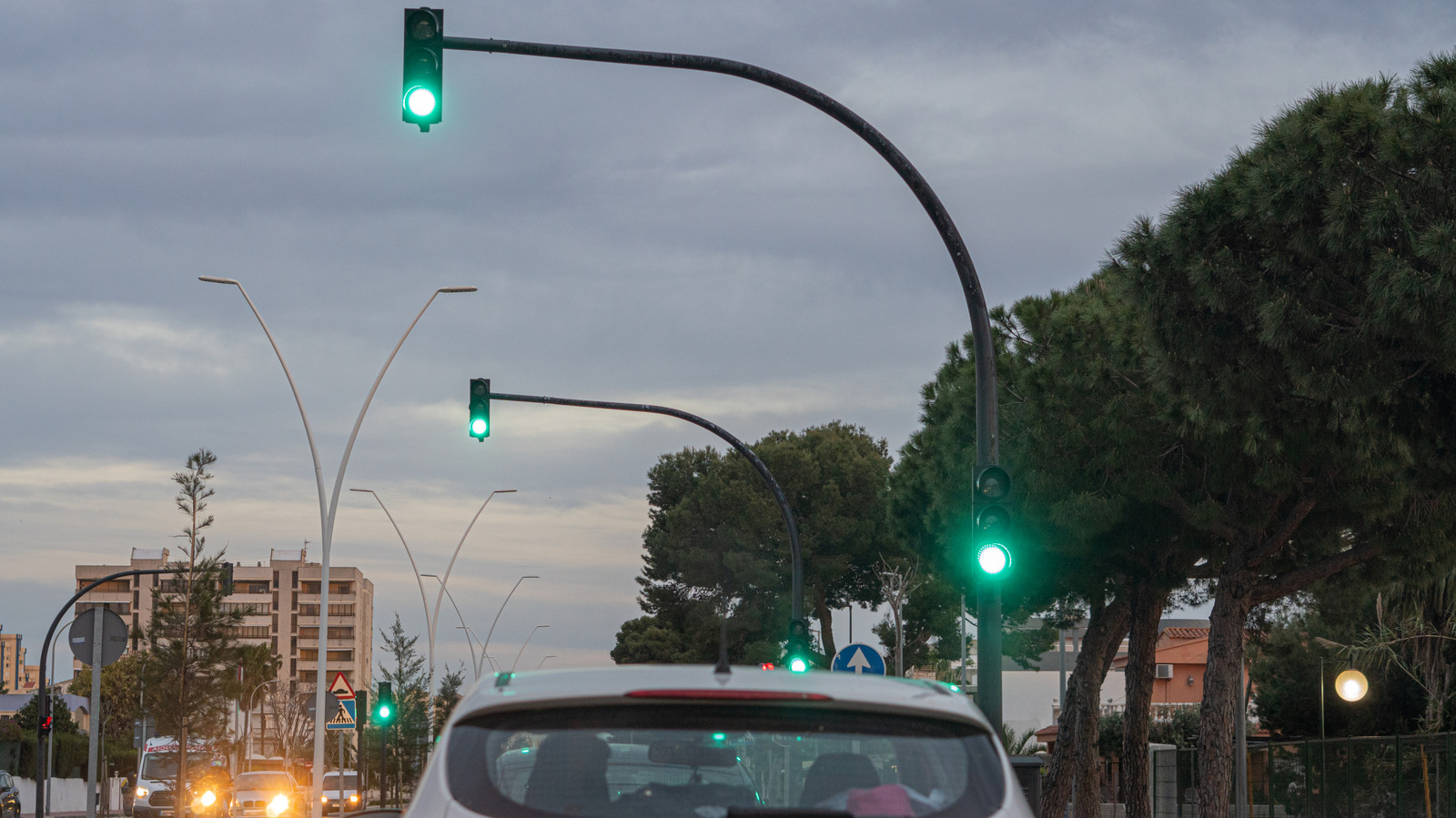
Until that fateful day, getting stuck at red lights when you’re in a rush will remain a constant source of commuter frustration. On some occasions, however, a stream of greens opens up on the road ahead like the parting of the Red Sea. That stream of green has a name, with researchers dubbing it the “Green Wave.” While they may seem rare, the “Green Wave” is a common occurrence in certain parts of the world, and it serves a very important purpose.
What is the purpose of a traffic light Green Wave?
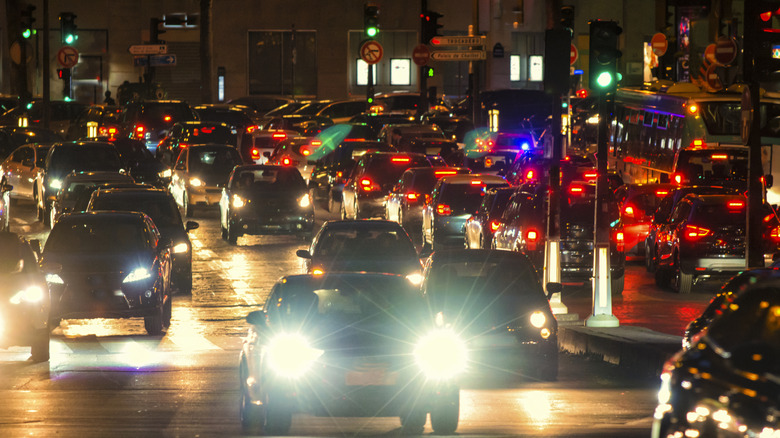
While it might seem like a weird sort of karmic intervention, that “Green Wave” of traffic lights was actually programmed for a specific purpose by whatever government organization is in charge of maintaining the traffic signals in your city, state or township. They are, however, far more commonly utilized on high-volume roads in urban areas. The purpose of a “Green Wave” is to improve the flow of traffic in those areas, particularly during times with increased traffic volume.
At its core, the concept is very simple. The idea is to keep traffic flowing during peak volume times by simply reducing the number of stops at concurrent traffic signals. To enact a “Green Wave,” planners and engineers simply synchronize the traffic lights in congested areas to all turn green at the same time and stay that way for a specified period that ensures a steady flow of traffic in one direction. The method is, naturally, easier to manage on one-way streets with no turning lanes, though some cities have attempted to aid traffic flow further by simply outlawing left turns in metropolitan areas. Some have even taken to banning right turns too.
In any case, on top of aiding the flow of traffic in congested areas, “Green Wave” traffic patterns are also believed to have a positive effect on the environment. After all, the reduction in stop-and-go traffic also reduces a vehicle’s idling time, which, in turn, leads to reduced greenhouse gas emissions.

Comments are closed.