
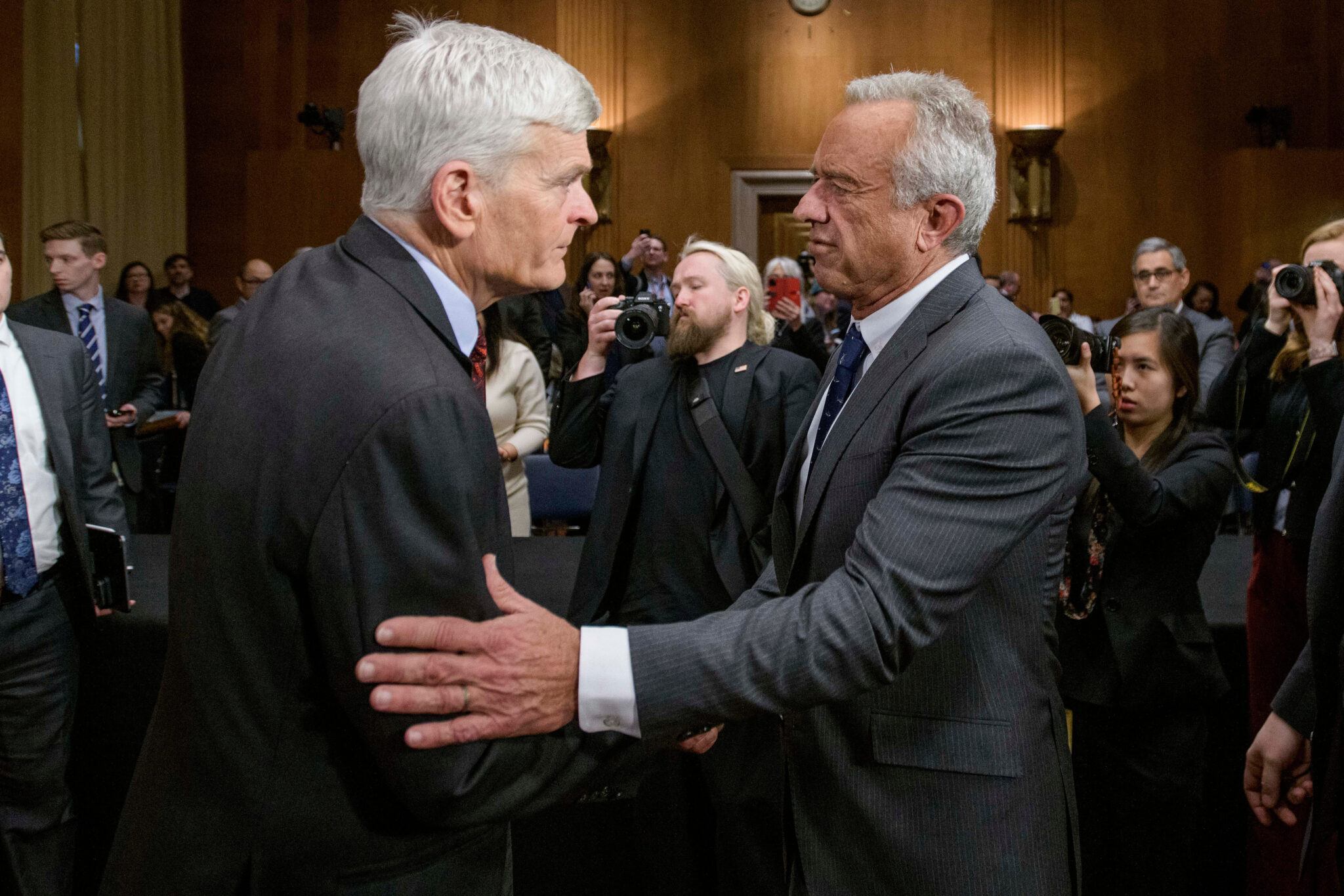

RFK Jr. Senate Hearing Puts Bill Cassidy’s Political Future on the Line/ TezzBuzz/ WASHINGTON/ J. Mansour/ Morning Edition/ Sen. Bill Cassidy faced a major political and policy test as Health Secretary Robert F. Kennedy Jr. appeared before two Senate committees for high-stakes hearings. Cassidy, a physician and longtime vaccine advocate, must balance his criticism of Kennedy’s anti-vaccine positions with pressure from President Donald Trump and his upcoming Louisiana primary fight. How Cassidy handles Kennedy could shape both his reelection campaign and future congressional oversight of U.S. health policy.
- Bill Cassidy questioned Robert F. Kennedy Jr. in two Senate hearings
- Cassidy chairs one committee overseeing HHS and sits on another
- He is also fighting for reelection in Louisiana next month
- Trump endorsed Cassidy rival Julia Letlow
- Cassidy has long defended vaccines and clashed with Kennedy’s views
- MAHA PAC pledged $1 million to Letlow’s campaign
- Cassidy avoided vaccine questions in his first hearing exchange
- His decisions could impact both public health oversight and his Senate future
Bill Cassidy Faces a Defining Political Moment
Sen. Bill Cassidy entered Wednesday’s Senate hearings with far more than policy oversight at stake.
As Health Secretary Robert F. Kennedy Jr. testified before two powerful Senate committees, Cassidy faced a collision of his roles as a lawmaker, a physician, and a Republican fighting for reelection.
Cassidy chairs the Senate Health, Education, Labor and Pensions Committee and also serves on the Finance Committee, giving him two major opportunities to question Kennedy.
But unlike most oversight hearings, this one carries direct political consequences.
Cassidy is battling for survival in next month’s Louisiana primary while trying to manage his long-standing disagreements with Kennedy over vaccines and public health.
How he handles RFK Jr. could shape both his campaign and his legacy.
Cassidy and Kennedy Have a Complicated Relationship
Cassidy and Kennedy have never had a simple political relationship.
As a doctor, Cassidy has spent years publicly defending childhood vaccines and warning about preventable diseases.
As a senator, however, he became one of the key Republicans who helped Kennedy win confirmation as Trump’s Health and Human Services secretary.
That support came despite Kennedy’s long record of anti-vaccine activism and public skepticism toward immunization programs.
Cassidy said he backed Kennedy only after receiving commitments that he would preserve the existing vaccine approval system and continue supporting the childhood vaccination schedule.
Still, many in Washington were surprised Cassidy voted yes.
That decision now follows him into every hearing involving Kennedy.
Critics argue he helped place vaccine skepticism inside the federal government.
First Hearing Came Without Vaccine Questions
Many observers expected Cassidy to immediately confront Kennedy over vaccines during Wednesday’s hearings.
Instead, in his first round of questioning, Cassidy did not raise vaccines at all.
He focused on healthcare affordability and eliminating fraud inside federal healthcare systems—both longtime priorities in his congressional work.
That choice drew attention because vaccines remain the biggest public policy divide between the two men.
Kennedy has recently pushed aggressive efforts to roll back vaccine recommendations for diseases like influenza, hepatitis B, and RSV.
Those moves are currently being challenged in court and have sparked backlash from medical experts and public health advocates.
Cassidy must now decide whether to confront Kennedy more directly later—or avoid a political fight altogether.
Trump’s Endorsement Changed Cassidy’s Re-Election Fight
Cassidy’s political problem became much bigger when President Donald Trump endorsed one of his primary opponents.
Trump backed Rep. Julia Letlow in an unusual effort to remove a sitting Republican senator from his own party.
Cassidy had already been vulnerable because he was one of the few GOP senators who voted to convict Trump during the impeachment trial following the Jan. 6 Capitol attack.
That vote permanently damaged his standing with many loyal Trump voters.
Now, every disagreement with Kennedy or the Trump administration becomes politically dangerous.
Political analysts say any hearing moment that makes Cassidy look disloyal could be used against him in campaign ads.
MAHA Movement Also Pressuring Cassidy
Cassidy is not only facing pressure from Trump.
He is also under attack from Kennedy’s “Make America Healthy Again” movement, often called MAHA.
The movement includes anti-vaccine activists and a broader coalition focused on food systems, health reform, and environmental concerns.
The MAHA PAC aligned with Kennedy has pledged $1 million to Letlow’s campaign.
Some believe that support is partly retaliation for Cassidy’s criticism of Kennedy’s vaccine agenda.
Cassidy pushed back strongly on that suggestion.
“I’m not really sure what MAHA’s beef is,” Cassidy told reporters.
“Let me point out that I am the reason that Robert F. Kennedy is now the secretary of HHS. He would not have gotten there otherwise.”
Cassidy Says Vaccines Are Where They Disagree
Cassidy insists he supports much of the broader MAHA agendaespecially around fighting ultraprocessed foods and improving nutrition policy.
But he openly acknowledges that vaccines remain the central disagreement.
He said recent measles-related child deaths proved the medical case.
“We’ve seen, frankly, that I am right,” Cassidy said, referring to children who died after not being vaccinated.
He has repeatedly criticized Kennedy for slashing funding for mRNA vaccine development and for replacing vaccine advisory committee members with figures Cassidy believes may carry conflicts of interest.
He also raised concerns that Kennedy’s decisions could make COVID-19 vaccines harder for Americans to access.
These issues make it difficult for Cassidy to simply stay silent.
CDC Disputes Deepened the Conflict
Cassidy escalated his oversight efforts last year by holding hearings focused on changes inside the Centers for Disease Control and Prevention.
He invited former CDC Director Susan Monarez, who was removed by Kennedy after clashing over vaccine policy.
He also brought in former CDC Chief Medical Officer Debra Hourywho resigned citing what she called an erosion of science at the agency.
Cassidy framed those hearings as part of broader accountability.
“I want to work with the president to fulfill his campaign promise to reform the CDC and Make America Healthy Again,” Cassidy said.
“The president says radical transparency is the way to do that.”
Experts Say Vaccine Support May Not Hurt Him
Some analysts believe Cassidy’s vaccine stance may not be the political liability many assume.
Vaccine law expert Dorit Reiss said Republican voters may be less hostile to pro-vaccine arguments than political insiders expect.
“He’s probably not alienating voters by focusing on the issue and calling it out,” she said.
Louisiana consultant Mary-Patricia Wray said the most committed MAHA voters are likely already supporting someone else.
Instead, Cassidy may benefit by appealing to moderate Republicans, independents, and Democrats willing to switch party registration for the primary.
She said consistency may be his strongest argument.
“If I was advising Bill Cassidy, I would tell him your goal here is not to get out unscathed,” Wray said.
“Your goal is to prove that your consistency on issues regarding public health is an asset in your campaign, not a detriment.”
The Future of HHS Oversight Is Also at Stake
If Cassidy loses his primary, it would not just end his Senate career—it would change how Congress oversees the massive U.S. Department of Health and Human Services.
As chairman of the Senate HELP Committee, Cassidy currently holds significant power over HHS oversight.
Experts warn another Republican senator may be far less willing to challenge Kennedy’s decisions.
Claire Leavitt of Smith College said today’s more hyperpartisan Congress rewards loyalty over independence.
Dorit Reiss went further, arguing Cassidy still bears responsibility for confirming Kennedy in the first place.
“His original sin, of course, was voting for Kennedy at all,” she said.
That judgment may define both his political future and how history remembers his role in America’s vaccine battles.
More on US News
Comments are closed.