
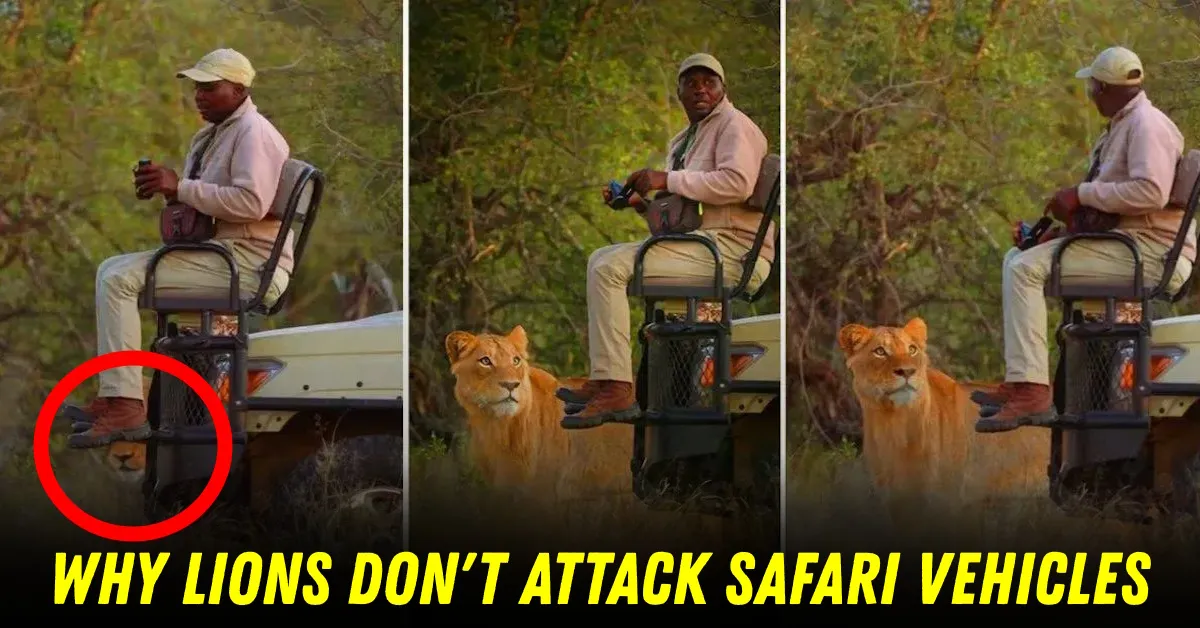

The biggest thing which helps in avoiding any attack from lions or other wild animals towards a safari vehicle is PERCEPTION. Lions do not distinguish individual humans inside a safari vehicle. Instead, in their perception the entire structure which includes the safari vehicle and the humans as one single large and unfamiliar creature. And this combined silhouette appears too big to them to attack.
Also they are mostly used to see antelopes, zebras and other animals which have smaller sized bodies and colors. So seeing such a thing on their ground does not provoke them to attack. Apex predators like lions and other wild cats rely heavily on visual recognition patterns and a safari vehicle does not match any of those which they see as prey.
Lions are one of the most energy efficient hunters in wildlife. They do their best to avoid any unnecessary risk. This is because an injury in the wild can easily become the reason for their death. Hence the sheer size of the Safari vehicle makes the lions believe that trying to fight it and attack as prey will not guarantee food.
Basically the combination of high risk and unclear reward makes these lions ignore the safari vehicles as potential prey. This is the same reason why lions mostly avoid adult elephants, Rhinos and large buffalo herds.
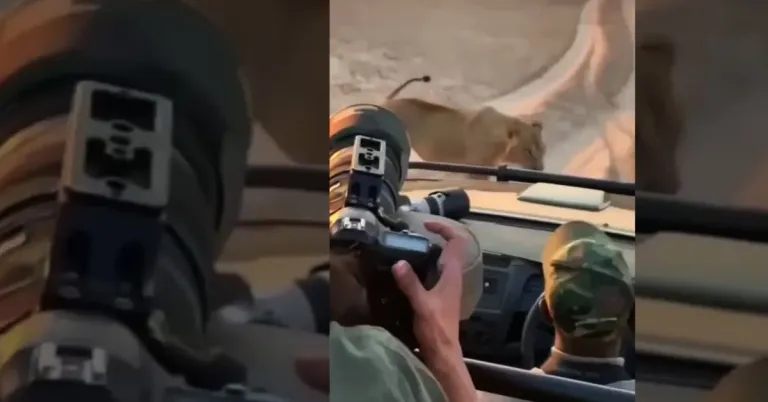
Over the years, jungles and safaris have become heavily commercialised and due to the regular sightings of safari vehicles in the natural habitat of these wild cats, they also get used to them. Only if it is a new safari and the lions and other wild animals are not used to seeing such vehicles, will they react aggressively. However, after sometime they realise that these safari vehicles do not attack and behave like prey and do not pose any threat, so they eventually stop being aggressive.
Another very important reason why lions do not attack safari vehicles is because these vehicles do not show any kind of prey-like signals. Lions and other wild cats rely heavily on movement, smell and sound to identify their prey. However, a safari vehicle does not match any of these conditions.
Firstly, the movement of a safari vehicle is very slow and predictable. Prey animals usually run in panic, change directions suddenly and try to escape. This triggers the hunting instinct in predators. But safari vehicles move in a controlled and steady manner, which does not excite the lion in any way.
Secondly, the smell also plays a big role. Safari vehicles emit smells like petrol, diesel, oil and metal, which are completely unnatural in the wild. These smells are not associated with food and hence lions do not feel the need to attack.
Lastly, there is no sound which resembles prey. There are no distress calls, no running noises or anything that would make the lion feel that this is something it can hunt.
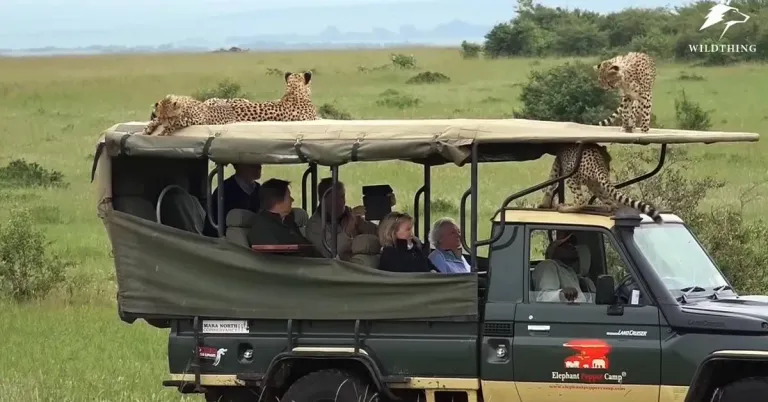
Another very important factor which decides whether a safari remains safe or not is human behaviour. There have been many instances where people forget basic rules and try to act smart in front of wild animals. They shout, wave hands, stand up or even try to get closer for a better view.
However, doing such things can be extremely dangerous. The moment a person stands up or leans out of the vehicle, the illusion of the “single large animal” breaks. The lion may then recognise that there is a separate and smaller being which can be attacked. Sudden movements and actions can also trigger their hunting instincts. So it is always advised to remain calm, stay seated and avoid any unnecessary movement while on a safari.
Another reason why safari vehicles are generally safe is because lions do not associate them with food. In well managed safari parks, strict rules are followed and animals are not fed by humans. This ensures that lions do not develop any connection between vehicles and food. If at all animals start associating vehicles with food. It can become extremely dangerous as they may start approaching vehicles aggressively.
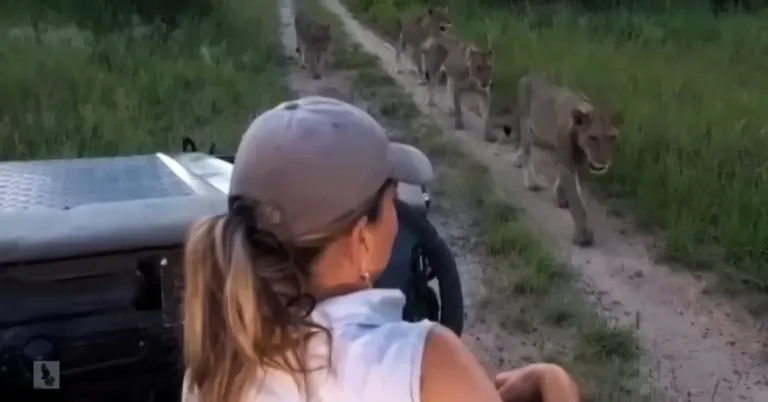
Safari drivers and guides also play a crucial role in ensuring safety. Such drivers are very well trained and they have years of experience in dealing with wild animals in their natural habitat. They understand the behaviour and body language of lions and other animals very well. And if at any point they note aggression or discomfort in the animal. They start to maintain distance or slowly move the vehicle away. Also in case of any danger, they know exactly how to react calmly without creating a panic situation.
Even after all these factors, it is important to understand that a jungle safari is never 100 percent safe. These are wild animals and their behaviour can never be predicted completely. If a lion feels threatened, cornered or if someone breaks the rules. There is always a possibility of an attack. This is why following instructions and respecting wildlife is extremely important.
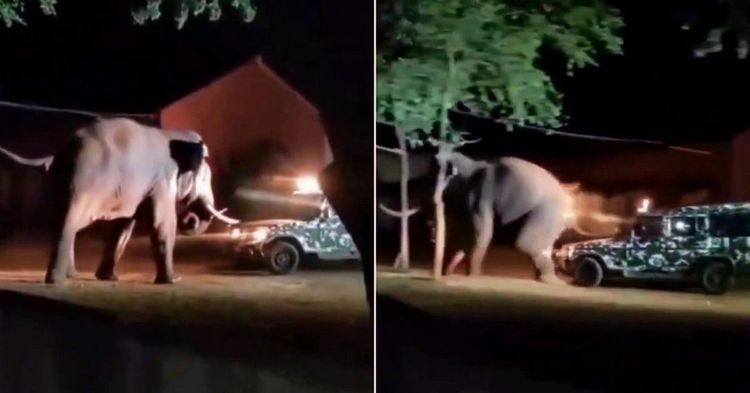
Lastly it has to be noted that not all animals behave like lions. Even though all big cats are calculated predators and avoid unnecessary fights. The animals like wild elephants, rhinos and wild buffaloes can become much more aggressive. These animals may attack safari vehicles if they feel their space is being invaded or if they feel threatened. So the behaviour of not attacking vehicles is not common across all wildlifes.
Source
Comments are closed.