
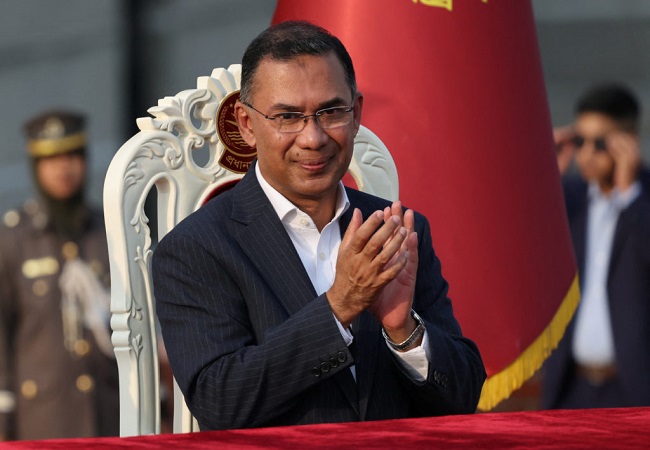
International Crisis Group’s report came out, said- Neighboring country will have to improve relations with India for its own interest.

New Delhi. International Crisis Group on Thursday appealed to the new government of Bangladesh to resolve the issue of ban on Awami League. Thomas Keen, Crisis Group’s senior consultant on Bangladesh and Myanmar affairs, said that the BNP government will also have to resolve the politically sensitive question related to the future of the Awami League. Considering the important role of this party in Bangladesh politics since independence, the temporary ban on it cannot be sustained for long. He made this statement in the context of a new report on Bangladesh by the International Crisis Group.
Read :- Previous governments showed soft stance on Pakistan, will not allow illegal immigrants to settle in Bengal – BJP President Nitin Naveen
Given his close ties with the party and the fact that most of its senior leaders are out of the country, the report said. New Delhi should use its influence to encourage the party leadership to take such steps that could pave the way for its return to politics. The International Crisis Group said in its report that improving deteriorating relations with India should generally be the first priority of the BNP government, but while trying to build better relations with its big neighbor, it will also have to maintain a balance with other important partners, especially China and the US. This matter is very important for the new government. It should move quickly to take advantage of the limited time left for reforms after the elections, so that it can show the people of Bangladesh that it will not just repeat the past mistakes after coming back to power.
Following the increasingly dictatorial rule in Bangladesh, a massive protest movement ousted Sheikh Hasina’s government from power in August 2024. After Hasina fled, the army had decided Hasina’s fate by refusing to open fire on the protesters. Consultations took place with political parties and student leaders, resulting in the appointment of Muhammad Yunus as the head of an interim administration. Kean further said that the stakes are very high for the BNP. She should move quickly to take advantage of the limited time left for political and economic reforms after the elections, and show the Bangladeshi people that now that she is back in power, she is not simply returning to old ways. Keane said Bangladesh’s 12 February elections were a historic moment, ending eighteen months of interim rule that began after a major rebellion. This rebellion removed former Prime Minister Sheikh Hasina from power. The Bangladesh Nationalist Party won a clear majority, while voters also endorsed the July Charter reforms in a simultaneous referendum.
Comments are closed.