

One of its key programs is the DeRIGHT-V campaign, which focuses on addressing common misconceptions about dengue through a mix of educational content and creative communication approaches.
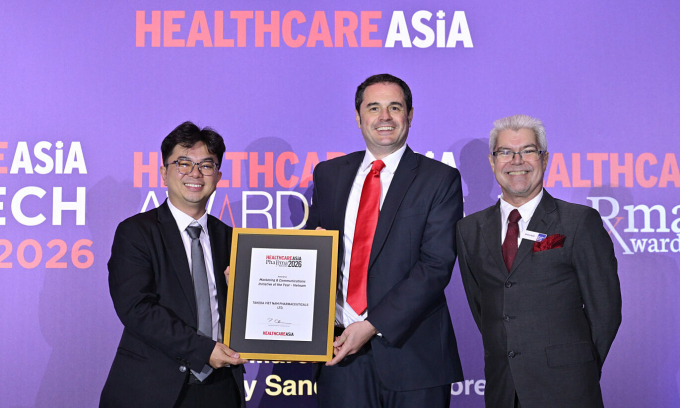
The campaign has received recognition at both international and domestic levels. In 2026, it was awarded “Marketing and Communications Initiative of the Year” at the Healthcare Asia Pharma Awards – a prestigious annual healthcare award organized by Healthcare Asia to honor companies with innovative initiatives and meaningful contributions to healthcare systems across Asia. It previously won “TVC of the Year” at the Van Xuan Awards 2025.
Takeda’s representatives receive the award at Healthcare Asia Pharma Awards 2026. Photo courtesy of Takeda |
According to the company, the name “DeRIGHT-V” reflects its objectives in supporting dengue response efforts in Vietnam, with an emphasis on improving public understanding and promoting science-based prevention.
“De” represents the first two letters of Dengue and also “Demystify” – addressing persistent misconceptions about the disease; “RIGHT” represents the goal of bringing correct and more science-based awareness in disease prevention. “V” (Victory) stands for Vietnam and the aspiration for a victory over the disease.
Within 2 years (2024-2025), the campaign implemented a series of activities aimed at raising awareness, including short-form videos, digital content, and an interactive storytelling station on dengue complications at the Saigon Zoo and Botanical Gardens in Ho Chi Minh City. These initiatives have been updated regularly to foster more proactive health behaviors.
The campaign recorded more than 733 million impressions and 78 million views, along with increased online search interest related to dengue and dengue vaccination.
 |
An interactive storytelling station at the Saigon Zoo and Botanical Gardens highlighting the complications of dengue. Photo courtesy of Takeda |
To broaden outreach, Takeda has worked with local Centers for Disease Control and media partners to provide epidemiological information and support public understanding of dengue trends.
Benjamin Ping, General Manager of Takeda Vietnam, said that while general awareness of dengue is relatively high, public understanding of the disease’s risks and severity may remain limited.
Vietnam records more than 100,000 dengue cases annually, with the disease occurring year-round and affecting all age groups. Severe cases may require hospitalization, creating additional impacts on families, including disruptions to work and schooling.
Ping said effective health communication plays a key role in supporting preventive behavior and reducing the broader social and economic burden of the disease.
During the 2026 Lunar New Year, severe dengue cases requiring hospital treatment were documented in a photo reportage by the Vietnam Government Portal (VGP), conducted in collaboration with Takeda Vietnam.
Over the past two years, Takeda Vietnam has also worked with medical associations, hospitals and training institutions to organize more than 1,000 educational activities, reaching over 7,000 healthcare professionals nationwide. One of the key events was the Vietnam Dengue Summit 2025, which brought together more than 700 experts.
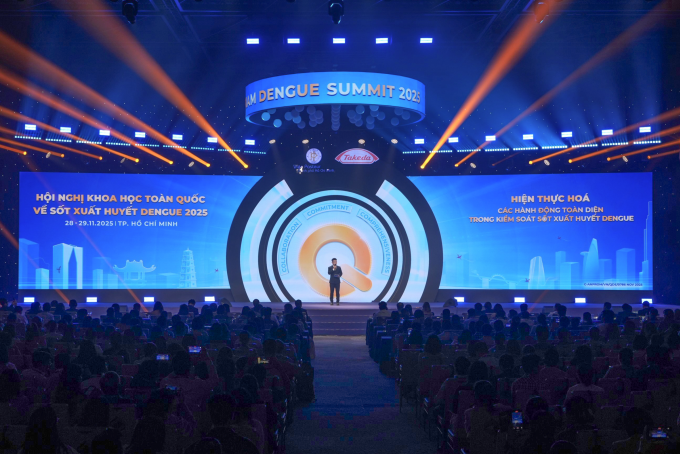 |
The Vietnam Dengue Summit 2025 brought together more than 700 local and international experts. Photo courtesy of Takeda |
In parallel, the company has continued research and development efforts in dengue prevention. Its dengue vaccine has been recommended by the World Health Organization for use in high-burden countries and has been approved in more than 40 countries, with more than 21 million doses distributed globally.
These activities reflect Takeda Vietnam’s ongoing efforts to support dengue prevention through communication, collaboration and medical engagement.
This content is provided by Takeda Vietnam. This information is available to the general public for informational purposes only. It is not intended to substitute for consultation with a relevant expert or health care provider.
Comments are closed.