
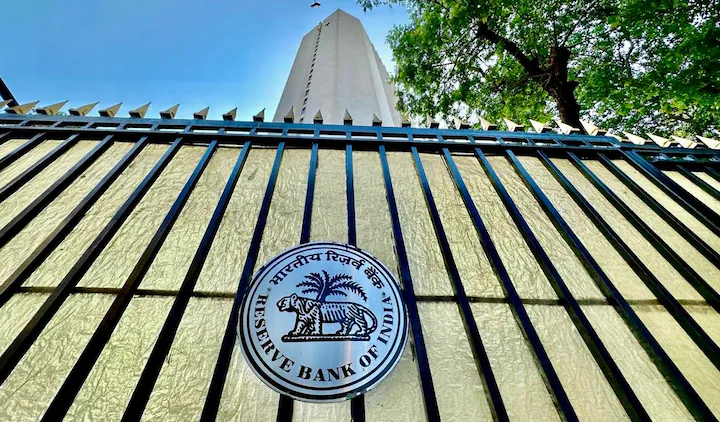
RBI Seeks Global Insights on Anthropic Claude Mythos Risk: A Collaborative Regulatory Move

Mythos, the latest AI product of Anthropic, which has been generating much interest among regulators worldwide, is also attracting the RBI’s attention.
While it is still too early for a detailed study, the RBI is making preliminary attempts to assess the possible risk factors that this technology poses to the financial sector. Essentially, an advanced AI solution can significantly increase the possibility of identifying vulnerabilities within software products used by commercial banks every day.
However, a preliminary assessment has already been performed by the RBI. Initial observations show that there is no doubt that Mythos could increase the speed of detecting security breaches. This implies an increased risk of cyber attacks on banks and payment systems responsible for processing sensitive information.
To prevent potential threats, the RBI has not been acting alone. In fact, the regulator has already engaged in conversations with counterparts at major financial regulatory bodies, such as the US Federal Reserve and the Bank of England. It has been revealed that the main topic discussed by regulators is finding a way to manage risks before they become significant.
Such coordination is critical. Cyber-attacks cross borders easily enough; once a vulnerability is discovered in one network, it may be quickly replicated across others using tools such as Mythos. Through collaboration, authorities seek to establish a shared response strategy rather than acting independently.
India’s Strategic Tug-of-War with Mythos
Indian institutions are doing their bit on the issue too. The National Payments Corporation of India (NPCI), which oversees UPI, has expressed interest in gaining early access to Mythos. A select few banks are involved in this venture, which aims to experimentally deploy the model in a secure environment to identify potential ‘day-zero’ vulnerabilities.
This represents a paradigm shift in approach, moving away from defensive posturing in favor of identifying vulnerabilities using the very tools cyber attackers might employ. If successful, they will be able to address any gaps proactively without any adverse consequences.
However, there are some limitations. Firstly, it should be noted that Mythos is stored on servers located in the USA, and its access is restricted. Until now, Anthropic company permitted to use its services only to a certain number of organizations in the United States. It means that Indian authorities and banks will not be able to conduct comprehensive tests.
The second problem concerns legal restrictions. In India, there are stringent regulations that impose mandatory localization of personal data. Therefore, if banks use services offered by Mythos located in a foreign state, there will be a likelihood of violation of these requirements. It leads to conflicting situations because one needs to test the tool and adhere to established norms.
RBI’s Strategic Roadmap for AI Regulation in Banking
For that reason, it is possible that RBI may try to arrange negotiations with the company offering the tool. The purpose will be to find a solution that would facilitate testing but at the same time ensure compliance with legal restrictions.
Elsewhere, regulatory bodies are equally prepared. Authorities in Japan are ready to conduct a meeting with the banks. Australian and New Zealand central banks are monitoring the unfolding situation. In all these cases, the theme is the same: banks have to test their security measures and get ready for novel cyber threats.
Coming back to India, RBI is not satisfied with solving this problem alone but rather focusing on building future regulations concerning AI-based banking operations. Thus, the central bank is developing long-term rules aimed at ensuring the safe application of advanced AI by banks. This regulation will involve cooperation with Anthropic and others as well as general model usage in the finance industry.
It is expected to regulate aspects such as risk assessment, data security, and responsibility for misuse. Banks should provide proof regarding how they apply AI, the data used for that purpose, and how they prevent the risks of AI-based misuse. Local data storage requirements will be the cornerstone of the regulation.
This is definitely still early days, and much will depend on the evolution of AI tools like Mythos and their adoption rate. However, one thing is obvious – regulators recognize both potential and dangers associated with AI technology. AI may help banks increase cybersecurity but also provide hackers with new tools.
Such a balanced attitude to AI in the RBI strategy is explained by a thorough analysis of possible risks as well as cooperation with international partners and regulations.

Comments are closed.