
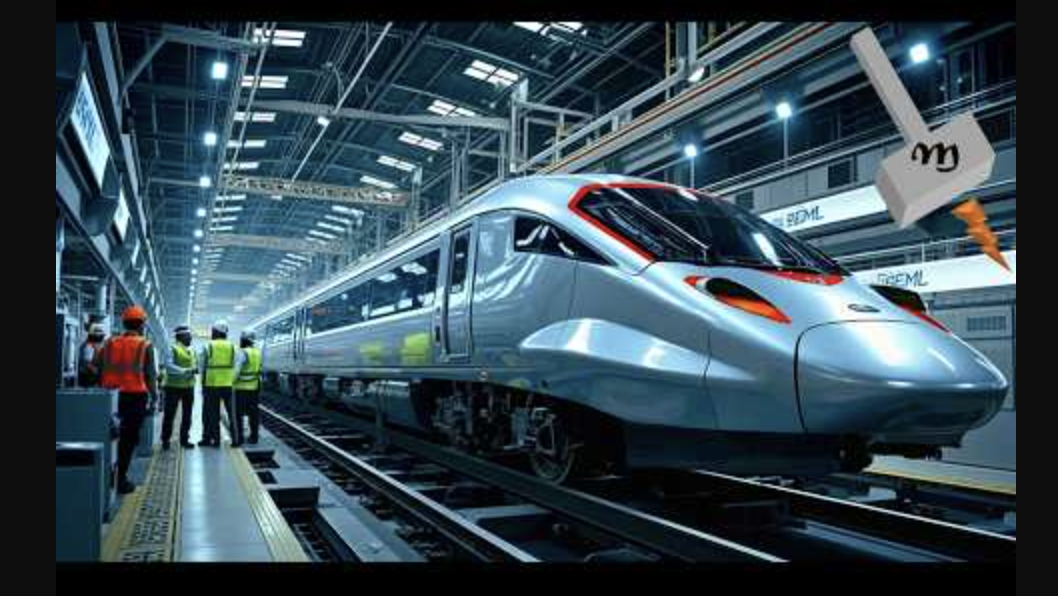

India’s ambitious high-speed rail dream has taken a major step forward, with the country’s first indigenously built bullet train—B28—set to be manufactured at BEML’s Aditya plant in Bengaluru.
A Landmark Facility for High-Speed Rail
The newly inaugurated Aditya manufacturing complex by Ashwini Vaishnaw is specifically designed for high-speed train production.
The facility will manufacture the B28 bullet train coachesmarking a crucial move toward Atmanirbhar (self-reliant) rail technology in India.
This is a big shift from earlier dependence on foreign technology, especially Japan’s Shinkansen systems.
What Is the B28 Bullet Train?
The B28 trainset is India’s first homegrown high-speed train being developed by BEML Limited in collaboration with Integral Coach Factory.
Key highlights:
- Design speed: Up to 280 km/h
- Operational speed: Around 250 km/h
- Train type: Modern, air-conditioned, high-speed trainsets
- Capacity: ~500+ passengers
It represents India’s push to develop its own bullet train ecosystem instead of relying entirely on imports.
Timeline: When Will It Launch?
The government has set an ambitious target:
- First prototype: Expected by early 2027
- Commercial rollout: Around mid-to-late 2027 after testing
Manufacturing is already underway, with trials to follow before passenger operations begin.
Where Will It Run First?
The first deployment of the B28 train is planned on the Mumbai–Ahmedabad High-Speed Rail Corridorspecifically:
- Initial stretch: Surat to Vapi (~97 km)
- Target launch: August 2027
This will be India’s first operational bullet train segmentmaking it a historic milestone for the country.
Why This Project Matters
This development is more than just a train launch—it represents a strategic technological leap:
1. Indigenous Capability
India joins a select group of countries capable of designing and manufacturing high-speed trains.
2. Reduced Import Dependence
Cuts reliance on expensive foreign technology and boosts domestic manufacturing.
3. Faster Travel Revolution
High-speed rail will significantly reduce travel time—for example, future corridors like Chennai–Bengaluru could shrink journeys to just over an hour.
4. Economic Multiplier
Boosts jobs, engineering expertise, and supply chains across industries.
The Bigger Vision
India aims to build a large high-speed rail networkwith multiple corridors planned across major cities.
The B28 is just the beginning—if successful, it could pave the way for:
- Large-scale domestic bullet train production
- Export opportunities
- A fully indigenous high-speed rail ecosystem
Image Source
Comments are closed.