
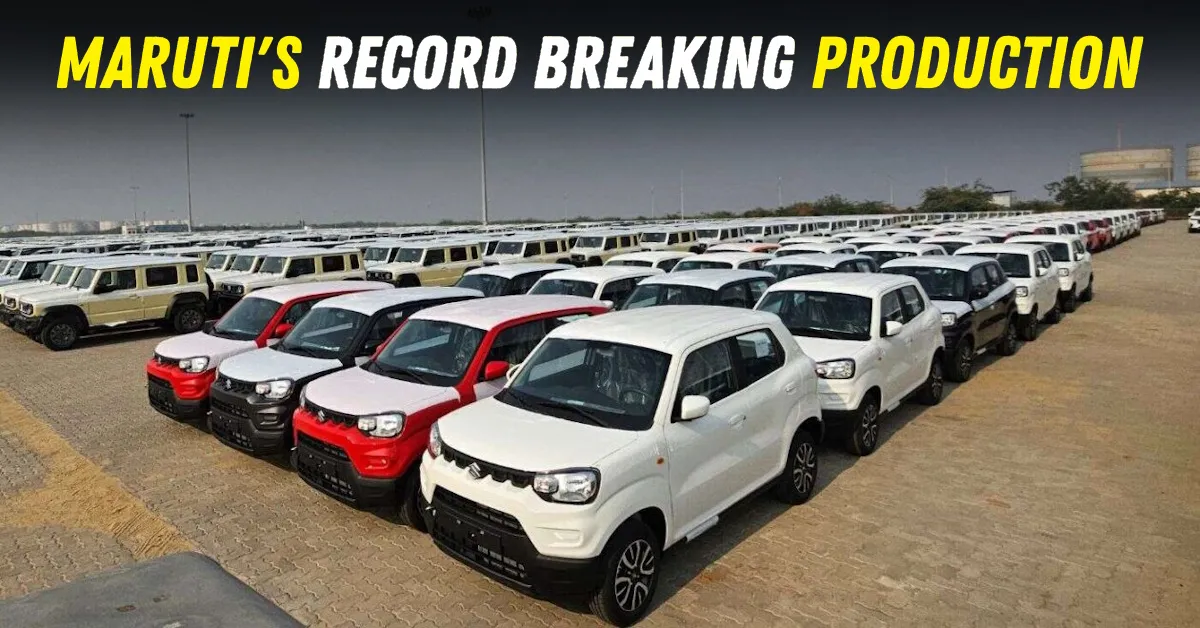

Maruti Suzuki built 23.4 lakh passenger vehicles in FY2026, its highest-ever annual output and the highest annual production volume achieved by any passenger vehicle maker in the country. That number also made Maruti’s India operations the biggest production base inside Suzuki Motor Corporation’s global network.
Those are big milestones, but the more revealing figure is the one underneath them: the company is now operating so close to its installed limit that its next growth phase depends less on demand and more on how quickly fresh factory capacity can come online.
Maruti says its current installed annual capacity across Gurugram, Manesar, Kharkhoda and Hansalpur is 24 lakh units. Against production of 23.4 lakh, that means utilisation was about 97.5 percent. Put differently, headroom was only around 60,000 units for the full year.
That is barely 2.5 percent spare capacity. For a company this size, that is tight. It leaves very little room for demand spikes, model-mix shifts, shutdowns, supply disruptions or faster export growth without putting pressure on the system.
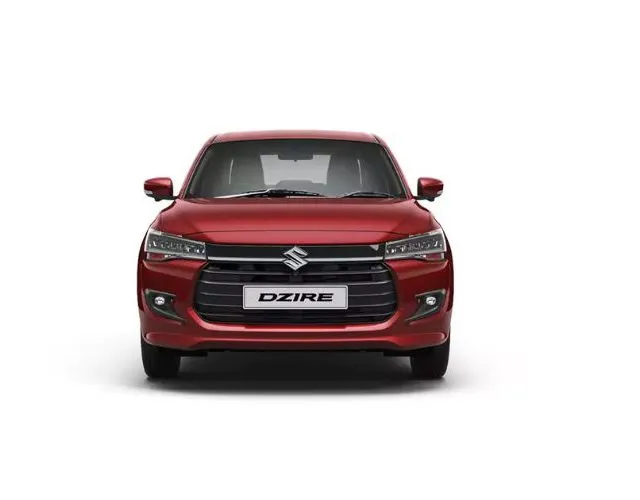
The other reason this number matters is how broad the production base has become. Five Maruti models crossed the 2 lakh-unit mark in FY2026: Dzire, Fronx, Swift, Ertiga and Baleno.
Even at the minimum possible interpretation, that means those five models alone accounted for more than 10 lakh vehicles, or at least 42.7 percent of total production. In reality, the contribution would be higher because each of those models was above, not merely at, 2 lakh units.
That spread matters because it reduces dependence on a single nameplate. The Dzire remains a volume anchor, but the Fronx is the more telling sign of where demand is moving. It has ramped from a 2023 launch to one of the company’s top production models in a short span.

The Swift and Baleno are long-established mainstream pillars. The Ertiga continues to prove that MPVs still matter when they are priced and packaged correctly. This is not one hero product carrying the factory. It is a multi-model machine working at full tilt.
Maruti’s own statement also says the company now builds 17 models across more than 650 variants for domestic and export needs. That level of complexity matters because running close to 98 percent utilisation is not the same as simply repeating one product endlessly. The production system has to handle different bodies, trims, fuels, transmissions and market requirements while still holding line speed and output.

This is also where the original draft needs a sharper correction. The next big plant in the public pipeline is not another Kharkhoda phase in Haryana. Maruti has already identified land at Khoraj Industrial Estate in Sanand, Gujarat, for its fifth manufacturing facility.
When fully operational, that plant is planned to add 10 lakh units of annual capacity. That is a very large addition by any standard, and it shows how seriously Maruti is planning for the next decade rather than just the next two years.
The company says it aims to scale to about 40 lakh units per year over time. That target is worth pausing on. From the current 24 lakh installed base, 40 lakh would mean adding roughly 16 lakh units of annual capacity, or about two-thirds more than what Maruti has now. That is not a routine expansion. It is a structural shift in scale.
There is a simple reason for that ambition. Passenger-vehicle demand has stayed large enough that Maruti cannot defend share merely by optimising its existing footprint. Even if the domestic market grows at a moderate pace, Maruti still needs absolute volume growth just to hold its position. Add exports to that, and the pressure rises further. The company has already been pushing Gujarat harder as part of its export story, which makes additional western-region capacity strategically useful, not just numerically necessary.
Maruti’s FY2026 production was not just its best year. It was also its clearest warning signal that the present network is nearing its ceiling. Reports tracking the company’s production trend say FY2025 output was around 21.02 lakh units, which means FY2026 rose by roughly 2.38 lakh units, or about 11.3 percent. That is a strong jump in one year, but it also explains why the spare room has almost vanished.
So the record is real, but so is the constraint. Maruti has proved it can build at extraordinary scale. The harder question now is whether it can add new scale fast enough to keep the next few years from being shaped by capacity limits rather than market opportunity. That is what makes this production record more than a bragging point. It is also the clearest argument yet for why the next plant matters so much.
Comments are closed.