
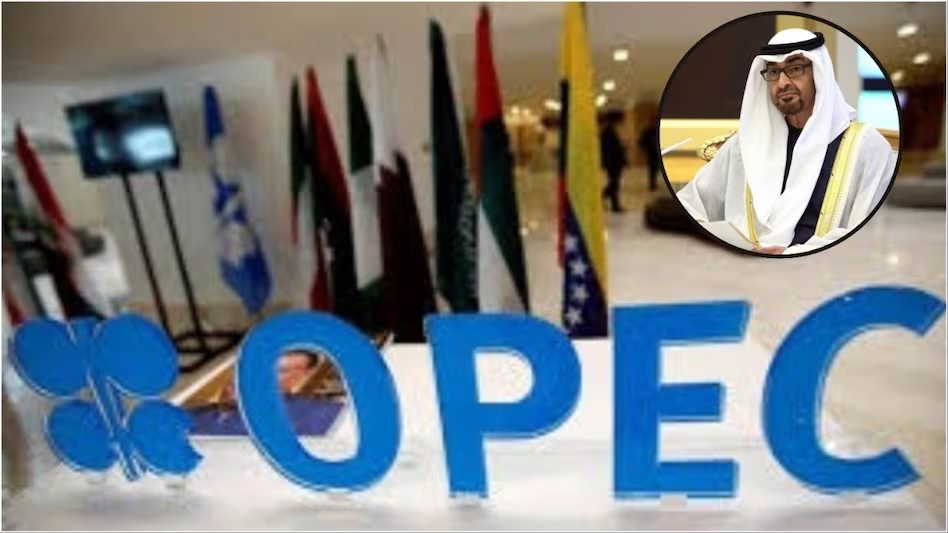

New Delhi: Amid tensions with Iran, the United Arab Emirates (UAE) has taken a major decision. The UAE has decided to withdraw from the petroleum countries’ groups OPEC and OPEC+. This decision comes at a time of ongoing tensions with the Gulf Council (GCC). This move by the UAE could deal a major blow to the group’s de facto leader, Saudi Arabia. The UAE’s departure from OPEC could create chaos and weaken the group, which has generally strived to maintain unity despite internal differences on issues ranging from geopolitics to production quotas.
OPEC countries are already facing difficulties in sending exports through the Strait of Hormuz due to Iranian threats and attacks on ships. The Strait of Hormuz is a narrow channel between Iran and Oman, carrying a fifth of the world’s crude oil and liquefied natural gas. OPEC, already facing the Strait of Hormuz blockade, is expected to face a major setback from the UAE’s move.
What did the UAE government say?
The UAE’s Energy Minister said of the decision to withdraw from OPEC and OPEC+, “This decision was taken independently and there has been no direct consultation with any other country, including Saudi Arabia. We are capable of making our own decisions.” The UAE government stated that this decision follows a comprehensive review of the UAE’s production policy and its current and future capacity, and is based on our national interest and our commitment to effectively contribute to meeting the market’s immediate needs.
Is this good news for Trump?
The UAE’s withdrawal from OPEC is a major victory for US President Donald Trump, who has accused the organization of “robbing the rest of the world” by raising oil prices. Trump already wants to weaken this group, which is dominated by Russia and Saudi Arabia.
What are OPEC and OPEC Plus?
It was established in 1960 to formulate policy regarding oil production and sales. Initially, the organization included Iraq, Iran, Kuwait, Saudi Arabia, and Venezuela. Later, its membership was expanded. Currently, the organization includes Saudi Arabia, Iraq, Iran, the United Arab Emirates (UAE), Libya, Indonesia, Kuwait, Nigeria, and Venezuela. In addition to these 12 members, OPEC Plus includes 10 more countries: Russia, Azerbaijan, Bahrain, Brunei, Kazakhstan, Malaysia, Mexico, Oman, and South Sudan.

Comments are closed.