

New Delhi: Amidst the increasing tension in West Asia, the Strait of Hormuz has once again become the center of global discussion. Despite the announcement of a strict blockade by America, the situation is presenting a different picture. The movement of ships in this area, one of the busiest sea routes in the world, has not stopped completely, but many tankers are still successful in reaching their destination. This situation not only raises questions on American strategy, but also raises new concerns regarding global trade and energy security.
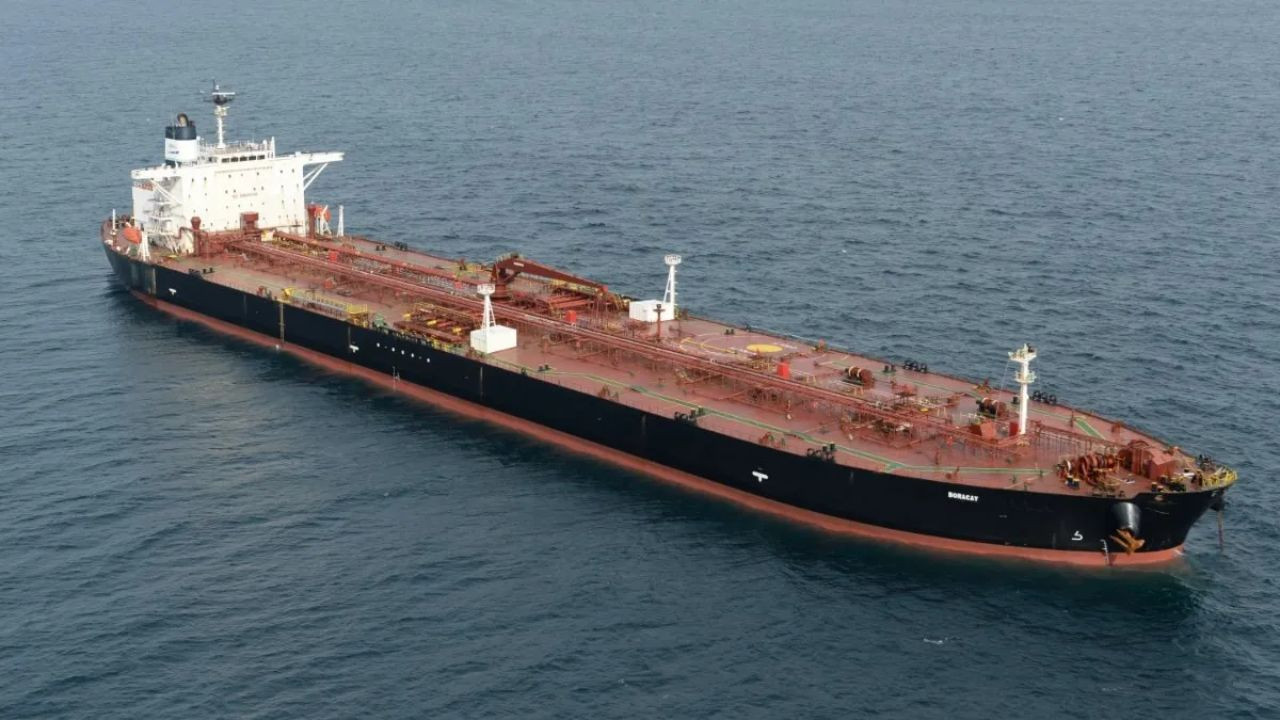
America has adopted a strategy of strict monitoring and control in the Strait of Hormuz to put pressure on Iran. Under this, the US Navy has been deployed in the Gulf of Oman. Despite this, many ships are successful in passing through this route. Recently, an Indian tanker named ‘Desh Garima’ passed through this tense area and reached Mumbai safely. About 97 thousand metric tons of crude oil was brought from Qatar in this ship.
According to reports, more than 30 tankers have passed through this route since the blockade started on April 13. Experts believe that this situation shows that it is not easy to make a maritime blockade completely effective.
‘Shadow Route’ is being discussed
In this entire incident, the most discussed are the alternative routes through which ships are escaping the blockade. Some experts believe that the ships move parallel to Pakistan’s Makran coast while staying near Iran’s coastal waters. In this way, they can enter from one area to another without coming into international waters. Although this route is technically feasible, it also involves political and diplomatic complexities, especially given the relations between India and Pakistan.
Another safe route also exists
Another possible route is that the ships move along the coast of Iran, reach Chabahar port and from there enter international waters. After this they can proceed directly towards the west coast of India like Mumbai, Kandla, Kochi or other ports. This route is considered relatively safe because it does not require entering the territorial waters of any other country and ships can travel directly under international regulations.
What do international rules say?
Under maritime laws, each country controls its territorial waters up to 12 nautical miles. But according to the rule of ‘innocent navigation’, foreign merchant ships can pass through these waters without any hindrance, provided they do not carry out any activity. Despite this, use of this route is considered risky in view of the current tension between India and Pakistan. Many experts say that even though this is legally possible, in practice it is not a safe option.
Important role of Indian Navy
The Indian Navy is also playing an active role during this entire crisis. According to the information, as soon as an Indian ship leaves the Hormuz area, the Navy escorts it to a safe place in the Gulf of Oman. This strategy provides safe passage for ships while keeping them away from US and Iranian military activities. Due to this, ships do not need to go near Pakistan’s territorial waters.
Limitations and challenges of blockade
The US blockade is limited only to international waters. As soon as a ship enters a country’s territorial waters, it goes out of US control. This is the reason why America cannot directly intervene in the waters of Iran, Pakistan and India. Due to this limitation, many ships use these areas to evade the blockade. Although America has so far forced many ships to return, establishing complete control still remains a challenge.
impact on global market
The impact of this entire incident is not limited to regional politics only. A large part of the world’s oil is supplied through the Strait of Hormuz. In such a situation, any kind of disruption here can affect the global market. Fluctuations in oil prices and uncertainty of supply can affect the economy of many countries. Despite efforts to put pressure on Iran, it is becoming clear that it is extremely difficult to completely implement a maritime blockade in modern times.

Comments are closed.