
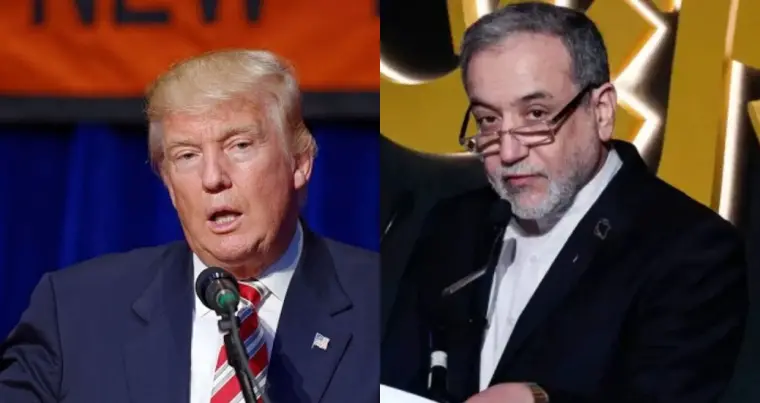

Controversy has increased over Iran being elected Vice-President of the Nuclear Non-Proliferation Treaty (NPT). America called it an insult to the organization, while Iran rejected the allegations and accused America of adopting a double standards and suppressing other countries.
New York: A major diplomatic controversy has come to light in the 11th session of the NPT Review Conference held in New York City, US. The decision to elect Iran as the Vice-President of the Nuclear Non-Proliferation Treaty (NPT) in this conference has sparked heated debate at the international level.
The conference is held once every five years and aims to review global nuclear security, arms control and peaceful nuclear energy uses.
Iran’s selection with the support of the Non-Aligned Group
Chairman of the conference and Ambassador of Vietnam Do Hung Viet said that Iran’s name was proposed by the Non-Aligned Movement. This group includes more than 100 countries including India.
After this decision, mixed reactions were seen in the international community. Some countries called it a part of diplomatic balance, while others considered it a matter of serious concern.
America’s strong objection
America has strongly opposed this decision. US official Christopher Yeo called it against the spirit of the Nuclear Non-Proliferation Treaty (NPT). He says that Iran has been involved in efforts to develop nuclear weapons for a long time, so giving it such an important position weakens the credibility of the organization.
The US argues that giving leadership roles to countries that have doubts about nuclear programs could harm the global security framework.
Iran’s counterattack: America accused of double standards
Iran has completely rejected America’s allegations. Iranian representatives say that America itself has used nuclear weapons and is also continuing to expand its arsenal, so it has no right to preach to other countries.
Iran also says that it has always been in favor of a peaceful nuclear energy program and the allegations being made against it are politically motivated.
What is NPT and how does it work
The Nuclear Non-Proliferation Treaty was established in 1970, while it was opened for signature in 1968. Its main objective is to prevent the spread of nuclear weapons in the world.
This treaty has three main pillars:
- stop the spread of nuclear weapons
- Gradual reduction of existing nuclear weapons
- Ensuring peaceful use of nuclear energy
This arrangement is monitored by the International Atomic Energy Agency (IAEA), which ensures whether member countries are following nuclear rules or not.
Currently, 191 out of 195 countries of the United Nations are members of this treaty. India, Pakistan, Israel and South Sudan remain outside it, while North Korea exited it in 2003.
Growing inequality on nuclear disarmament
In recent years, the goal of reducing nuclear weapons under the NPT has not been as successful as expected. According to experts, many nuclear power countries are making their weapons modern and more powerful instead of reducing them.
Strategic competition, especially between China, the US and Russia, has further complicated this process.
Iran’s nuclear program and global concern
Iran has been a member of the NPT since before the Islamic Revolution of 1979, but questions have been constantly raised over its nuclear program. According to reports, Iran has increased uranium enrichment to 60%, while the limit for civilian use is 3 to 5%.
Although Iran continues to claim that its program is completely peaceful, Western countries and international agencies remain suspicious of its intentions.
Increasing tension in West Asia
Tension between America and Iran has already reached its peak regarding Iran’s nuclear program. During the tenure of previous US administrations, especially Donald Trump, several economic sanctions were imposed on Iran, which further increased regional instability.
Along with this, the indirect conflict between Israel and Iran has made the situation more complex, which has affected the security balance in the entire West Asia.

Comments are closed.