
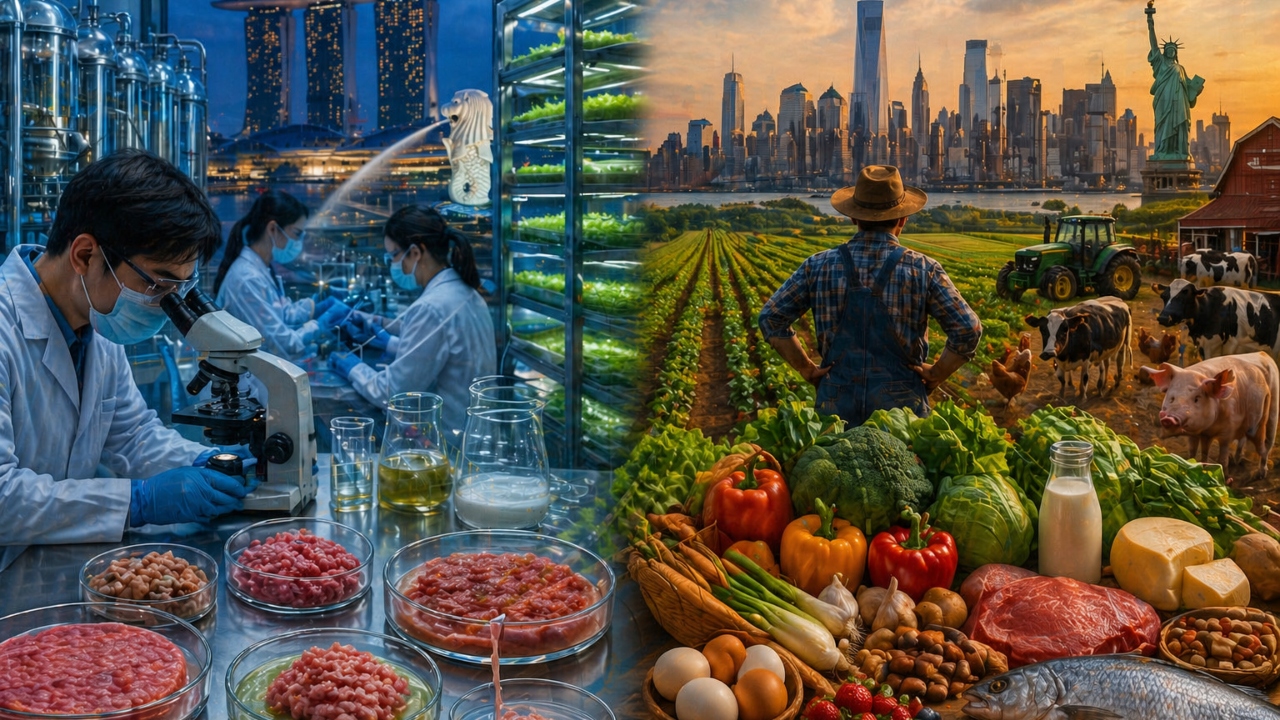

for some time now lab grown food Or ‘cultured food’ is increasingly in discussion. It is one of the biggest hot topics in science today. While on one hand it is being said to be the solution to a possible food crisis in the future, on the other hand there is intense fear and debate about it. This is the question. Will real farming end in the future or will it remain just an option? Will traditional farming and “real food” be left behind in the times to come?
In fact, increasing population, climate crisis and lack of resources have forced scientists to find alternatives where food can be prepared without harming animals and with less resources. Meanwhile, meat and dairy products prepared in labs have further intensified the debate. Supporters consider it a solution to food security, while opponents say it is against health, morality and tradition. This is the reason why this issue is now becoming not just science but a big global debate of the future.
What is lab grown food?
Lab grown food, specifically ‘cultured meat’, is actually meat that is made by growing cells taken from animals in a lab. There is no need to kill the animal in this. Scientists take some cells from the animal’s body and grow them in a controlled environment (bioreactor), from which meat is prepared. That means ‘the meat is the same, but without the animal.’
Which foods are being worked on in the lab?
Today in the world, not only meat, work is going on in the lab on many types of foods, among them chicken, beef, pork (meat), fish and seafood, dairy products (milk, cheese), egg (egg protein) and others. More than 150 companies of the world are working in this sector and billions of dollars have been invested.
Veg or non-veg – which is being produced?
- Till now the biggest focus of lab grown food is on non-veg (meat). Lab grown chicken and beef are already in testing and limited sales. It has also been approved in countries like Singapore and America.
- However, work on ‘plant-based’ and ‘fermentation-based’ technology is also going on in the veg sector, but the actual term ‘lab grown’ is mostly used for meat.
Why was this needed?
1. Population and Hunger: By 2050 the world’s population may reach close to 10 billion. Providing food to so many people is a big challenge.
2. Environmental Crisis: Animal husbandry produces huge amounts of greenhouse gases and also consumes a lot of land and water.
3. Reducing killing of animals: Billions of animals are killed every year for food—lab grown meat can save that.
4. Food Security: This technology can provide food even in countries where farming is difficult.
Now where is this mentioned?
Lab grown food is now not just research but has become a global agenda. UN organizations like FAO, FDA, World Economic Forum have started discussing its benefits, risks and rules.
If there is no lab grown food, will people die of hunger?
It would be wrong to say that without lab grown food people would die of hunger. There is still enough food production in the world, but the problem is distribution and inequality. However, in the future, considering the increasing population, climate change and limited resources, lab grown food can become a complementary (alternative) solution, it will not necessarily replace the entire farming.
Will real food run out?
No, this does not seem possible at present. Farming, dairy and traditional food will continue. Lab grown food will come as an option or supplement. But it is certain that in the coming times, “What kind of food is right?” There will be a big debate on this.
What are the challenges?
Lab grown food is still in its initial stages and there are many problems. The cost is very high. Large scale production is difficult. Who will answer the questions of consumer acceptance and religious and moral questions?
Lab grown food is neither completely the only food of the future nor can it be ignored. This is a technology that can change the food system in the future, but it is not possible to eliminate traditional farming right now. The real fight is not about “lab vs farm”, but about how to get sustainable and safe food.
Food crisis is mentioned in which reports?
- Many international organizations have been continuously warning about the increasing food crisis in the world.
- The most important report is from the Food and Agriculture Organization (FAO), which tells that crores of people in the world are still struggling with malnutrition and hunger.
- The World Food Program (WFP) has said in its report that there is a situation of “acute hunger” in many countries, where people are not getting enough food daily.
- The World Bank and the International Monetary Fund (IMF) have also cited food inflation, supply chain and climate change as major causes of the global food crisis.
- The World Economic Forum (WEF) has clearly stated in its reports that in the coming decades, there will be huge pressure on the food system due to increasing population and limited resources.
Can lab grown food be the solution to the food crisis?
It is too early to call lab grown food a “complete solution” to the food crisis. This technology provides an alternative route, especially for meat production, which can reduce the pressure on land, water and animal husbandry. But the reality is that its cost is still very high and large scale production is limited. Reaching out to common people has not been possible yet. Experts believe this could be a supplementary solution, especially in the future, but it alone will not end global hunger. The real root of food crisis is poverty, inequality, lack of distribution. Solutions to these problems will still be necessary.
Why is lab grown food in the headlines?
- Lab grown food is in discussion for many reasons.
- Animal husbandry releases large amounts of greenhouse gases. Lab grown meat is being considered as an option to reduce this.
- Due to new biotechnology and investment, this sector is progressing rapidly.
- Some countries have started approving lab grown meat on a limited scale, which has increased its credibility.
- Many companies around the world are investing billions of dollars in this sector.
- It has also become a part of the ethical debate due to its efforts to reduce the killing of animals and to be presented as “clean meat”.

Comments are closed.