
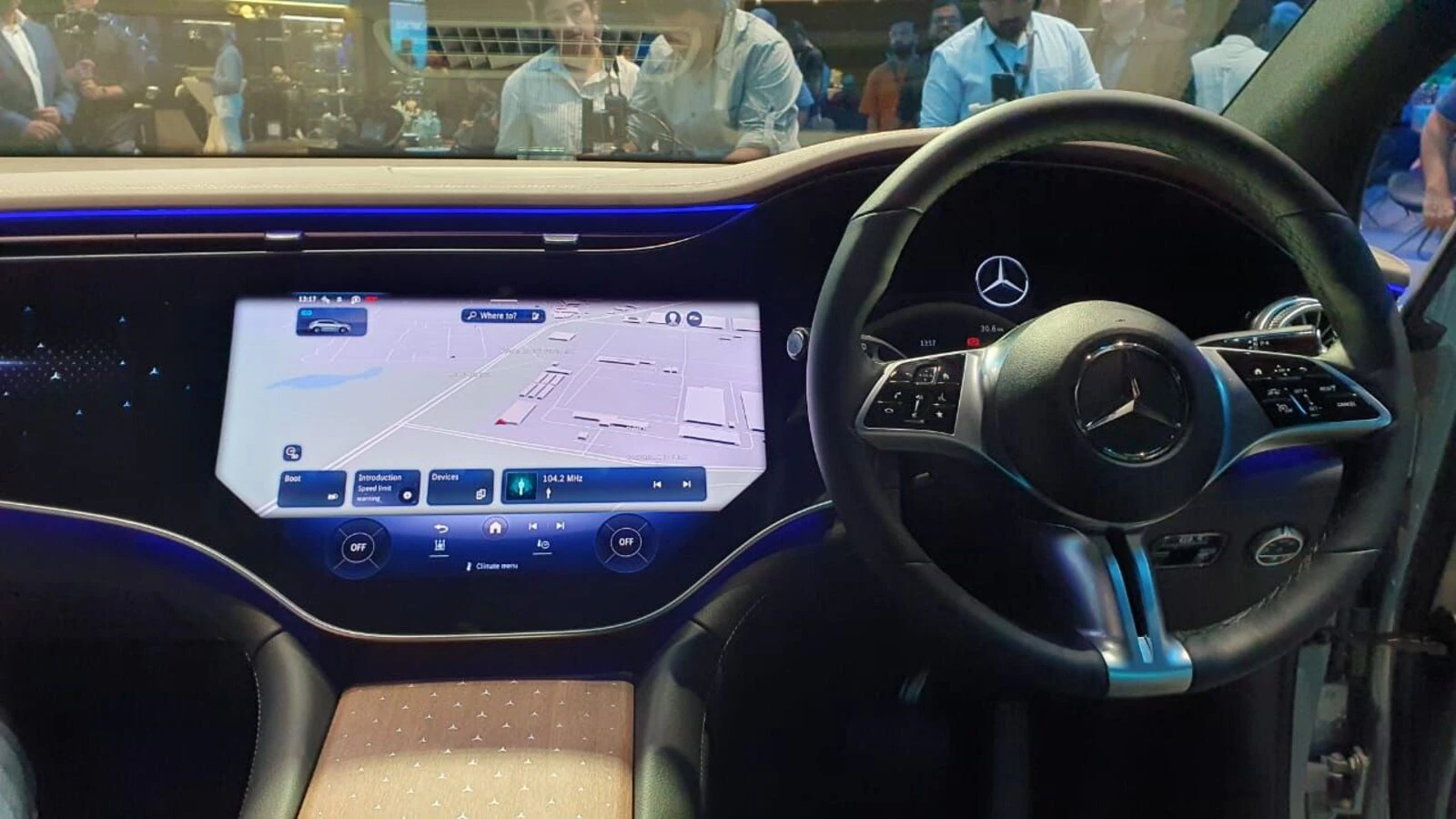

While parts of the auto industry are quietly stepping back from oversized touchscreens, Mercedes-Benz is holding its ground. Even as competitors rethink all-digital dashboards, the German luxury giant is leaning further into expansive displays, arguing that screens are central to a modern premium experience.
Models like the GLC and C-Class continue to feature the brand’s signature Hyperscreen, stretching across the dashboard like a digital canvas. For Mercedes, this isn’t just about aesthetics; it’s about redefining how drivers connect with their cars.
Mathias Geisen, Mercedes’ sales chief, frames it simply: the magic lies behind the screen. Much like smartphones, the hardware may feel familiar, but the experience evolves through software, personalization, and seamless interaction.
The Premium Play: Personalisation and Digital Atmosphere
Here’s where Mercedes is trying to differentiate itself. It’s not just selling a screen, it’s selling an experience.
The company believes that large displays allow customers to shape their car interiors in ways that weren’t possible before. From custom wallpapers to personal photos, the car becomes an extension of the user’s digital life.
Geisen points out that this level of personalization helps create an emotional connection. It’s less about operating a machine and more about inhabiting a space that feels tailored to you.
And in the luxury segment, that emotional layer matters. Buyers aren’t just looking for functionality, they’re looking for identity, comfort, and a sense of control over their environment.
The Reality Check: Customers Want Buttons Back
But here’s the twist. While Mercedes is doubling down on screens, it’s also quietly correcting course.
Customer feedback has been blunt. Touch-heavy controls, especially haptic ones on steering wheels, didn’t land well. Drivers found them unintuitive and, at times, frustrating to use.
Geisen admits as much. The company has already started reintroducing physical “roller” controls in place of touch-sensitive pads, acknowledging that some functions simply work better when you can feel them.
This shift isn’t a retreat from digital, it’s a recalibration.
Finding the Balance Between Digital and Physical
What’s emerging now is a hybrid approach. Mercedes isn’t abandoning its screen-first philosophy, but it’s becoming more selective about where digital makes sense and where it doesn’t.
The idea is simple: keep the immersive, high-resolution displays for personalization, navigation, and entertainment, while restoring physical controls for frequently used functions like volume, climate, or quick adjustments.
Customer research clinics have reinforced this direction. People love the visual appeal and flexibility of big screens, but they don’t want to dig through menus for basic tasks.
So the future Mercedes interior will likely look like a blend of both worlds, high-tech, but grounded in usability.
The Bigger Picture: A Defining Design Debate
Mercedes’ stance highlights a broader debate in the automotive world. As cars become more software-driven, brands are still figuring out how far to push digital interfaces without compromising ease of use.
Some are scaling back. Mercedes is refining.
What this really means is that the industry isn’t moving in one direction; it’s experimenting. And in that space, Mercedes is betting that luxury isn’t about choosing between digital and physical, but knowing how to combine them in a way that feels effortless.
If they get that balance right, the Hyperscreen won’t just be a feature; it’ll be the centerpiece of what modern luxury driving feels like.

Comments are closed.