
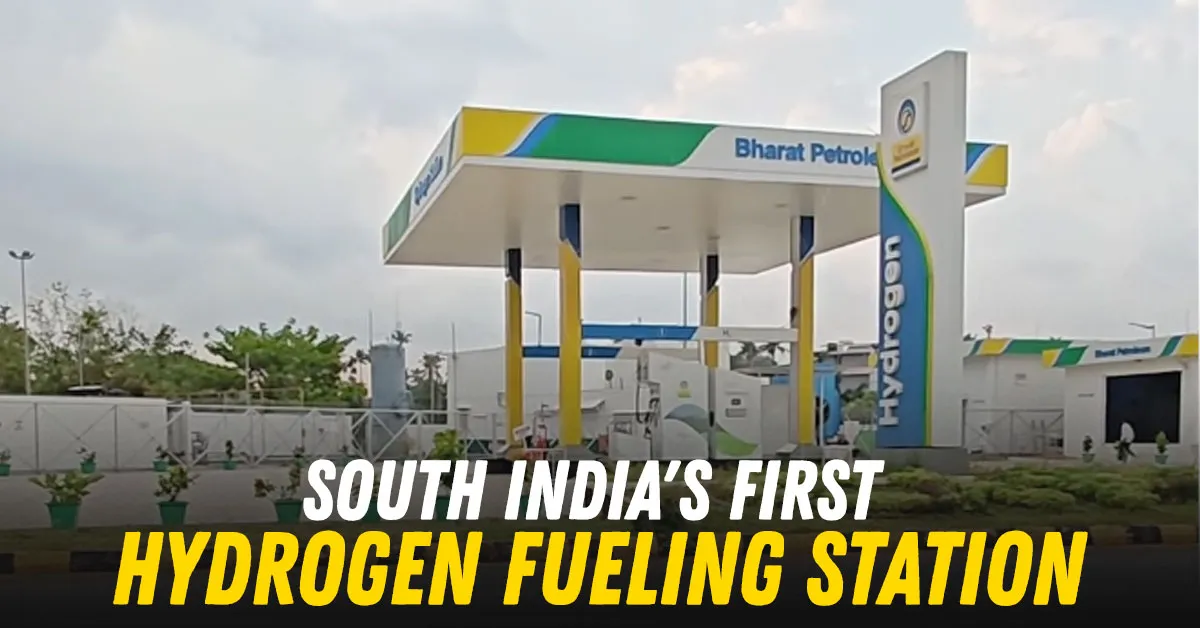

The Indian automotive landscape is still new to using hydrogen as a fuel. This is set to change soon. Union Transport Minister Nitin Gadkari sees green Hydrogen as the ‘fuel of the future’ and believes that it needs to be explored further. While conversations around Hydrogen-powered vehicles continue, here’s a quick look at South India’s first Green Hydrogen filling station. It is located in Kerala’s Kochi, near the Cochin International Airport Ltd (CIAL).
What you see here is a Green Hydrogen refuelling station. It is located in Nedumbassery, near the Cochin International Airport (COK). It has been established through a collaboration between Bharat Petroleum Corporation Ltd (BPCL) and CIAL. This fueling station will be used by the soon-to-be-inducted, Hydrogen-powered airport buses. In the near future, the Kochi Water metro will also use electric-hydrogen hybrid vessels from Aluva to the airport. These will also be powered by Hydrogen from the CIAL plant.
Yes, the Kochi International airport has a green hydrogen plant within its premises! It, in fact, became the world’s first airport to have a green hydrogen plant within. This isn’t the first time that we have seen it achieve an energy milestone. It is also the world’s first airport that’s fully powered by solar energy. The fueling station is an extension of this plant.
The green hydrogen plant makes hydrogen from water using renewable energy sources. A hydel station has been installed near the airport for this. The green hydrogen pilot project uses technology and operational management from BPCL, while CIAL gives it suitable water and green energy resources. The plant is known to make around 200 kilograms of Green hydrogen daily using a 1,000 kW electrolyser. Kerala’s leap towards Hydrogen fuel aligns well with the centre’s energy direction.
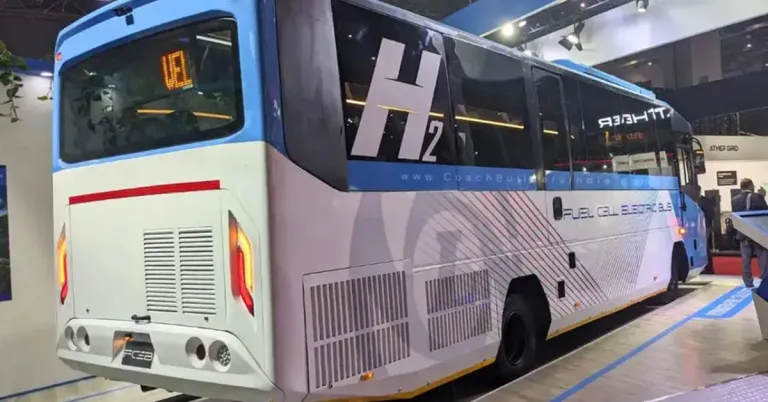
According to more recent reportsCochin International Airport Ltd is preparing to procure its hydrogen-powered airport buses. Once this is realised, CIAL will become India’s first airport to use hydrogen-powered buses for passenger transportation. In the initial phase, three hydrogen fuel cell electric buses will be inducted into service at Kochi airport.
This will be part of the Kerala Hydrogen Valley initiative under the centre’s National Green Hydrogen Mission. Funding for this has been capped at 2.90 crore per bus. The total cost would be around Rs 8.7 crores. The money will be released in stages and the procurement is expected to be completed within a year starting March 2026. CIAL will have ownership of these buses and will also bear the operational expenses. This project, when implemented, is expected to reduce emissions from airport transport operations and enhance passenger convenience.
Think of a Hydrogen bus as an electric bus with its own power plant. The complex powertrains of these vehicles convert hydrogen gas into electricity through a chemical reaction. This electricity is then used to power the electric motors that power the wheels.
Compressed hydrogen gas is stored in high-pressure tanks and fed into a fuel cell stack. Inside it, the gas meets Oxygen inducted from outside air, triggering a chemical reaction. This is often catalysed by Platinum that breaks hydrogen molecules into protons and electrons. These electrons are then forced through a circuit to power the motor (s). The protons, on the other hand, pass through a membrane and combine with oxygen to form water- the only byproduct! The advantage here is that hydrogen filling doesn’t take as long as conventional EV charging.
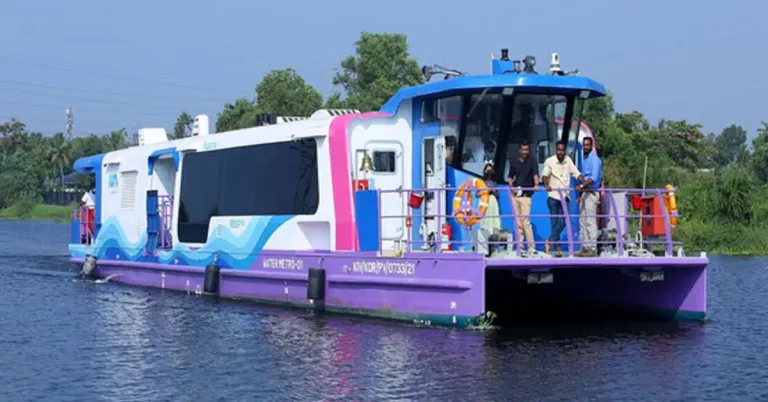
Image source: Twitter | Kochi Metro
Kochi Water Metro is also planning to introduce electric-hydrogen hybrid vessels. When taken into operation, this will connect Aluva to the airport. These being fast, can cut travel time in this route, significantly. Minimising environmental impact comes as a bonus. At present, water metro ferries are powered by a combination of batteries and diesel. Electric-hydrogen hybrids will be better, faster alternatives. They will emit only water vapour and heat and will thus be a lot less polluting than diesel boats.
Cochin Shipyard Ltd (CSL) has already developed India’s first green hydrogen ferry- a 50-passenger vessel which is now operational in Varanasi. CSL will be building vessels for the water metro as well. Initially, the state authorities had taken a stand against hydrogen ferries due to their high operating costs and difficulty in sourcing. With the new plant getting operational, these seem to have been addressed.
India is targeting a sharp reduction in the production costs of green Hydrogen. It intends to bring it down from $4.5 per kilogram to $1 per kilogram by 2030. If that happens, India will become one of the cheapest manufacturers of green Hydrogen.
Hydrogen can then be used to power heavy vehicles and machinery. This can bring down emissions in the commercial sector, particularly the Steel and fertiliser industries. Just last year, Adani Enterprises launched what is claimed to be India’s first hydrogen-powered truck, through a partnership with Ashok Leyland and Canadian fuel cell maker Ballard. To further accelerate Hydrogen fuel adoption and innovations in the space, the GST Council has recommended reducing GST on green hydrogen to just 5%.
More recently, Gadkari stated explicitly that petrol and diesel vehicles have no future in India and added that the use of hydrogen as a fuel needs to be explored further. He also spoke about how hydrogen-powered trucks and buses are currently being tested in various regions, as pilot projects. He believes it to be the fuel of the future.
In short, the country is moving towards hydrogen-powered vehicles and Kerala’s BPCL hydrogen fueling station is part of a larger network. Private majors like JSW Energy, Adani Group, Reliance and Larsen & Toubro (L&T) are already exploring this space. In the coming years, we will see more developments including the debut of Hydrogen-powered passenger vehicles as well.
Comments are closed.