
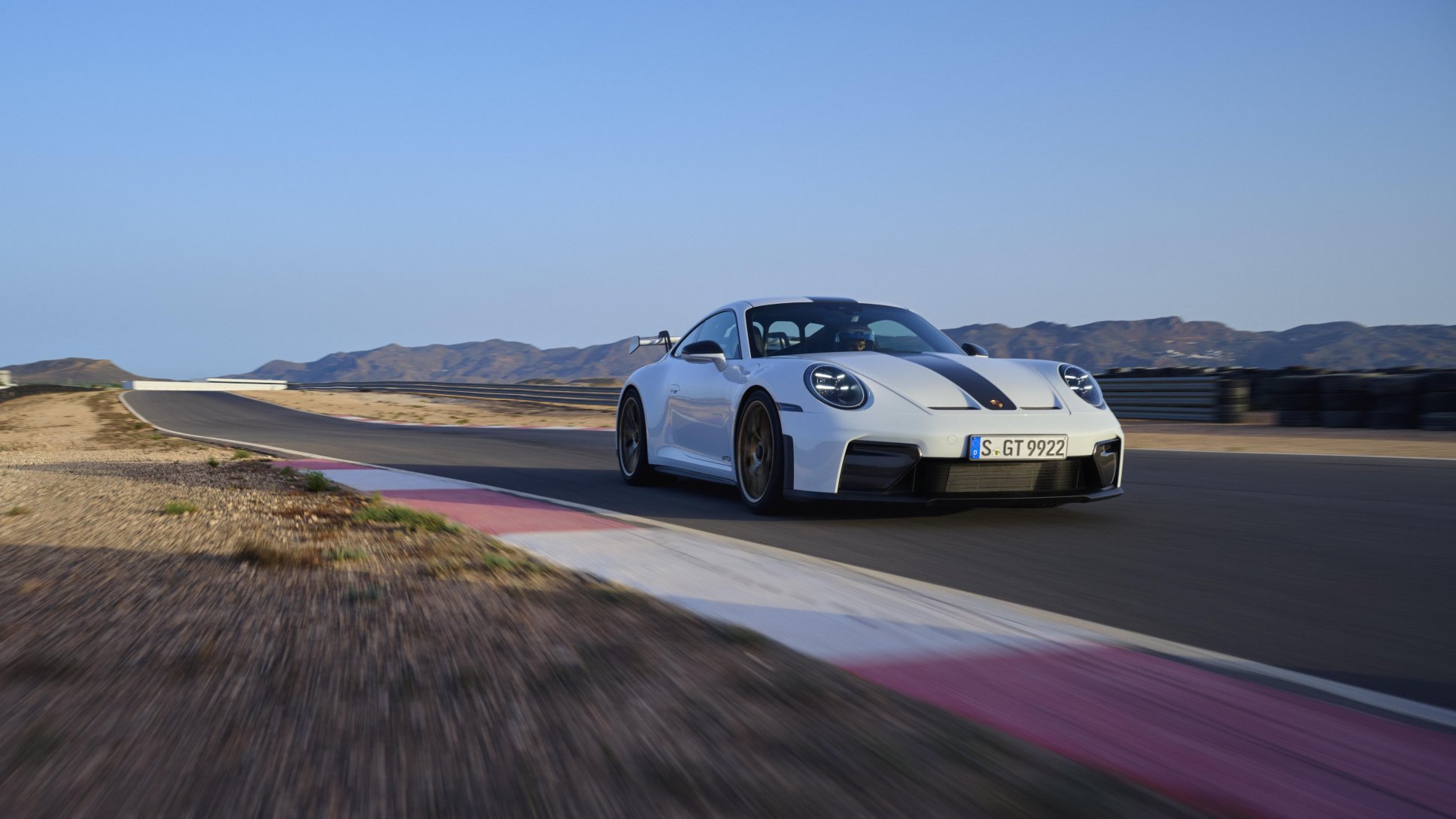

The Porsche 911 GT3 has always been a bit of a rebel. In a world steadily moving toward electrification and turbocharging, it stood firm with a naturally aspirated flat-six that screamed all the way to redline. That raw, mechanical purity is exactly what made it special.
But here’s the thing. That same purity is now under threat.
As global emissions regulations tighten, especially across Europe, Porsche is facing a tough reality. The very engine that defines the GT3 could soon become impossible to justify without major changes.
Why the GT3 Engine Matters So Much
For enthusiasts, the GT3 isn’t just another fast 911. It’s the driver’s 911.
Its 4.0-liter naturally aspirated flat-six, evolved from earlier 3.6 and 3.8-liter versions, delivers something increasingly rare: instant throttle response, a linear power band, and a soundtrack that feels alive. No turbos. No artificial assistance. Just pure engineering.
Even within Porsche’s lineup, it stands apart. Cars like the Porsche 911 Turbo S rely on forced induction for massive power, while the newer Porsche 911 GTS has already embraced electrification. The GT3, by contrast, has held its ground.
That resistance may not last much longer.
Europe Tightens the Noose
According to Andreas Preuninger, the man behind Porsche’s GT division, the timeline for naturally aspirated engines in Europe is shrinking fast.
He suggests that without significant updates, the current engine might only survive a few more years in European markets. The challenge isn’t just emissions output, but also noise regulations and particulate filters that can choke performance and alter the driving experience.
Interestingly, the outlook in the United States appears more relaxed. There, the GT3 could continue in its current form for a longer period, thanks to relatively less aggressive regulatory pressure.
Still, the writing is on the wall.
Turbocharging: The Inevitable Shift?
When asked directly about the GT3’s future, Preuninger didn’t rule out turbocharging. In fact, he hinted that it might be unavoidable.
That would mark a major philosophical shift.
Turbocharging brings efficiency and compliance, but it also changes how a car feels. The razor-sharp throttle response and high-revving character of the GT3 could give way to something more controlled, more filtered.
There is another path: hybridization. Lamborghini, for instance, managed to retain its V12 in the Lamborghini Revuelto by pairing it with electric motors. Porsche could attempt something similar keeping the engine naturally aspirated while adding electrification to meet regulations.
But that raises a different question. At what point does a GT3 stop feeling like a GT3?
The Purist’s Dilemma
This isn’t just about engineering. It’s about identity.
The GT3 has always been the sweet spot usable on the road, devastating on track, and deeply engaging at any speed. Changing its core formula risks alienating the very audience that made it iconic.
Yet standing still isn’t an option either.
What this really means is that Porsche is walking a tightrope. Keep the soul intact, but evolve enough to survive.
If Preuninger’s hints are anything to go by, the next generation of the GT3 could look very different under the skin. And for enthusiasts, that makes the current version feel a lot more special, maybe even the last of its kind.

Comments are closed.