

That equated to around 6,900 approvals for the month, according to a report released late last month by the Department of Home Affairs (DHA).
March’s approval rate was eight percentage points lower than the previous record low of 67.6% posted in February.
Grant rates for March had previously remained above 73% for more than 20 years.
China and several key Southeast Asian markets like Vietnam, the Philippines and Indonesia recorded low rejection rates of around 4-15%.
Students from South Asia, however, were the most affected. The approval rate was only 27% for Nepalese applicants and 49% for Indian ones.
Experts have described the rejection rate as unusually high.
Phil Honeywood, CEO of the International Education Association of Australia, told Times Higher Education that the immigration department appears to be applying a policy known as “direction 106,” which was introduced two years ago.
Under this policy, authorities conduct a “holistic financial assessment” to determine whether applicants can afford living costs for the full duration of their studies, whereas the previous rules only required proof of sufficient funds for the first year.
Jon Chew, chief insights officer at Australia-based education provider Navitas, said DHA had historically explained spikes in rejection rates so students, agents and institutions could adjust accordingly. This time, however, schools are unclear about the criteria, which could affect Australia’s goal of attracting talent.
International students do not want a “black mark” on their records from an Australian visa refusal, as it could affect their chances of obtaining visas to the U.K., Canada and other countries, he added.
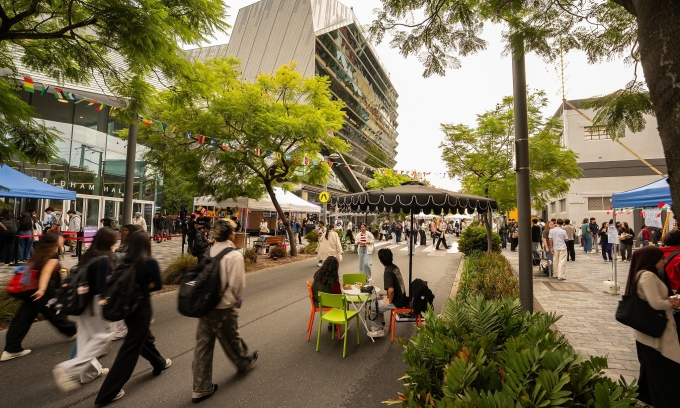
Students at a campus of Adelaide University in Australia. Photo by Adelaide University |
Over the last two years, Australia has steadily tightened study visa rules as part of efforts to control immigration following a post-Covid-19 surge that saw nearly 1.1 million international students in 2024.
Post-study work rights have been reduced from 4-6 years to 2-3 years, while English language and financial requirements have been tightened, with the required proof of funds raised by 20% to A$29,710 (US$21,400). Student visa application fees have also increased to A$2,000, among the highest in the world.
More than one million international students came to Australia last year. The most popular fields of study at the undergraduate and postgraduate levels were management and commerce, followed by information technology.
Comments are closed.