
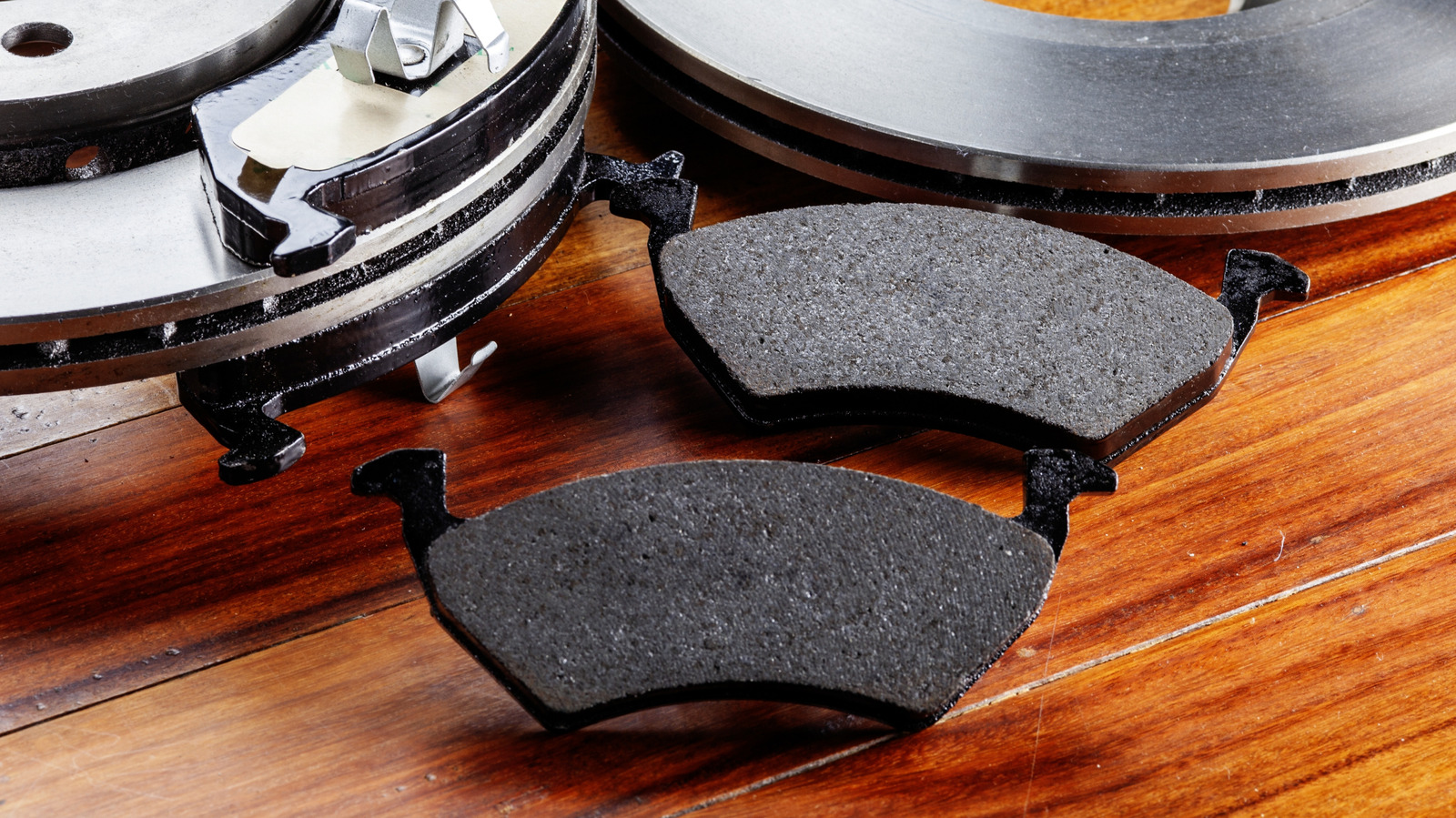

A brake pad’s whole point is to rub against the brake rotors and generate friction. And when you get a new set of brake pads, the pad face and the rotor sit against each other as two unfamiliar surfaces. To get them acquainted, you need to go through a process known as bedding. This is a quick break-in that evenly lays down a thin film of pad material onto the rotor surface. It helps you get the maximum stopping power out of them and ensures they wear evenly, too.
Most mechanics would agree that skipping the process can lead to a few unpleasant problems. The most common is brake judder, which is basically a pulsing vibration you might feel through the steering wheel when you slow down. Skipping bedding causes the pad material to smear unevenly across the rotors, leaving high and low spots.
Then there’s glazing. New brake pads contain a binder called phenolic resin, which holds the pad’s fibers and fillers together. It needs a proper heat cycle to fully cure. But if you push new brake pads too hard too soon, the resins boil out instead of curing. And when they boil, a glassy finish called glazing forms on the pad face. Glazed pads offer almost no friction.
Another major risk is brake fade, which is probably the most dangerous of the bunch. It generally isn’t a separate problem. Rather, it’s often the outcome of one or more of the issues above. It’s more dangerous because it temporarily reduces stopping power. That typically happens when uncured resins vaporize under heavy use, creating a thin layer of gas between the pad and the rotor. The pedal goes spongy, sometimes sinking toward the floor, causing the car to simply keep rolling instead of stopping.
The bigger picture
Now for the part nobody really likes to admit. The average American has probably never even heard of the term “brake bedding,” contrary to what many auto enthusiasts would have you believe. This is despite the fact that skipping the bedding process is one of the common brake myths you should stop believing. The truth is, a new pad and the rotor still mate together over the first few hundred miles of normal driving. The only concern is that it might happen unevenly, which causes more wear than necessary. The natural process is also simply a lot slower. The pad material does eventually transfer, but it can take anywhere from 100 to 400 miles for that to happen. So the failures described above are more like worst-case scenarios, rather than something that’s guaranteed to happen.
That said, if you ignore bedding entirely and start driving aggressively, or never finish the bedding process, the brakes could rely solely on what mechanics call abrasive friction alone. The pads grind against bare iron, generating heat that can soften the rotor and break down the brake pad materials over time. You also miss out on adherent friction, which is the stronger pad-on-pad-material grip that does most of the work in a properly broken-in system. So while the sky will not fall, you are quietly trading away stopping distance, pedal feel, and a chunk of brake life.
The right way to bed the brakes
The real goal of bedding, then, is to squeeze the maximum mileage and performance out of parts you’ve paid real money for. One way to do it is to follow the 30-30-30 braking rule, which takes just about 30 minutes. But if that’s a bit confusing, there’s another similar method that takes just as long. All you have to do is find an empty road, get up to around 40 mph, and brake firmly down to about 10 without coming to a full stop. Then roll through before accelerating again. Repeat this five or six times to build heat in the pads.
Once that’s done, bump up the aggressiveness a bit. Take the car to roughly 55 or 60 mph and brake harder this time. After that, slow down to about 15 mph. Three or four rounds of this should be enough. You might even catch a faint whiff of resin burning, but that’s sort of the whole point. After the process, just don’t pull over and park — which is the bit that many people actually get wrong. Instead, drive at a steady speed for 10 to 15 minutes, without touching the brakes if at all possible. Stopping with hot pads clamped against hot rotors can again cause judder later. When all that’s done, only then park somewhere safe and let everything cool down.

Comments are closed.