
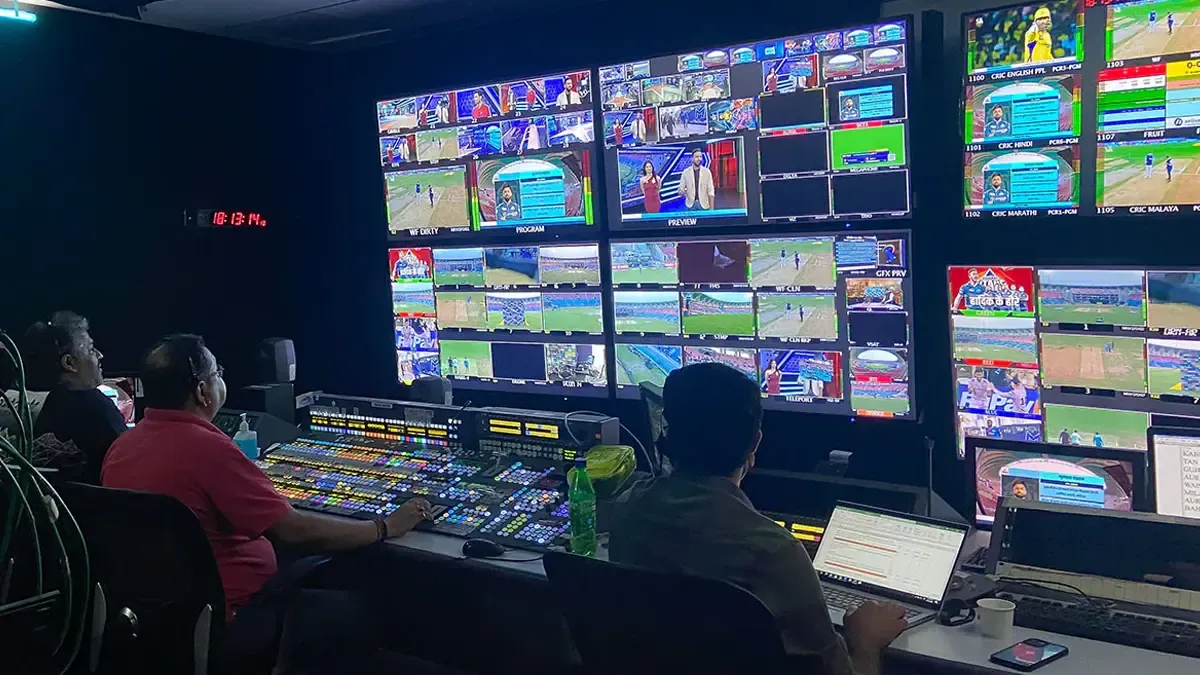

Delhi: These days, the broadcast of IPL is in discussion in the entire cricket world. Consecutive matches, some days even when there were two matches and the second match started even before the first match was over. Okay, Jio Star’s IPL broadcast is still far from world class in the eyes of experts but the scale at which this broadcast is being handled is amazing. Wouldn’t you like to know how the broadcast of one match after another is reaching you?
Also read: Big blow to CSK, strong player injured and out of entire IPL 2026, team’s balance disturbed
Jio Star has two headquarters in Mumbai and from here an operation is being run which has no competition in global sports. These headquarters house commentary in more than 12 languages from more than 20 studios and produce everything from IPL to inter-team series to every ICC World Cup that the world watches. Broadcasts are available from all the major cricket stadiums in the world: West Indies, United States, United Kingdom, UAE and also from South East Asia. From the same building, Jio Star can start broadcast production for cricket being played anywhere. In 2024, the ICC T20 World Cup, produced in nine languages, was played in the United States and West Indies.
Overall, the facilities available in these two headquarters for production services and production technology are unmatched even in global sports broadcasting. Both these facilities have:* 20 production studios* 20 control rooms* More than 15 smaller studios and commentary booths for broadcast.
IPL coverage includes a cricket TV studio and analysis set with a dedicated broadcast desk, camera screens and lighting setup to broadcast in more than 12 languages using feeds from more than 25 cameras, including a vertical format and a sign-language descriptive commentary feed. When IPL ends, whatever is the next biggest tournament, this studio will be painted in its colors. This sequence continues throughout the year. Not only cricket, but also for other sports like Kabaddi and football, if there is commentary in more languages then this is used.
IPL production takes about 9 weeks and the production work is handled by Akelejio Star. Tournaments keep changing, but the tempo remains the same at Jio Star Studio. 3 weeks before the IPL, the studios decorated for the World Cup will be converted for the IPL and immediately after the IPL final, the studios will be decorated for the ICC Women’s T20 World Cup.
The walls are the same, just the lighting, graphics, and branding vary from tournament to tournament, language, and audience. The Telugu language studio is orange for Sunrisers Hyderabad while the Tamil studio shows Chennai Super Kings. Every team is equal for the studio. Most importantly, there are over 12 different ways to describe the same match.
In the studio, the audio is mixed in a Dolby Atmos production room, with each microphone feed being remixed for each language. Among the technical languages, English is considered more suitable for the international audience, Hindi is considered more cinematic and Tamil and Telugu are considered equally better for their own audience. Each language not only sounds different, it makes the match feel different. The same principle applies to pictures, and graphics, commentary and break content are created separately for each language and are not direct translations.
That’s why different language groups have separate editorial teams that are supported by multiple Vizrt graphics engines and Jio Star is one of the largest users of Vizrt in India. Each match broadcast involves a staff of approximately 1,100 (including those in the stadium), with a roster of over 120 commentators in multiple languages. Note some other important points:
Also read: IPL 2026: Varun Chakraborty gave a big update on his injury
* There is a delay of about 4 milliseconds between the ball being released from the bowler’s hand in the stadium and you seeing it on the monitor, which is ‘no delay’ in the eyes of experts.
* Because of this speed, the remote commentary team works as if they were in the stadium. Commentators can report matches happening anywhere in the world in real time.
* Multiple monitors in the cricket broadcast control room show live match production feeds and graphics systems.

Comments are closed.