
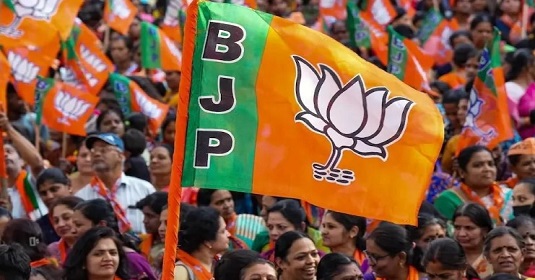
Big political upheaval in Bengal: TMC out of power after 15 years, these 7 big reasons behind BJP’s historic lead

Kolkata. A big change seems to be taking place in the politics of West Bengal after 15 years. Chief Minister Mamata Banerjee-led Trinamool Congress (TMC) seems to be out of power, while the Bharatiya Janata Party (BJP) is in a position to form the government for the first time in the state. Bengal, which has been the center of battle between regional versus national parties for a long time, is at a decisive juncture this time.
BJP not only strengthened its organization in this election, but also made major changes in the strategy, narrative and election management up to the booth level, the direct effect of which is visible in the results.
7 big reasons for change of power in Bengal-
15 years of anti-incumbency wave:
Mamata Banerjee, who came to power in 2011 by ousting the Left, became the Chief Minister for three consecutive terms, but during her long rule, the government was surrounded by allegations of corruption, violence and unemployment. BJP made it a big election issue.
Law and order and violence-
Political violence in the state, incidents like Sandeshkhali and questions raised regarding the safety of women damaged the image of the government. The RG Kar Medical College incident also had a big political impact.
Corruption allegations-
Allegations of scams, ‘cut money’ and administrative corruption weakened TMC’s image. Keeping this at the centre, BJP created a narrative of “system change”.
Para Club and Grassroots Network-
Para clubs, which are linked to society and politics at the local level, formed the basis of TMC’s grassroots network, but allegations of “cut money” and political influence continued to arise around them.
Effect of SIR process-
There was a large-scale controversy over the process of deletion and addition of names (SIR) in the voter list. After about 90 lakh names were removed, its direct impact was visible on many seats.
Young voter becomes gamechanger-
Nearly 1.5 crore young voters made unemployment, recruitment scams and corruption the main issues. This vote bank proved to be decisive.
Violence-free elections and high turnout-
The deployment of central forces led to a peaceful atmosphere and a record voter turnout of over 92%, effectively replacing the anti-incumbency vote.
Big change in BJP’s strategy-
This time instead of personal attacks, BJP focused on 15 years of anti-incumbency wave and administrative issues. Local leaders were given more responsibility and the election campaign was made Bengal-centric.
Amit Shah’s activism, long election stay and frequent rallies also strengthened the organization.
Displeasure of government employees also became the reason-
Resentment among government employees over non-implementation of the Seventh Pay Commission and pay discrepancies also went against TMC, the effect of which was visible in the voting.

Comments are closed.