
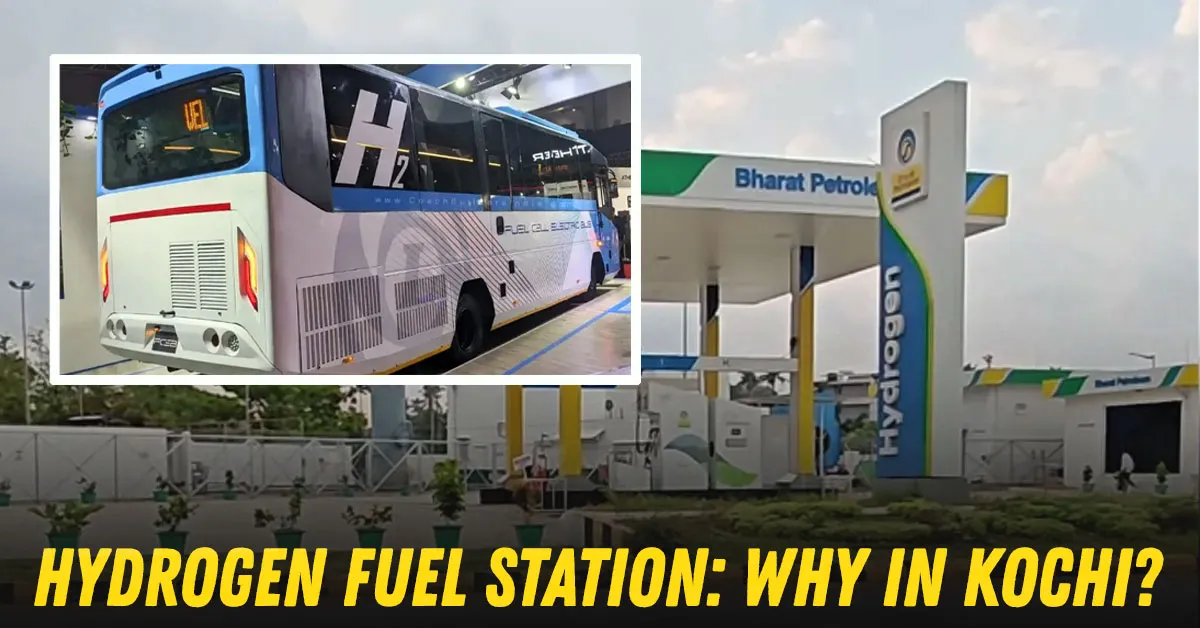

India is still in the early stages of adopting hydrogen as a fuel. Yet, Kochi, often regarded as the commercial and financial capital of Kerala, now has South India’s first green hydrogen refuelling station! Do you know why this city got this facility? It is not a random development, but is part of a broader push towards green mobility. It will fuel a bunch of airport buses and even the water metro in the future.
This green hydrogen fuel station is located near the Cochin International Airport (CIAL). CIAL is one of India’s most progressive airports and runs completely on solar power. This strong renewable energy ecosystem, in a way, paved the way for setting up a green hydrogen manufacturing facility there.
CIAL’s Green Hydrogen refuelling station and manufacturing facility have been set up through a collaboration with Bharat Petroleum Corporation Ltd (BPCL). The plant makes green Hydrogen through water electrolysis. In this method, water molecules are split into Hydrogen and Oxygen by passing electricity through it.
In this case, the electricity required for the process comes from the solar energy ecosystem set up at the airport. Water is also provided by CIAL. According to the partnership, BPCL will provide technology and operational management while CIAL will give the necessary land, water and energy resources. This plant has a daily production capacity of around 200 kilograms of Green Hydrogen using a 1,000 kW electrolyser.
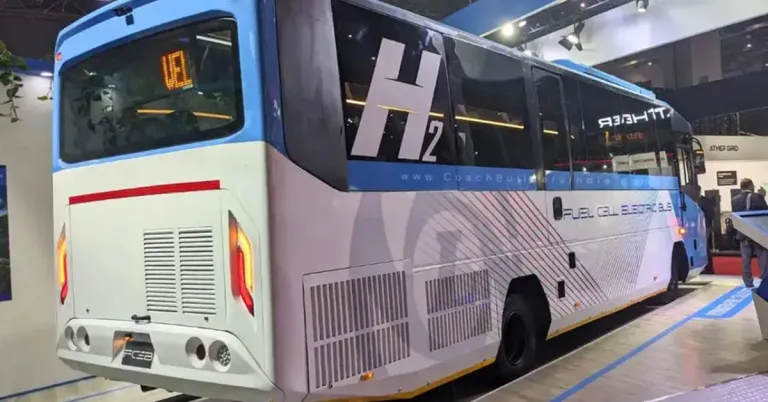
You too will have this question as India is very new to using hydrogen as a fuel and we rarely get to see Hydrogen-powered vehicles on our roads. Kochi’s green hydrogen plant is still a pilot project. The Cochin International Airport is eyeing to procure hydrogen-powered buses for use as airport shuttles. These will rely completely on the Hydrogen produced by this facility.
Once the procurement goes through, CIAL will become India’s first airport to use hydrogen-powered buses for shuttling services. Initially, three such buses will be procured, with a reported fund cap of Rs 2.90 crores per bus. The total cost of purchase would thus be around Rs 8.7 crores. These funds will be released in stages and the procurement process is expected to be completed within March 2027. CIAL will own and operate these buses. The shift to green hydrogen-based buses will reduce the pollution caused by these, significantly.
Hydrogen buses have complex powertrains. These use fuel cells to convert compressed Hydrogen into electrons and protons and then use this electricity to power the electric motors that drive the wheels. For those who are wondering, a fuel cell is an electrochemical device that converts chemical energy (Hydrogen in this case) directly into electrical energy. Inside it, the compressed hydrogen meets Oxygen and a chemical reaction is triggered with the help of catalysts like Platinum. This breaks Hydrogen molecules into protons and electrons. The protons then pass through a membrane and fuse with Oxygen to form water- the only exhaust emission!
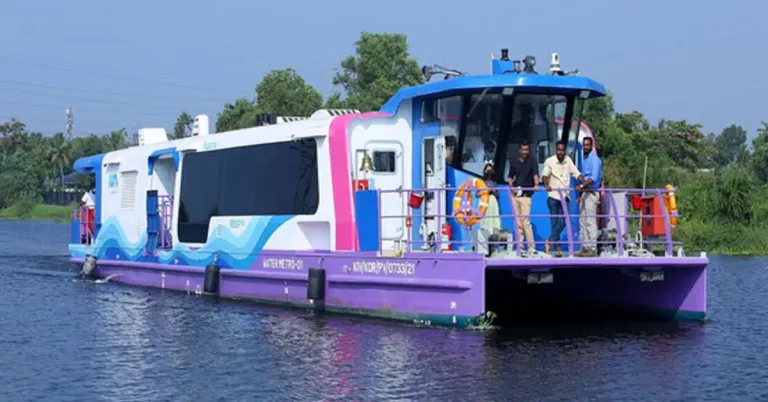
Kochi Water Metro is also planning to use CIAL’s Hydrogen in the not-so-distant future. It plans to induct into service, fast Electric-hydrogen hybrid vessels, which when realised, will connect Aluva to the airport. This will reduce the travel time in this route significantly, and will reduce environmental pollution as well. In the case of these vessels, the only by products will be heat and water vapour.
Cochin Shipyard Ltd (CSL) has already made what is claimed to be India’s first green hydrogen vessel which is now in service in Varanasi. CSL will build hydrogen-powered vessels for the Water Metro too.
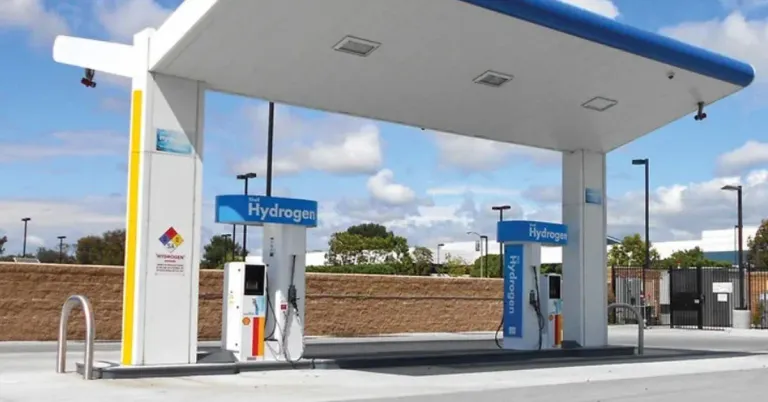
Kerala’s government and concerned authorities had previously taken a stand against hydrogen ferries due to the high operating cost involved and the difficulty in procuring the fuel. Now, with CIAL’s solar project and green hydrogen manufacturing facility operational, these hurdles have already been addressed.
As the country moves towards hydrogen fuel, India wants the production costs of green Hydrogen to come down to $1 per kilogram from $4.5 per kilogram. This is expected to be achieved by 2030. Our country will then become one of the cheapest manufacturers of green Hydrogen in the world. In the future, when more vehicles, particularly heavy vehicles and industrial machinery adopt hydrogen as their respective fuels, we will see the customer base of this plant and dispensing station grow in size.
Comments are closed.