
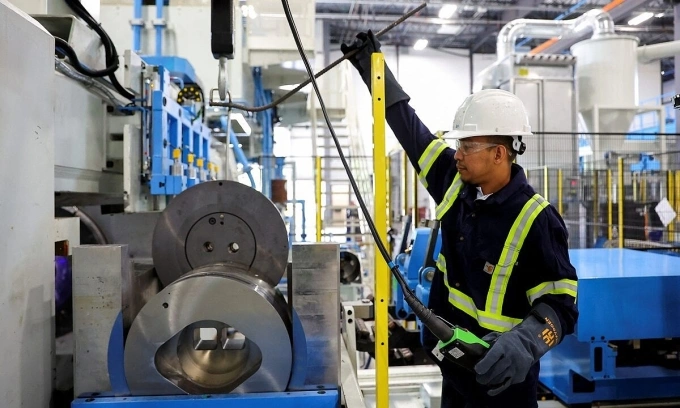

A worker places a dye into the saddle in preparation for aluminum extrusion at Magna Aluminum Profile in Salaberry de Valleyfield, Quebec, Canada, June 11, 2025. Photo by Reuters
Canada will accelerate permanent residency processing for 33,000 foreign workers to address labor shortages in small towns and remote rural communities.
The Immigration, Refugees and Citizenship Canada (IRCC) this week announced the In-Canada Workers Initiative, which aims to help up to 33,000 workers transition more quickly to permanent resident status before 2028.
According to IRCC, these workers are already supporting the labor and economic needs of smaller and rural communities.
The department will prioritize eligible applicants who currently hold work permits and have already submitted permanent residency applications.
Eligible candidates include people who have lived in rural areas or small remote towns in Canada for at least two years and have applied through one of several immigration pathways, including the Provincial Nominee Program (PNP), the Atlantic Immigration Program (AIP), community immigration pilots, caregiver programs, or agri-food programs.
Under the plan, IRCC aims to grant permanent residency to at least 20,000 people in 2026, with the remaining applications to be processed in 2027.
Canada’s immigration minister, Lena Metlege Diab, said the initiative is intended to support economic growth and ease labor shortages in key sectors across rural communities.
“By transitioning temporary residents who are already living and contributing to their communities to permanent residence, we’re providing the certainty and the stability needed to maintain and grow vibrant local economies,” she was quoted as saying in the IRCC statement.
The program is also expected to help reduce the immigration backlog, as Canada faces severe processing delays. In some cases, international students currently wait nearly 250 days on average to receive work permits.
Canada is currently one of the world’s top two study-abroad destinations alongside the United States. Nearly 700,000 new study permits were issued there last year, down 64% from the previous year and marking the lowest level in a decade.
Comments are closed.