
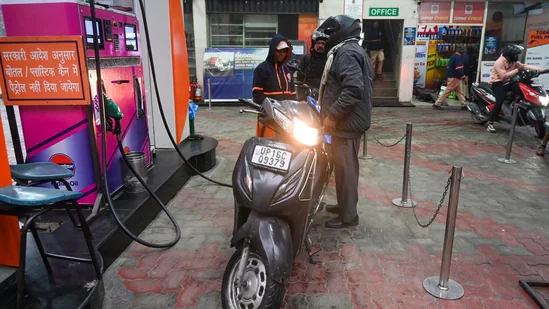
PM Modi urges carpooling and public transport over personal cars. Is India bracing for a fossil fuel shock?

India seems to be bracing for a fossil fuel shock amid the Middle East crisis. The appeal Prime Minister Narendra Modi made to the citizens of India, urging a spate of measures, including fuel conservation, has spiked speculation about a fossil fuel shock on the Indian economy. India, the world’s third-biggest oil importer and consumer, has been feeling the heat of the conflict in the Middle East. The central government said late last month there was no proposal to raise prices for petrol and diesel, leaving it among the countries yet to raise prices despite the global surge in crude oil prices. PM Modi’s appeal to the nation is a crisis management response to the current account deficit problem due to high crude prices.
Meanwhile, PTI has reported that to protect the Indian consumers from the global energy shock, the state-owned oil firms, namely the Indian Oil Corporation (IOC), Bharat Petroleum Corporation Ltd (BPCL) and Hindustan Petroleum Corporation Ltd (HPCL), may spend ₹1 lakh crore in 10 weeks. The three state-owned oil marketing companies (OMC) are reportedly to spend ₹1,600-1,700 crore a day for the next 10 weeks, to insulate Indian consumers from global energy shock and to shield the Indian economy. However, the ever-widening losses are now raising questions about how long the OMCs can continue bearing the cost without financially capitulating. This translates to how long the prices of petrol and diesel could remain unchanged.
State-owned OMCs spending ₹1 lakh crore for 10 weeks
Since the conflict started in the Middle East 10 weeks ago, state-owned OMCs have ensured uninterrupted supplies of petrol and diesel at rates that are way below cost, unlike many global energy systems that imposed rationing or passed through steep price increases. This has resulted in the three OMCs running record-high under-recoveries, the difference between cost and retail selling price.
PTI reported the combined under-recovery on fossil fuel, including petrol and diesel, is ₹1,600 crore to ₹1,700 crore daily, adding total under-recovery for the 10 weeks is now well over ₹1 lakh crore. Despite a 50% surge in crude oil prices, petrol and diesel continue to be priced at a two-year-old rate of ₹94.77 a litre and ₹87.67 per litre, respectively.
The revenues that OMCs earn from selling fuel are the only source that is used by them to buy crude oil, build infrastructure to process it into fuel and lay a network to take the product to consumers. For 10 weeks, the OMCs have managed to insulate the Indian market, but now the cost is visible, claimed the report.
If elevated crude prices persist for an extended period, OMCs may require higher working capital borrowings and calibrated reprioritisation of some capex timelines. However, strategic investments in refining expansion, energy security infrastructure, ethanol blending, biofuels, and transition fuels continue to remain national priorities and are expected to proceed with Government support.
The report cited another source saying that the OMCs are operating under significant financial pressure. “Financially strong OMCs are critical for India’s energy security, supply continuity, infrastructure expansion, and economic stability. Sustained stress on OMC balance sheets could affect future investments in refining, pipelines, strategic reserves, clean fuels, and energy transition initiatives,” the report quoted the source as saying.
Petrol, diesel price imminent?
As the OMCs are operating under significant financial pressure, the price hike for petrol and diesel is inevitable. The report stated that raising petrol and diesel prices is now a political call that the government will have to take. A source reportedly said that there is no doubt that a fuel price hike has become inevitable, but the timing and quantum of increase have to be decided by the government.
While countries from Japan to the UK have raised petrol and diesel prices by up to 30% since the start of the Middle East conflict, fuel prices in India continue at two-year-old levels. This, despite the crisis, has disrupted India’s import of 40% of crude oil.
While the three OMCs have worked overtime to keep the supply lines running even when demand spiked due to panic buying, the government intervention included excise duty reductions to absorb part of the fuel cost burden. The special additional excise duty on petrol was cut to ₹3 per litre from ₹13, while excise duty on diesel was reduced to zero from ₹10 per litre. The government has reportedly taken a hit of ₹14,000 crore a month in cutting the excise duty.

Comments are closed.