

Vu Hoang Son, executive committee member of the Vietnam Recreational and Electronic Sports Association (VIRESA), said at the “Esports Business Connect: A Launchpad for Vietnam’s Esports” session on May 9 that Vietnam’s esports industry benefits from a large gaming community and rapid technology adoption.
According to Son, Vietnam has more than 28 million gamers and over 10 million regular esports viewers. Vietnamese teams have also achieved strong international results, helping raise the profile of the country’s esports scene in the region. However, he noted that the size of the audience has not yet translated into equivalent economic value.
Vu Hoang Son, Executive Committee Member of the Vietnam Recreational and Electronic Sports Association, speaks at Vietnam GameVerse 2026. Photo courtesy of Vietnam GameVerse 2026 |
Son said many domestic esports tournaments still operate mainly at the grassroots level, while most revenue remains concentrated within international value chains.
“We may be doing the right thing in terms of movement-building, but not yet doing it right in terms of business,” he said.
According to Son, the industry needs to move beyond viewing esports simply as gaming and instead recognize it as a broader ecosystem combining gaming, content, and esports entertainment.
He said the industry should gradually shift its focus from local development toward regional and global markets through technology platforms and strategic partnerships.
Son identified four key areas requiring parallel development: professional tournament systems and rankings, human resources and community building, media content, and intellectual property (IP) development.
He added that esports content extends beyond competitions themselves and includes player stories, community engagement, and cultural identity. Strong IP ownership, he said, would help esports evolve into a broader cultural and commercial product.
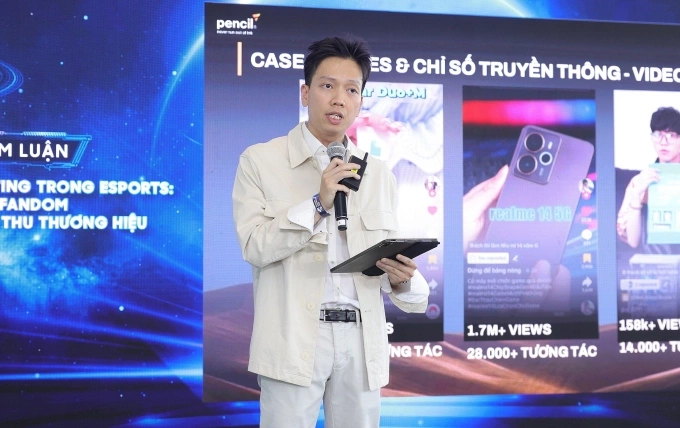 |
Ho Le Tuan, esports expert at Pencel Group and Saigon Phantom, discusses team operations and the commercialization of fan communities. Photo courtesy of Vietnam GameVerse 2026 |
The discussion also focused on the challenge of operating professional teams and commercializing fan communities.
Ho Le Tuan, esports expert at Pencel Group and Saigon Phantom, said Vietnam’s esports audience remains large, but revenue efficiency is still relatively low. According to him, average revenue per viewer in Vietnam is about US$0.06, significantly below the global average.
Tuan said esports organizations need to move away from a tournament-centered model and instead focus on building long-term community culture.
“Cultural marketing, turning fans into customers, is the strategy Pencel Group has chosen to build a sustainable esports ecosystem,” he said.
According to Tuan, organizations should invest more heavily in culture, emotional connection, and community identity rather than focusing only on direct product promotion.
He identified identity, community, and commerce as the three core pillars of sustainable esports development. Teams, he said, need clear identities, regular fan engagement, and diversified revenue streams through merchandise, fashion products, and exclusive content.
Tuan described Vietnam’s esports industry as entering a phase of “professionalization and commercialization,” requiring closer cooperation between teams, businesses, and communities to build long-term value.
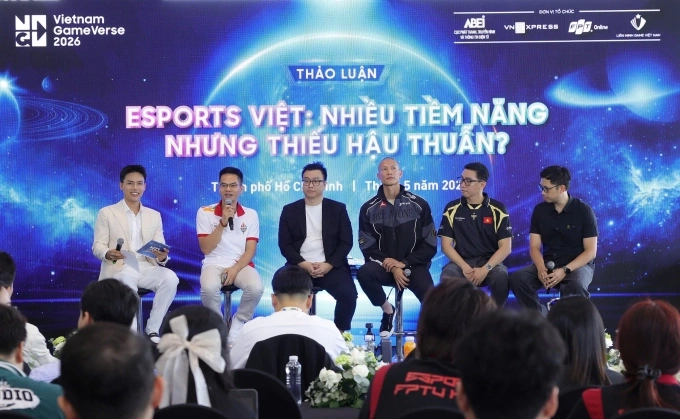 |
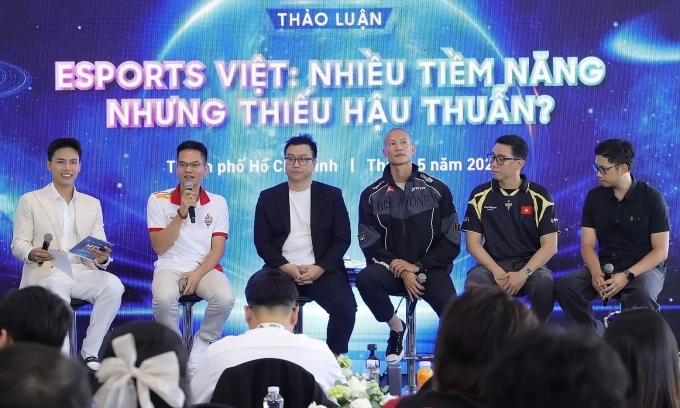
Guests join the panel discussion “Vietnamese Esports: Great Potential but Limited Support” at Vietnam GameVerse 2026. Photo courtesy of Vietnam GameVerse 2026 |
A later panel discussion titled “Vietnamese Esports: Great Potential but Limited Support” examined broader structural challenges facing the industry.
Do Viet Hung, chairman of VIRESA, said the biggest challenge is not a lack of potential but weak connectivity across different parts of the esports ecosystem.
According to Hung, many countries with more developed esports industries previously faced similar issues, but industry events and forums are helping Vietnam gradually address these gaps.
The discussion also addressed the difficulties of operating professional teams.
TK Nguyen, CEO of GAM Entertainment, said sponsorships and tournament prize money remain important revenue sources, but teams cannot rely on them alone in the long term.
“If you do not own any IP, how can you have the foundation and community to grow?” he said.
From the perspective of tournament organizers, Vu Quoc Hoan, founder of 500BROS, said Vietnam’s esports industry still lacks business professionals who understand both the market and the industry’s unique characteristics.
According to Hoan, sustainable esports development requires three interconnected layers: amateur players, professional competition systems, and influential star players. He said Vietnam still lacks smooth transitions between these levels.
Dang Thai Duong, director of DGaming Media, added that the industry should invest more heavily in community and semi-professional tournaments, which could serve as a bridge helping young players view esports as a viable career path.
 |
Do Viet Hung, Chairman of the Vietnam Recreational and Electronic Sports Association, shares insights during the panel discussion. Photo courtesy of Vietnam GameVerse 2026 |
From the sponsor perspective, Nguyen Hong Phuc, marketing manager at Monster Energy Vietnam, said businesses are interested in esports not only because of high viewership but also because of its ability to build communities and strengthen brand loyalty.
According to Phuc, many sponsorship proposals still focus heavily on viewership and impression metrics without clearly demonstrating how those figures translate into revenue or long-term commercial value.
“We need a language that connects the story of views to revenue,” he said.
Speakers also highlighted the growing importance of offline experiences in esports development.
Vu Quoc Hoan said esports is increasingly evolving beyond livestreams and social media into broader entertainment festivals combining gaming, music, fashion, and community culture.
According to participants, Vietnam’s esports industry does not lack players, audiences, or passion. However, the sector still needs stronger ecosystem connectivity, clearer commercial models, sustainable IP development, and long-term value creation for teams, businesses, and fan communities.
Comments are closed.