

Muhammad Faizan
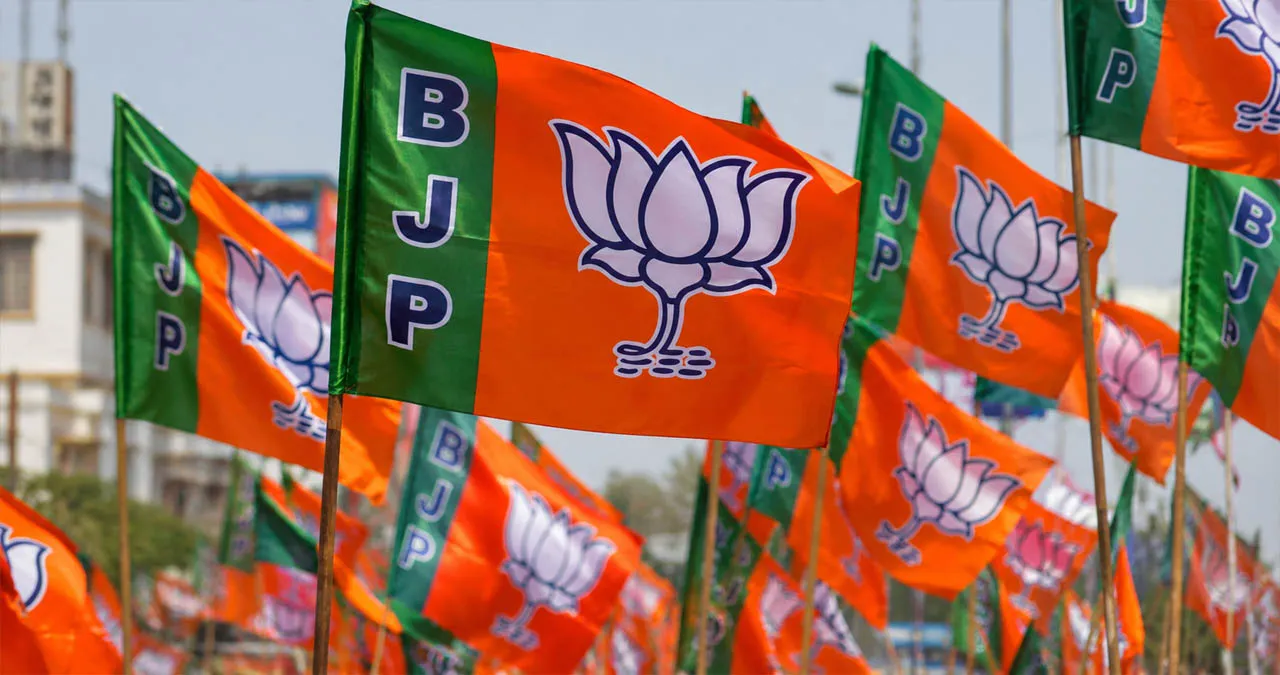
There are many such seats in the politics of Western Uttar Pradesh which surprise even the biggest political analysts. One of these very interesting seats is Thakurdwara assembly of Moradabad district. The electoral history of this seat is witness to the fact that merely increasing one’s vote bank does not guarantee victory. If we look at the figures of the last two decades, Thakurdwara Assembly Seat has become such a puzzle for BJP, where the party became organizationally strong, its vote percentage also increased in many elections, but despite this it could not establish itself here permanently.
In fact, the political mood of Thakurdwara has been changing with every election. The social equations on the ground change so rapidly that the mathematics of the giants fails. According to local people, BJP’s victory or defeat here does not depend on how many votes it gets, but on how many parts the opposition’s votes are divided or consolidated.
Thakurdwara Assembly Seat BJP: As long as the opposition remained scattered, the lotus bloomed
If we look at the 2002 assembly elections, BJP’s Kunwar Sarvesh Kumar had registered a landslide victory by securing 45.74% votes. Then Mohammad Ullah of Congress stood second with 44.04% votes. The contest was very tough, but BJP was successful in getting the seat. The main reason for this was that at that time Samajwadi Party (SP) and BSP were in a very weak position. BSP got only 4.28% votes and SP got 3.29% votes. That means the opposition was completely scattered and BJP got the direct benefit from it.
However, in the year 2007, Mayawati’s social engineering changed the whole game. Then BSP’s Vijay Kumar alias Vijay Yadav surprised everyone by getting 37.02% votes, while BJP slipped to 31.62%.
The same story was repeated again in 2012 when BJP’s Kunwar Sarvesh Kumar returned with 38.39% votes. In this election too, the fragmentation of the opposition was a bigger reason behind the BJP’s victory than its own strength. Actually, at that time Mahan Dal got 21.14% votes, Congress’s Nawab Jaan got 21.12% votes and BSP got about 12% votes, while SP was limited to only 2.56% votes. The lotus blossomed easily as Muslim and non-BJP votes were divided into many parts.
2014 by-elections and strengthening of SP’s siege
The real change in the politics of Thakurdwara started with the by-election of 2014, which is considered to be the biggest turning point here. In this election, SP’s Nawab Jaan defeated Rajpal Chauhan of BJP by securing 47.82% votes. BJP got 36.19% votes in this election, which was not bad, but the unity of the opposition changed the game. In the same election, Congress, which was once at 21%, came down to only 7.48%.
From here, a large part of Muslim voters left Congress and BSP and shifted directly to Samajwadi Party. After this, this hold became stronger in the elections of 2017 and 2022. In the 2022 elections, BJP performed brilliantly and increased its vote share to 41.62%, which was an excellent sign for the party. But despite this, BJP lost, because SP’s Nawab Jaan secured 48.76% votes. In this election, Owaisi’s AIMIM was not in the fray and BSP had also become weak, as a result of which the anti-BJP votes were completely polarized one-sided.
Ticket race and the path to 2027
It is being told that the stir between the two camps has already intensified regarding the upcoming 2027 elections. At present, neither SP nor BJP has finalized the tickets, but there is a long list of people seeking tickets from both the parties. There is discussion at the local level that more than half a dozen leaders from both the parties are staking their claim.
In such a situation, only the selection of the candidate will decide the future of this seat. If BJP gambles on a face whose acceptability is limited only to a particular section, then it may have to suffer huge losses. At the same time, SP will also face the challenge of bringing out the face of its strong Muslim-Yadav equation as well as uniting other sections. In seats like Thakurdwara, the personal network and fraternity equation of the candidate has more impact than the party symbol. Therefore, the war of 2027 will not depend only between parties, but on the selection of the right candidate.
In the grand contest of 2027, Thakurdwara is once again going to become the hot seat of entire Uttar Pradesh. The challenge for the BJP is clear—if it wants to flourish here, it will not be enough to merely increase its vote percentage, it will also have to make a dent in the opposition’s core vote bank and forge new social alliances. At the same time, SP will have a tough challenge to maintain its strong fort.

Comments are closed.