
Microsoft loses senior scientist Li Hongzhi to China’s Tongji University amid 89% drop in AI talent to US

Li, who spent more than 10 years at Microsoft Research in positions including head of Microsoft AI Asia’s generative AI group, recently returned to China and has joined the newly established Institute of AI for Engineering at Tongji.
According to public records, Li received his bachelor’s degree in computer science from Zhejiang University before earning a master’s and PhD from Columbia University, where he was part of a five-person team that won the Grand Challenge 1st Place Award at ACM Multimedia 2013 in Barcelona.
The team, led by Brendan Jou and including Joseph G. Ellis, Daniel Morozoff-Abegauz and Columbia professor Shih-Fu Chang, was recognized for a paper on structured exploration of heterogeneous multimedia news sources.
After his PhD, Li joined Microsoft Research’s U.S. headquarters in Redmond, Washington, where he held positions including principal researcher, principal architect and principal applied science manager, the South China Morning Post reported. His research focused on machine intelligence, multimodal content analysis and cloud computing.
He was one of seven co-authors of “Rethinking Classification and Localization for Object Detection,” a paper presented at the IEEE/CVF Conference on Computer Vision and Pattern Recognition in June 2020 and led by Northeastern University’s Yue Wu. The paper proposed a “double-head” neural network architecture for separating the distinct requirements of object classification and localization, and has become a widely cited reference in computer vision.
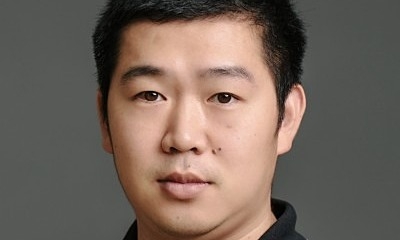
AI scientist Li Hongzhi. Photo courtesy of his Linkedin account |
Li’s departure comes as Stanford University’s 2026 AI Index documents a “precipitous” decline in AI scholar migration to the U.S. since 2017 and a sharp narrowing of the U.S.-China AI performance gap.
Stanford’s Institute for Human-Centered Artificial Intelligence, in its 2026 AI Index released in April, found that the number of AI scholars moving to the U.S. has fallen 89% since 2017, with 80% of that decline occurring in the past year alone.
Over the same period, the performance gap between the leading American and Chinese AI models has collapsed to 2.7%, down from 31.6% in May 2023, according to the report.
At Tongji, Li’s boss is Hua Xiansheng, executive dean of the Institute of AI for Engineering.
Hua’s career arc traces a similar path. He spent about 14 years at Microsoft, including stints at Microsoft Research Asia from 2001, Microsoft’s Bing search engineering organization, and Microsoft Research in the U.S., before joining Alibaba Group in 2015. At Alibaba he served as a group vice president and head of DAMO Academy’s City Brain Lab, according to Tongji’s official faculty page and his OpenReview career history. He moved to Chinese AI infrastructure firm Terminus Group as chief technology officer in 2022 and took up the Tongji role in 2025.
Tongji’s Institute of AI for Engineering is a newly established research body in Shanghai, focused on what it calls “AI for Engineering,” or adapting foundation models and intelligent agents for engineering applications. The institute has been actively recruiting overseas Chinese researchers.
Comments are closed.