
Maharashtra Proposed Devasthan Inam Abolition Act Sparks Controversy Temple Organizations Submit Memorandum To Chief Minister

The controversy is deepening across the state regarding the “Maharashtra Devasthan Inam Abolition (Draft) Act, 2026” proposed by the Maharashtra government. Many Hindu temple organizations, especially the Maharashtra Temple Federation, have launched a sharp protest against this draft law. The organization alleges that this law could open the way for the historical and religious properties of temples to go into the hands of tenants, occupiers and private individuals.
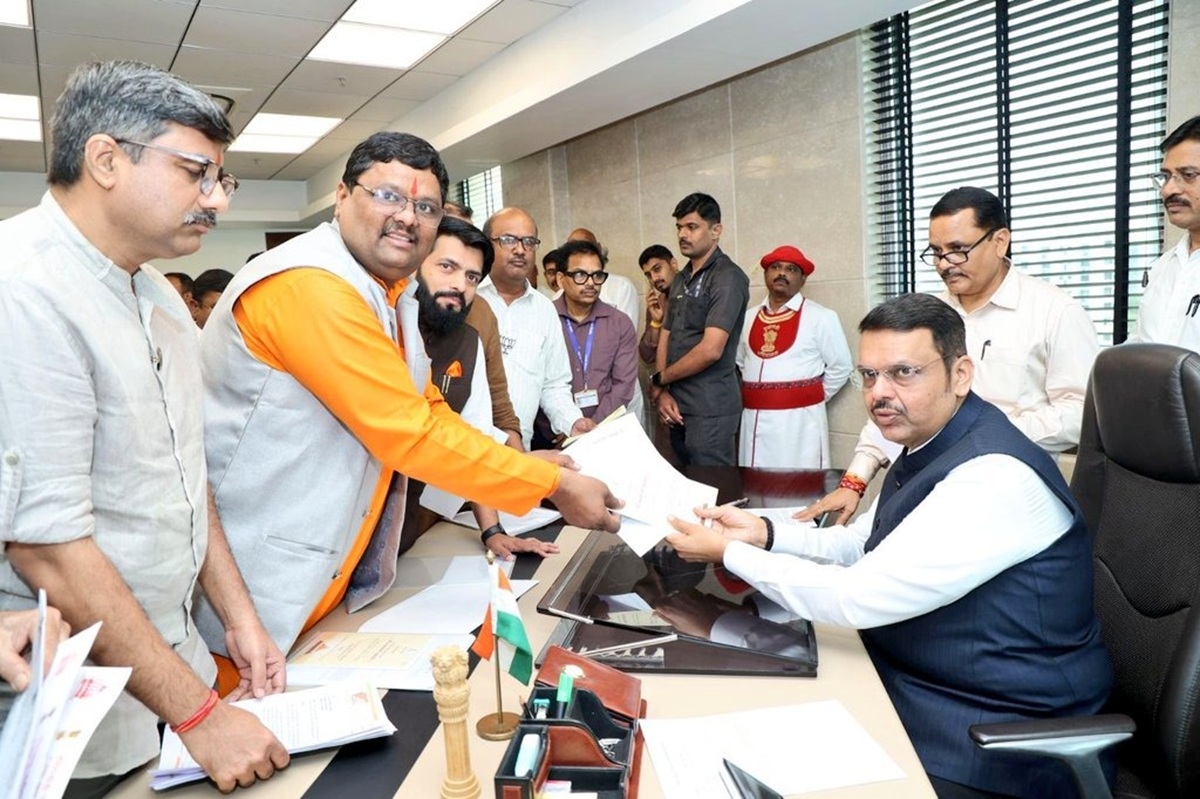
Maharashtra Temple Federation has warned that if the government implements this law in its present form, a state-wide agitation will be started. On this issue, the federation’s delegation met Maharashtra Chief Minister Devendra Fadnavis and submitted a memorandum. The delegation was led by the national convenor of the federation, Sunil Ghanwat. MLAs Pratap Adsad and Pratap Pachpute were also present with him.
The proposed ‘Maharashtra Devasthan Inam Abolition Draft Act 2026’ poses a major difficulty for temple lands and their management. Millions of temple trustees across the state are strongly opposing this law.
In this regard, a memorandum was submitted to the Hon. Chief Minister… pic.twitter.com/eQl42s2t0m
— Sunil Ghanwat 🛕🛕 (@SG_HJS) May 15, 2026
What is Devasthan Inam Bhoomi?
Devasthan Inam lands are lands that were historically given as donations or grants by former rulers to temples, religious institutions and charitable institutions. Many of these lands were tax-free or had special revenue exemptions. According to the draft law, this includes villages, village tracts, land revenue rights and tax-exempt lands.
However, the proposed law excludes lands covered under the Hyderabad Abolition of Rewards and Cash Grants Act 1954, the Hyderabad Extravagance Inquiry Act 1952 and the Waqf Act 1995. The issue of exemption of Waqf properties has now become the biggest political and religious center of this entire controversy.
What is the objection of temple organizations?
Maharashtra Temple Federation says that the property of temples legally belongs to the deity and neither the trustee nor the state government can transfer it to anyone else. The organization claims that in many decisions of the Supreme Court and High Court, temples have been considered as a juridical entity, whose property rights are protected.
Sunil Ghanwat raised three major objections regarding the law. First, he says that the Maharashtra government itself is not the owner of the Devasthan land, hence it should not have the right to make a law for the transfer of temple property. Second, he said that the lands of many temples are centuries old and may have been donated by Chhatrapati Shivaji Maharaj, the ruler of the Hindu Empire, and other Hindu dynasties. According to him, this law could hand historical religious properties into the hands of private individuals.
The third and most serious objection has been raised regarding keeping Waqf properties out of the law. The federation says that while there are preparations to reorganize and transfer the lands of Hindu temples, Waqf properties have been given special protection. The organization has called this unequal treatment.
Under Section 3 of the proposed law, there is a provision to abolish Devasthan inams and the traditional rights associated with them. At the same time, in Section 4, it has been said to give “Occupant Class-I” rights to authorized holders, Mirasdars, tenants and other farmers, through which they can get rights like ownership rights.
The law also provides for reallocation of land to “unauthorized holders” who were in possession before January 1, 2011, under certain conditions. Critics say this could legalize old encroachments.
However, strict provisions against illegal encroachments have also been added to the law. Sections 7 and 8 consider illegal possession as a crime and there is a provision for imprisonment of two to five years and fine up to the market value of the land. Along with this, it has also been said to give the Collector the right of immediate eviction.
constitutional rights issue
Maharashtra Temple Federation says that this draft law violates Article 25 (religious freedom), Article 26 (right to manage religious institutions) and Article 300A (right to property) of the Constitution.
The organization argues that the income of the temples supports worship, religious festivals, salaries of priests, social work and temple administration. If land ownership weakens, temples will be financially affected.
The federation has demanded the government to immediately withdraw the draft law, declare Devasthan land non-transferable, enact strict anti-land grabbing laws for temple lands, conduct SIT investigation into old encroachments and create a fast track court to settle disputes within six months.
At present this draft law has been released for public suggestions and objections. The state government has sought suggestions from citizens and concerned parties till June 5, 2026. In the coming time, the government can amend the law, postpone it or introduce it in the Assembly. But due to the sharp opposition of temple organizations and Waqf comparison, this issue seems to be becoming a big religious and political controversy in the politics of Maharashtra.
Also read:
Can chapters related to Singur and Nandigram movements be removed from the curriculum of Bengal?
Protest against open slaughter of animals in residential areas
Heated dispute between judge and lawyers in Rohini court, video goes viral
Large consignment of ‘jihadi drug’ Captagon seized for the first time in India

Comments are closed.