
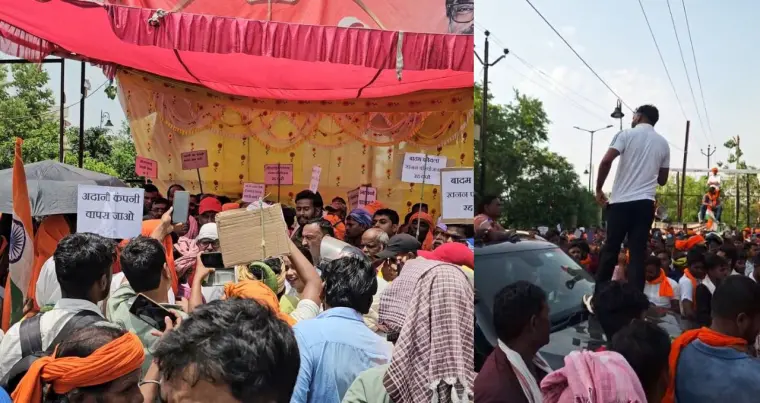
Hazaribagh Badkagaon Demonstration of villagers against coal mining and demand against land acquisition

Badkagaon area of Hazaribagh district witnessed a massive protest against the coal mining projects on Friday, in which thousands of displaced villagers surrounded the District Collectorate (Collection Office) and protested against the land acquisition and allotment of new coal blocks. During the demonstration, the villagers demanded to save their fertile land and warned of intensifying the agitation until the process of forcible land acquisition is stopped.
During the demonstration, a large number of women along with men participated. The women raised the demand to save their multilateral and fertile agricultural land with traditional weapons and placards.
The main protest of the protesters is regarding the allocation of new coal blocks in Badkagaon East area. The villagers said that they will not hand over their multi-faceted and fertile agricultural land to private companies under any circumstances.
According to the information, coal blocks in this area have been allotted to many big companies, which include Adani Group, JSW Group and LMDV. The villagers alleged that these projects would have a serious impact on their livelihood, agriculture and environment.
Thousands of villagers reached the district headquarters and surrounded the Collectorate premises. A large number of women were present in the crowd and played an active role in the protest. The women raised slogans against the administration and said that they would not hand over their land to the coal companies at any cost. Many protesters were carrying placards in their hands and registering a peaceful but firm protest.
Local representatives leading the movement warned that if the administration and companies continue the process of forceful land acquisition, the movement may take a more violent form. The villagers said that Badkagaon West area has already suffered massive displacement and environmental damage due to mining activities and now they are not going to let the Eastern area go into the same situation.
The protesters said that the land planned to be acquired for coal mining is a highly fertile and multi-culture agricultural area, where farmers cultivate various crops including paddy, wheat, pulses, sugarcane (for producing gourd) and green vegetables throughout the year. According to the villagers, this agricultural system is the main basis of livelihood of thousands of families and mining projects can deprive them of both land, employment and food security.
A large participation of women was recorded during this demonstration. Rural women stood at the main gate of the Collectorate and said that they can go to any extent to protect their land and future. They alleged that the mining projects would have a serious impact on their traditional life, agriculture and social structure.
The villagers also expressed concern about the environmental damage caused by coal mining. According to him, large-scale mining will affect soil fertility, affect water sources, increase air and noise pollution and harm biodiversity. Local people claimed that this project could affect the environmental balance of the area.
During the protest, the villagers submitted a detailed demand letter to the district administration, in which it was demanded to stop the land acquisition process immediately and not to proceed with any mining activity without the consent of the local people.
The protesters warned that if their demands were ignored, the agitation could take a more widespread form at the state level.
After the big demonstration, the district administration and police system have become alert. The administration is monitoring the situation and has expressed the possibility of deploying additional security forces in the area to maintain law and order. Officials said that efforts will be made to find a solution through discussion with all parties so that the situation can remain under control.
Coal mining projects in Jharkhand have long been a topic of discussion regarding development and displacement. On the one hand, they are considered necessary for energy and industrial development, while on the other hand, local communities view them as a threat to land, culture and life. This movement in Hazaribagh is believed to be seen in the perspective of this wider dispute.

Comments are closed.