
US-Iran Talks Advance Toward Framework on Strait of Hormuz Reopening and Military De-escalation

Senior United States officials have indicated that the United States and Iran are nearing a principled agreement aimed at reducing longstanding tensions, gradually ending military confrontation, and reopening the strategically significant Strait of Hormuz.
According to senior US officials, both sides have moved closer to a framework under which the Strait of Hormuz would be fully reopened and measures would be introduced to reduce bilateral tensions through phased military de-escalation. The proposed framework also includes provisions related to Iran’s enriched uranium stockpile and the implementation of nuclear material-related arrangements under international monitoring.
Officials said discussions remain ongoing regarding the management and possible transfer of enriched uranium stockpiles at both technical and political levels. The US side has sought arrangements under which such material would remain under American control or international oversight.
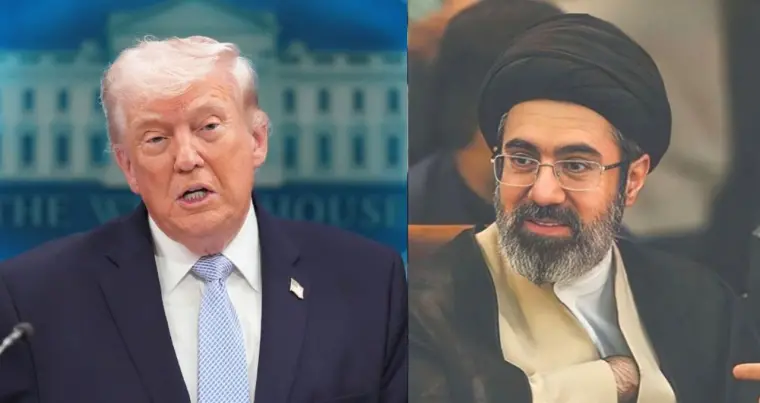
US officials stated that no agreement has yet been signed and that formal approval remains necessary before implementation. Final authorization would require approval from the President of the United States and Iran’s Supreme Leader. Officials indicated that the process could take several days or longer as internal political consultations continue in both countries.
The US President said publicly that no decision would be made in haste and that all aspects of the matter would undergo detailed review before further action is taken.
Under the proposed arrangement, Iran would agree to remove any blockade or restriction affecting the Strait of Hormuz, while international shipping and energy supply routes would be stabilized. Efforts would also be made to reduce volatility in global oil markets.
Iranian authorities have indicated that any major strategic decision requires the approval of the country’s Supreme Leader. According to recent remarks by Iran’s President, decisions related to national security are taken by the highest leadership, while final authority over foreign policy remains centralized. Iranian officials have also described discussions with the United States as remaining at an early and sensitive stage.
Iran has also sent a formal message to the United States through Oman, indicating that mediation efforts continue to play a role in ongoing diplomatic engagement.
Israeli officials have expressed concern regarding the potential agreement. According to one Israeli official, implementation of such an arrangement could provide Iran with increased strategic leverage at a regional level. Israeli concerns include the possibility that Iran could strengthen its geopolitical position, use the Strait of Hormuz as a future source of pressure, and affect regional power balances.
Political debate over the issue has also intensified in the United States. Democratic lawmakers have raised questions regarding wartime strategy and outcomes. One senior US lawmaker said ending the conflict would represent a positive development but added that previous strategic decisions should not be overlooked.
The lawmaker further stated that the conflict caused substantial humanitarian and economic losses, that the United States did not fully achieve its stated objectives, and that Iran’s military and political position remained ber than expected.
International political experts have said the conflict extends beyond a regional issue and has implications for global energy security. According to analysts, tensions in West Asia affected global oil markets, contributed to continued energy price volatility, and directly affected the economies of multiple countries.
Some experts also said the conflict was prolonged due to strategic miscalculations and contributed to a worsening global energy crisis.
No final agreement has been announced, though the level of diplomatic engagement between both sides has been cited as an indication of progress toward reducing tensions. Officials and observers have indicated that the agreement could ultimately be approved and implemented, negotiations could continue with revised conditions, or political disagreements could slow or disrupt the process.
Comments are closed.