


Skoda and Volkswagen recently launched the updated or facelifted versions of the Skoda Kushaq and Volkswagen Taigun in the Indian market. Both these SUVs are quite popular in the mid-size SUV segment, and with the update, these SUVs now get revised designs and more features.
After the SUVs, it is now the sedans’ turn to get an update. Both the Skoda Slavia and Volkswagen Virtus are being tested, and the launch is expected to happen in the coming months. Based on the images and videos that have surfaced online, here is what we know about these sedans so far.
Both the Skoda Slavia and Volkswagen Virtus are based on the same platform as the Kushaq and Taigun. Both the Slavia and the Virtus are expected to come with several cosmetic changes as part of the update.
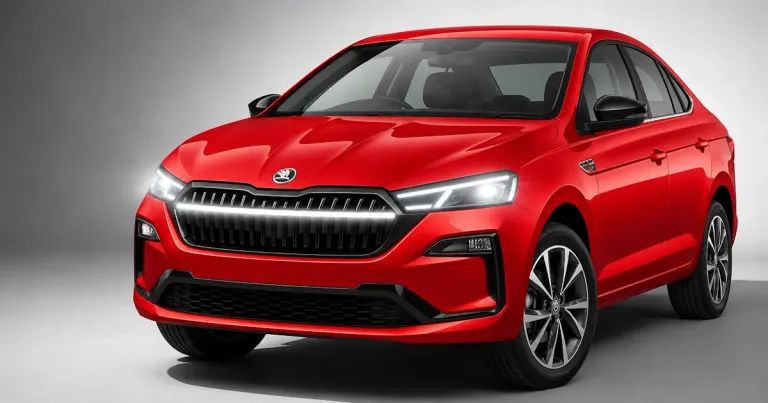
Both sedans will come with revised front grilles and updated headlamps. The Skoda Slavia sedan might come with connected LED DRLs. Volkswagen might offer a similar treatment along with an illuminated logo.

The side profile of the Slavia and the Virtus is going to remain the same as the current version. The only noticeable change here would be the alloy wheels. Both sedans are expected to come with revised alloy-wheel designs. As we move to the rear, both the Slavia and Virtus will get revised bumpers and tail lamps. We also expect to see a connected LED bar treatment here as well.

In terms of features, both the Slavia and Virtus will come with a larger driver display, leatherette upholstery, automatic climate control, an electric sunroof, seat ventilation, rear AC vents, a touchscreen infotainment system, automatic headlamps, automatic wipers, and more. It is possible that Skoda might offer a rear-seat massager function on the Slavia, while the Virtus might miss out on the same. Both sedans are still expected to miss out on ADAS features and would instead come with a host of safety features, including six airbags, ABS, and EBD as standard.
The Slavia and Virtus will be offered with a 1.0-litre, three-cylinder, turbocharged petrol engine that generates 115 Ps and 178 Nm of torque. This engine is available with a 6-speed manual and a 6-speed automatic transmission. The 1.5-litre TSI engine generates 150 Ps and 250 Nm of torque and is available with a 7-speed DSG gearbox.

Just like in the case of the SUVs, Skoda is expected to offer a heavily feature-loaded base variant. If that is the case, the Skoda Slavia will come with alloy wheels, cruise control, automatic headlamps, auto-dimming IRVMs, electric ORVMs, automatic climate control, and more. Not just that, Skoda may also offer the automatic transmission as an option with the base variant.
However, Volkswagen may take a different route. They may not offer as many features as the Slavia in the base variant, and there is also a possibility that the sedan could be launched at a slightly higher price.

When it comes to pricing, Skoda and Volkswagen are likely to be a lot more aggressive. The current prices for the Slavia start at Rs 10 lakh, ex-showroom, while the Virtus starts at Rs 10.50 lakh, ex-showroom. Their rivals, the Hyundai Verna and the recently launched Honda City facelift, are available at Rs 10.98 lakh, ex-showroom, and Rs 12 lakh, ex-showroom, respectively.
Both the Virtus and Slavia are likely to undercut their rivals in terms of price. With all these changes and feature additions, prices for the Slavia and Virtus may go up slightly, but they are still expected to stay below their rivals. Launch for both these sedans are expected to happen in the coming months.
Comments are closed.