
Trump lays out US-Iran deal terms: Hormuz to open, ‘nuclear dust’ to be destroyed, US blockade to be lifted

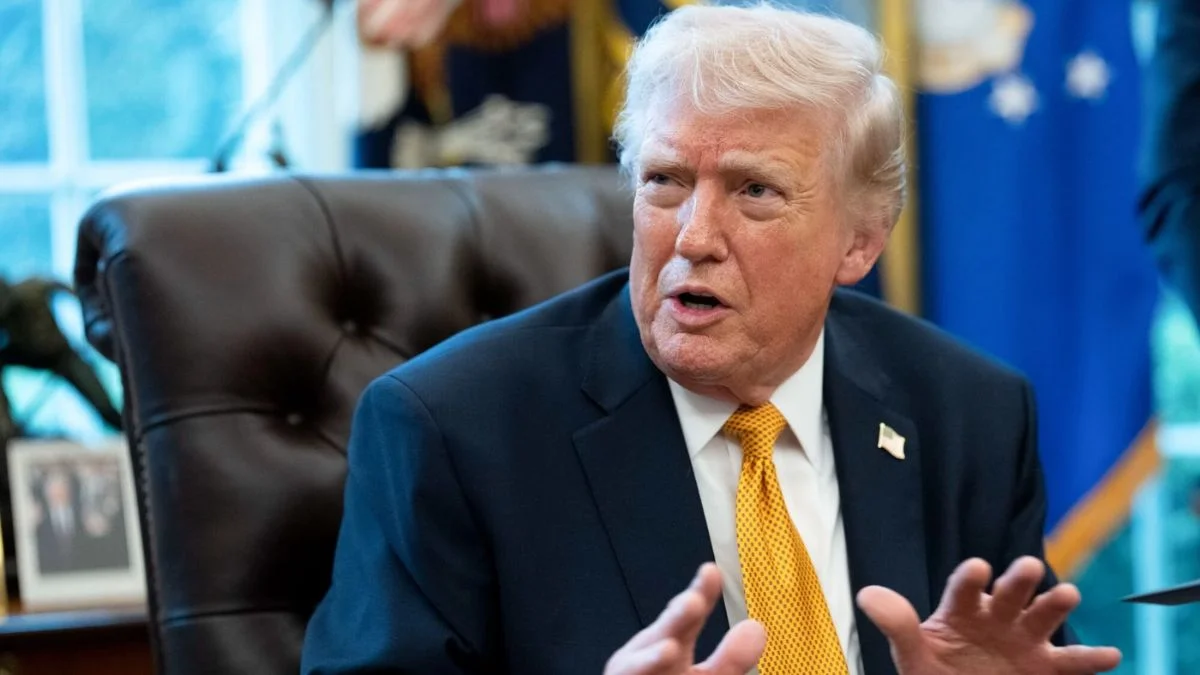
US President Donald Trump has laid out the terms of a tentative US-Iran agreement, with the deal still awaiting his final approval after a meeting in the White House Situation Room.
In a statement posted on Truth Social, Trump said Iran must agree that “they will never have a Nuclear Weapon or Bomb”, and that the Strait of Hormuz must be opened immediately, with no tolls, for unrestricted shipping traffic in both directions. He said Iran would have to complete the removal or detonation of any remaining sea mines in the strait, and that the US naval blockade — in place since April 13, 2026 — would be lifted. “No money will be exchanged, until further notice,” he wrote, signalling that financial relief for Iran was not yet on the table. Trump said he would meet in the Situation Room to “make a final determination” on the deal.
The tentative memorandum of understanding (MoU) between Tehran and Washington would lift parallel blockades on the Strait of Hormuz, allow free navigation by all vessels, and start a 60-day negotiation period to address Iran’s nuclear programme — including the fate of its stockpile of highly enriched uranium. The most difficult issues related to Iran’s nuclear programme are still to be worked out as part of those talks.
Trump’s key principle in the draft, according to a US official familiar with the negotiations, is “relief for performance” — the faster Iran clears the mines and lets shipping resume, the faster the blockade will be lifted, with sanctions waivers to allow Iran to sell oil freely following tangible concessions. The MoU also includes an Iranian commitment not to pursue a nuclear weapon, with the first issues to be negotiated within the 60-day window being the disposal of Iran’s highly enriched uranium and how to address Iranian enrichment.
Trump’s reference to Iran’s enriched uranium as “nuclear dust” — material he described as “buried deep underground with virtually collapsed mountains” — relates to the US B-2 bomber strike on Iranian nuclear facilities on June 21, 2025, about 11 months ago. He said the material would be “unearthed by the United States… in close coordination and conjunction with the Islamic Republic of Iran, plus the International Atomic Energy Agency, and DESTROYED”. Trump claimed the United States and China are the only countries with the “mechanical capability” of doing so, a characterisation that has not been independently verified.
The deal, however, is not yet final. Iran’s semi-official Tasnim News Agency, citing sources close to the negotiating team, has reported that the text of the agreement “has not yet been finalized or made definitive”, and that Iran has not yet informed the Pakistani mediator that the text is finalised. US sources have also cautioned that any advances in the talks could be upended quickly if Trump decides to withhold his approval, with the president under pressure from members of his own party and from Israeli Prime Minister Benjamin Netanyahu to reject a deal seen as easing pressure on Iran.
The US imposed its naval blockade on Iran on April 13, 2026, after the Islamabad Talks failed to produce a deal. The 2026 Iran war began in late February 2026 with joint US-Israeli strikes. The Strait of Hormuz, through which about a fifth of the world’s oil and gas passes during peacetime, has been effectively closed for much of the period, putting sustained upward pressure on global oil prices.
Trump’s earlier statements during the negotiations have at times signalled progress only to be followed by escalation, including a recent threat to strike Iranian power plants. A formal announcement, if the deal holds, is expected to follow the Situation Room meeting.

Comments are closed.