
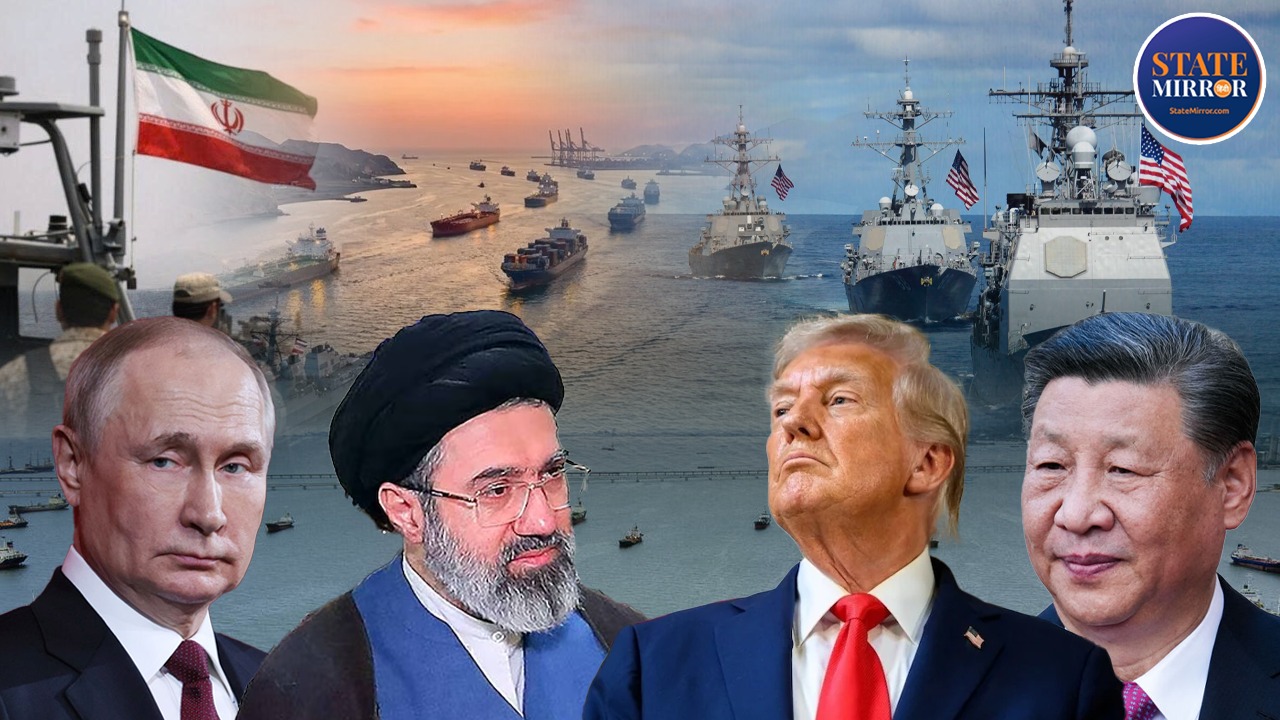
Trump trapped in China-Russia trap? Iran rejected secret deal, now what is America’s last option?

The diplomatic stir that has been going on in the Middle East since February 2026 has now reached a new turning point. US President Donald Trump Iran publicly threw cold water on the agreement which it wanted to present as its biggest foreign policy victory. Trump had claimed that Tehran was ready to make major concessions on its nuclear program and that the 60-day ceasefire would be extended, but the Iranian leadership clearly indicated that no final agreement had been reached on US terms. This is why the question is now being raised whether the increasing role of China and Russia has complicated America’s entire strategy.
After all, what deal was being attempted?
The focus of talks between America and Iran was nuclear program, uranium enrichment, security of the Strait of Hormuz and reducing regional tensions. According to reports, the US wanted Iran to destroy its stockpile of highly enriched uranium, close all possibilities for developing nuclear weapons and accept international monitoring.
The Trump administration’s effort was to create a more stringent arrangement than the 2015 Obama-era nuclear deal. America wanted not just a temporary ban but a long-term or permanent ban, whereas Iran sees its nuclear program as linked to national sovereignty and security.
Why did the deal get stuck?
The biggest controversy is regarding uranium enrichment. The US demanded that Iran either stop enrichment completely or its existing highly enriched uranium stockpile be sent out of the country. On the other hand, Iran says that it is its legitimate right to run a peaceful nuclear energy program and it will not accept the condition of “zero enrichment”.
Not only this, conditions like limiting nuclear infrastructure, control over missile program and ban on regional activities were also put forward by America. Iran considered them a direct attack on its security infrastructure.
Tehran also does not have confidence that America will not break any agreement in future. The experience of America’s withdrawal from the old nuclear deal in 2018 still impacts the thinking of the Iranian leadership.
What does Trump want?
Trump has two goals. First, to prevent Iran from acquiring nuclear weapons capability. Second, to show such an agreement in the Middle East that can be presented as a major achievement in domestic politics.
The US fears that if Iran continues to possess large quantities of uranium enriched up to 60 percent, it could reach 90 percent weapons-grade enrichment in a relatively short period of time. The International Atomic Energy Agency (IAEA) has already expressed concern about Iran’s increasing stockpile.
Apart from this, Washington wants that there should not be any kind of crisis in the Strait of Hormuz, because a large part of the world’s oil trade passes through this sea route. The increase in tension in this region has a direct impact on global oil prices and the world economy.
Why is Iran not ready?
In Iran’s eyes, this is not just a nuclear issue but a question of power, security and prestige. Tehran believes that if it completely abandons its enrichment capability, it will have no strategic pressure points left in the future.
This is why the reserves of highly enriched uranium have become Iran’s biggest “bargaining chip”. According to reports, Iran still has a significant amount of enriched material left after the recent military attacks.
The Iranian leadership also believes that it would be risky to make any major concessions without security guarantees amidst the Israeli, US military presence in the region and persistent sanctions. For this reason, Tehran is continuously saying that first the policy of sanctions and pressure should end, only then the talks of agreement should move forward.
What is the game between China and Russia?
From here the story becomes more interesting. China and Russia are not directly controlling the US-Iran talks, but both countries have provided so much diplomatic and economic support to Iran that Tehran is now negotiating with more confidence than before.
China remains a big buyer of Iranian oil. Despite Western sanctions, Beijing has served as economic oxygen for Tehran. On the other hand, Russia has many times tried to play the role of a mediator or alternative partner on the nuclear issue. There was even a proposal from Russia to keep Iran’s enriched uranium with itself.
After the Ukraine war, both Russia and China talk about a multipolar world order challenging American influence. In such a situation, Iran has become an important strategic partner for them. This is why Tehran now feels that it no longer has the compulsion to depend only on the West.
How did Iran change the game?
Till a few days ago, there were indications that a preliminary understanding could be reached, but then Iran publicly distanced itself from the claims that it was ready to give up its enriched uranium.
Tehran sent a message that it would not give up its biggest strategic strength before a final agreement. This increased pressure on America’s negotiation strategy. Now, if Washington remains adamant on its conditions, the talks may break down, and if it shows leniency, it may face domestic political criticism.
That is, despite its limited resources, Iran has turned America’s haste in its favor by using time, geopolitics and the support of China and Russia at the negotiating table.
What does this have to do with the Middle East war?
Gaza war, tension in Lebanon, Red Sea crisis, Houthi activities and Iran-Israel confrontation have made the entire region unstable. America does not want nuclear crisis and regional war to take an explosive form together.
On the other hand, Iran understands that regional instability gives it additional strategic importance. Whenever tensions rise in the Middle East, the world’s attention turns to energy security and sea routes. In such a situation, Tehran’s negotiating power increases.
Why talk of ceasefire for 60 days?
The idea of 60 days ceasefire (Ceasefire Extension) from America’s side is mainly related to controlling regional tension and taking time for diplomatic talks. Such a proposal has been made by the Trump administration. Behind this, Washington believes that if the conflict is stopped for some time, then talks on issues like nuclear programme, sanctions and security guarantees can move forward.
The Trump administration also says that America does not want the military conflict to turn directly into a major regional war, because it could affect oil supplies, the global economy and the security of its allies. However, Iran seems to be in favor of accepting the ceasefire only if it is guaranteed concrete political and economic concessions. Some experts also say that Trump does not have much in his hands now. He wants to get out of this somehow, but he doesn’t see any way.
How long has this crisis been going on and how long will it last?
The roots of this dispute go back to the Iranian Islamic Revolution of 1979. After this, relations between America and Iran remained continuously tense. Nuclear program became the main issue in the 2000s. A nuclear deal was reached in 2015, but after America’s exit in 2018, distrust increased again.
Recent military tensions, sanctions, maritime conflicts and new negotiations in 2026 have further complicated the crisis. Looking at the current situation, it is difficult to say that any permanent solution will emerge soon. Unless the US retreats from its original position of “zero enrichment” and Iran “nuclear rights”, this conflict is likely to continue in some form or the other.
That means at present there is more pressure politics going on than deal. Trump wants a quick solution, while Iran is playing a long strategic battle. And meanwhile, China and Russia are providing that backup space, which has prevented Tehran from bowing before America.
Deal fails, what is Trump’s next move?
Foreign affairs expert Brahmdeep Alune says that after Iran’s refusal, America has roughly four options left. First, try to reach a limited agreement by continuing diplomatic talks. Second, to increase pressure on Iran by tightening economic sanctions. Third, to create multilateral pressure with China, Russia and European allies so that Tehran can be forced to make concessions. Fourth, military pressure or a show of regional power, although this is considered the riskiest option as it could provoke a broader Middle East conflict. For now, Washington’s priority is to keep Iran at the deal table through a mix of negotiations and pressure.

Comments are closed.