
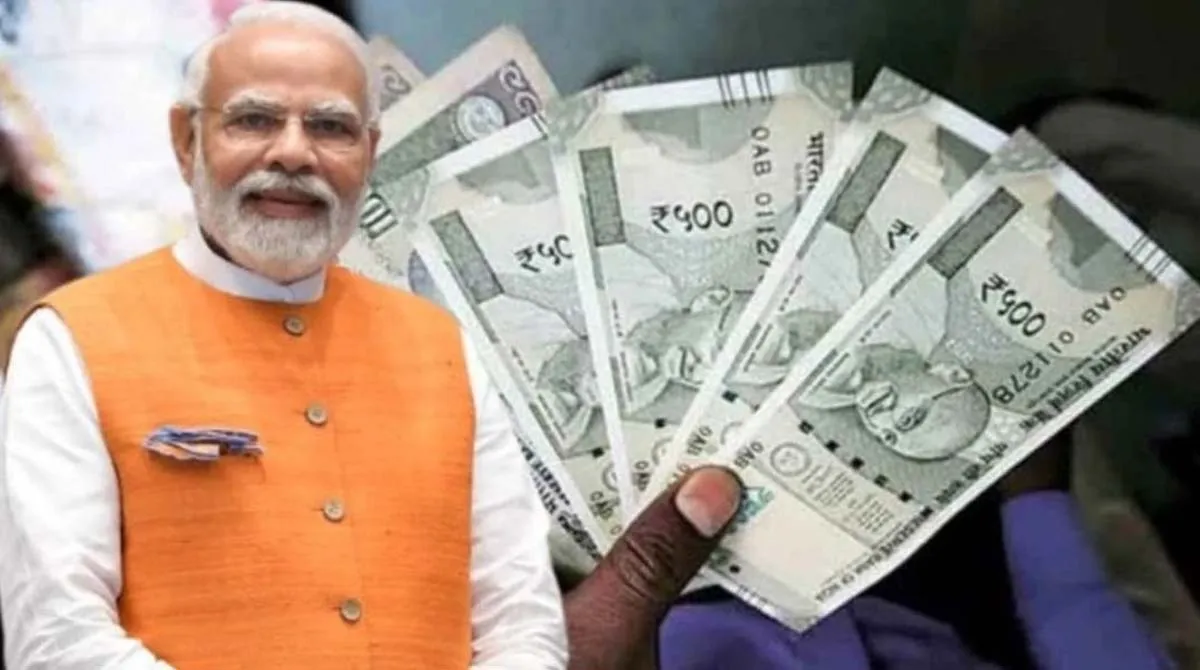
RBI Plastic Notes: Will paper notes be banned in India? Plastic notes will come in pockets, know what is the complete plan of the government

A very interesting and big news is coming out regarding the Indian currency, which has created a stir among the market and the general public. Speculations about the introduction of plastic notes i.e. polymer currency notes in the country have once again become very intense. The Reserve Bank of India (RBI) is seriously considering the option of replacing paper notes with polymer notes. According to sources, this important proposal has come up for discussion during the recent RBI Central Board meetings held in Patna and Mumbai.
This step of the Reserve Bank towards adopting polymer currency is not the result of any haste, rather a very clear and big trend of data is visible behind it. The annual report of the Reserve Bank clearly shows that the cost of printing traditional paper notes in India remains high every year. Along with this, the problem of notes getting spoiled and dirty due to weather and excessive use in different parts of the country also remains a big headache. To deal with this dual challenge, brainstorming has now started on this new option.
What are these plastic notes and why are they so special?
If this question is arising in your mind that what are these plastic or polymer notes, then let us tell you that they are completely different from our common paper notes. Notes made of polymer are much more durable and stronger than traditional paper currency. The biggest feature of these notes is that they have very little effect on dust, dirt, sweat and moisture.
Considering the diversity of climate and weather of a huge country like India, this quality is most important for us, because here the notes get spoiled very fast due to moisture and heat. Plastic notes have a very long lifespan, due to which the need to repeatedly print them and supply them in the market is greatly reduced. However, initially the cost of preparing and producing these notes is a bit high, but if seen in the long run, there can be a huge reduction in the total cost of the government and the Reserve Bank due to lack of frequent printing.
Billions of rupees are spent on printing notes in the country, see printing figures
The cost of printing new currency every year has always been a major challenge in India, even though there have been slight fluctuations in it from year to year. If we look at the latest and official data of RBI, it is found that the annual expenditure on printing of currency notes had reached its highest level in the financial year 2024-25, when the government had to spend a record Rs 6,372 crore for printing the notes. However, in the next year i.e. financial year 2025-26, there was some relief in this expenditure and it came down to Rs 4,875 crore.
If we go back a little, in the financial year 2016-17, the expenditure on printing of notes suddenly jumped to an all-time high of Rs 7,965 crore. But that year was an exception, because during that time historic demonetization was implemented in the country, due to which old notes had to be replaced and currency notes with completely new designs had to be issued in the market on a war footing.
The biggest problem is associated with paper notes, bad notes are increasing headaches.
Printing new notes is not the only challenge for the Reserve Bank. An even bigger and more complicated problem arises from the huge quantity of damaged, torn and heavily soiled notes which have to be taken out of circulation every year and replaced with new notes. RBI’s data on disposal of old and unusable notes explains very well how the cycle of cleaning and printing keeps going on due to the highest circulation of notes in the market.
According to the latest data of the Reserve Bank, the largest share of the total notes withdrawn from circulation and destroyed during the financial year 2025-26 alone was of the most used notes of ₹ 500 and ₹ 100 in our daily life. A total of 598.3 crore ₹500 notes were taken out of circulation during this period, while about 581.1 crore spoiled ₹100 notes had to be destroyed.
Plastic notes are already making waves in these big countries of the world
If we look at the global level, then this change of leaving paper notes and moving towards plastic currency is already going on very fast all over the world. At present, more than 60 large and small economies of the world are using plastic banknotes completely or partially. Australia has the distinction of being the first to introduce polymer currency in the world. After this, many other strong economies such as Canada, Singapore, Malaysia, Thailand, Indonesia and Romania have also adopted this modern technology.
Of these, developed countries like Australia, Canada and Britain have completely converted their entire currency system into polymer, that is, paper notes no longer circulate there at all. At the same time, many other countries have implemented it partially as an experiment, where only notes of some selected denominations have been made of plastic. However, in a large part of the world including India, mainly traditional paper currency i.e. paper notes are still used.
India had also done test 14 years ago, will that dream be fulfilled now?
It is not that India is thinking of trying this technology for the first time. The Government of India and the Reserve Bank had conducted a field test (pilot project) of polymer notes in some selected cities of the country about 14 years ago, i.e. in the year 2012. But, due to some technical and practical reasons, that scheme could not go beyond the pilot stage at that time and was shelved.
But now in the changed circumstances, when the data is clearly pointing towards new challenges related to continuously increasing costs and strength of notes, then RBI is again reviewing this old proposal very actively. Despite the increase in digital transactions in today’s time, the case for adopting polymer currency has become very strong. Now the biggest question before India is not just to print as many new notes as possible, but the challenge is that how to keep the notes being printed safely for as long as possible and how to reduce the huge government expenditure on their maintenance and replacement.

Comments are closed.