
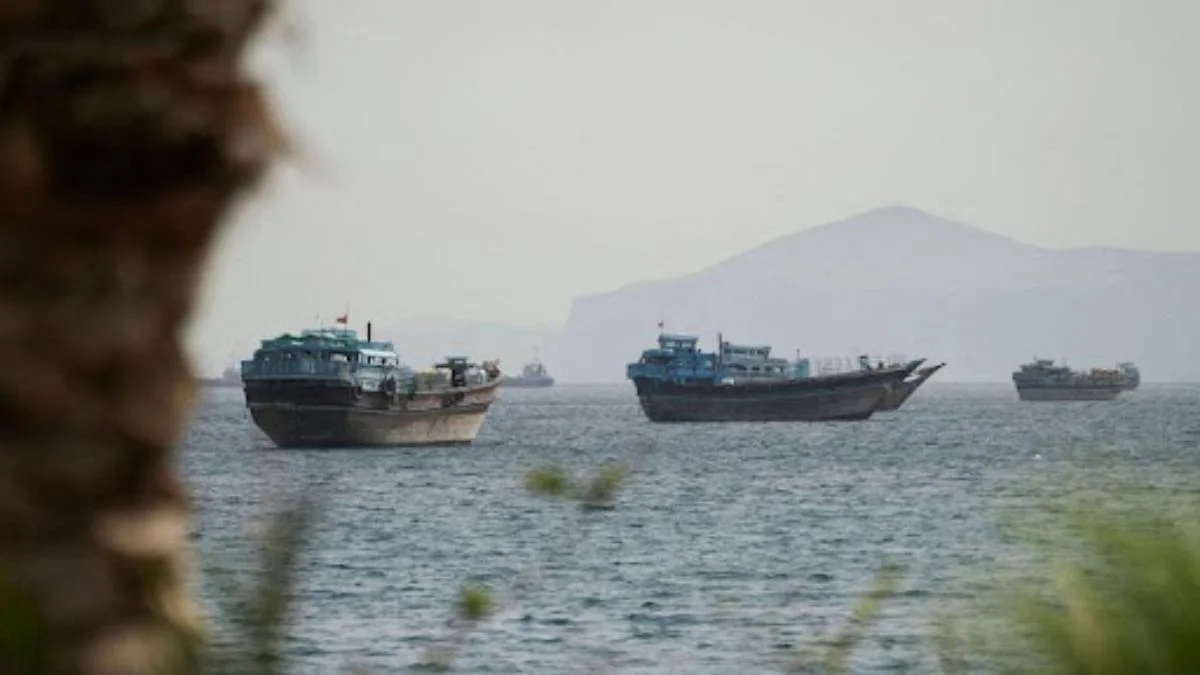
Middle East tensions escalate as reports suggest plans to block Strait of Hormuz and activate new fronts

Fresh concerns over regional security and global maritime trade have emerged after reports linked to Iran’s semi-official Tasnim News Agency suggested that the so-called “Resistance Front” and Iran are considering broader strategic measures involving key international shipping routes, including the Strait of Hormuz and the Bab el-Mandeb Strait.
According to information circulated through Tasnim-linked reports and statements attributed to Iranian-linked sources, discussions within the regional alliance referred to as the “Resistance Front” have focused on increasing pressure through major maritime chokepoints if military tensions in the region continue to escalate. The reports claimed that plans involve efforts to completely block the Strait of Hormuz and activate additional fronts, including the Bab el-Mandeb Strait.
The latest developments come amid heightened tensions involving Iran, Israel, the United States and regional armed groups operating across the Middle East. Iran has repeatedly linked its security posture and diplomatic decisions to ongoing military operations in Lebanon and what it describes as violations of ceasefire understandings by Israel and its allies.
The Strait of Hormuz remains one of the world’s most strategically important waterways, handling a significant share of global oil and gas shipments. Any disruption in the strait has immediate implications for international energy markets and global supply chains. Earlier this year, tensions surrounding Hormuz led to major concerns over maritime traffic and energy exports, with shipping companies, insurers and governments closely monitoring developments.
Attention is now increasingly turning toward the Bab el-Mandeb Strait, a critical maritime corridor connecting the Red Sea to the Gulf of Aden and the Indian Ocean. The waterway serves as a vital route for global trade, linking Europe, Asia and the Middle East through the Suez Canal. Analysts have warned that simultaneous pressure on Hormuz and Bab el-Mandeb could significantly disrupt international shipping and energy transportation.
Tasnim has previously cited military-linked sources warning that if attacks are carried out against Iranian territory or strategic assets, Iran could support actions that open a new front around the Bab el-Mandeb Strait. Similar statements have appeared in recent months as regional tensions intensified.
The issue has gained additional attention because Iran-aligned Houthi forces in Yemen operate near the Bab el-Mandeb corridor and have previously targeted commercial shipping in the Red Sea during periods of regional conflict. Security experts have repeatedly warned that any coordinated disruption involving multiple maritime chokepoints would have significant economic consequences.
The latest reports surfaced as diplomatic efforts between Iran and the United States face growing uncertainty. Tehran recently suspended indirect message exchanges with Washington, citing ongoing Israeli military actions in Lebanon and what it described as violations of ceasefire-related understandings.
Neither Iranian authorities nor international maritime organisations have announced any immediate operational changes regarding commercial navigation through the two waterways. However, the statements have heightened concerns among governments, shipping companies and energy markets already monitoring rising geopolitical tensions across the region.
With military activity, diplomatic tensions and strategic maritime routes increasingly interconnected, developments surrounding Hormuz and Bab el-Mandeb are expected to remain closely watched in the coming days as regional uncertainty continues to grow.

Comments are closed.