
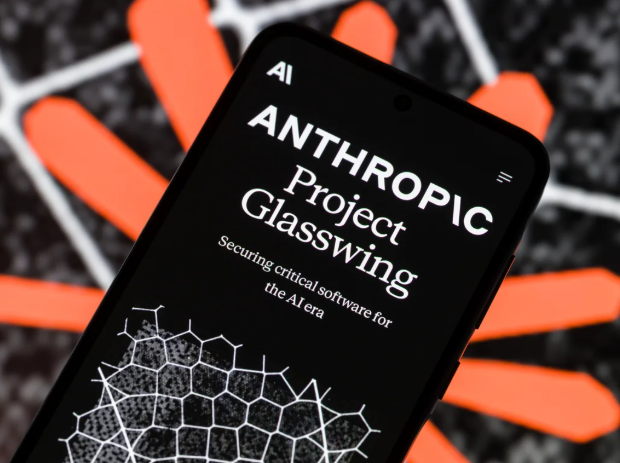

In a dramatic move to fortify its national defense systems, South Korea secures access Anthropic’s Mythos AI model. The integration will take place through the Korea Internet & Security Agency (KISA), the country’s primary cyber incident response body.
This critical alliance, built under Anthropic’s restrictive Project Glasswing program, aims to deploy advanced machine learning to identify and patch complex software vulnerabilities. Consequently, this deployment underscores a major South Korea secures access Anthropic’s Mythos AI model initiative, highlighting how sovereign nations are racing to weaponize frontier AI frameworks to defend critical national infrastructure against automated cyber threats.
Initially launched by Anthropic in April, Mythos represents a paradigm shift in automated digital warfare. Unlike traditional chatbots or generative text systems, Mythos is trained extensively on code repositories, exploit databases, and structural software flaws. This highly targeted training allows the model to spot dangerous vulnerabilities in what experts previously believed to be completely unbreakable code.
Furthermore, early testing reveals that the system possesses security flaw detection capabilities that sit fully on par with elite human experts. In its initial deployment phase, the framework scanned the networks of roughly 50 partner organizations. Astonishingly, it discovered over 10,000 security flaws rated as high or critical severity within just a few weeks.
However, because the model is so proficient, Anthropic originally placed strict controls on its distribution. Cyber analysts warned of an impending “Mythos Shock,” noting that a single malicious prompt fed into an unrestricted version of the model could theoretically dismantle large-scale security systems in less than ten hours.
Expanding Project Glasswing: Bringing Korean Tech Giants on Board
To safely manage this powerful tool, Anthropic manages its distribution via Project Glasswing. This private consortium acts as a controlled testing environment where trusted organizations use the model to find vulnerabilities, design patches, and run simulations before software releases.
Through this recent expansion, Anthropic is broadening the project from its original baseline of 50 members up to 150 organizations across 15 allied nations. This expansion officially welcomes South Korea into the network, alongside other newly added countries like Canada, Australia, France, Germany, and Japan. Importantly, the South Korea secures access Anthropic’s Mythos AI model agreement extends deep into the private tech sector. Local conglomerates including Samsung Electronics, SK Hynix, and SK Telecom are joining the network.
The inclusion of these hardware giants makes complete strategic sense. Both Samsung and SK Hynix recently acted as major infrastructure partners in Anthropic’s massive $65 billion Series H funding round. By integrating Mythos directly into their production lines, these hardware suppliers can audit critical semiconductor blueprints and telecommunication routers long before they enter global supply chains.
Overcoming Regulatory Friction and the Race for Cyber Defense
While securing this access is a massive victory for Seoul, implementing the tool requires navigating domestic bureaucratic channels. Korean cybersecurity experts emphasize that the local financial and public sectors are structurally vulnerable due to strict network separation rules.
Currently, domestic commercial banks must secure formal regulatory approvals before they can deploy cloud-based frontier AI tools on their internal networks. To bypass these regulatory roadblocks, the Ministry of Science and ICT is working to streamline the integration of model-driven security plays.This dual-track strategy shows that South Korea is leaving nothing to chance. In addition to joining Anthropic’s alliance, the Science Ministry recently held high-level meetings with OpenAI, formally joining their Government Trusted Access program to gain access to GPT-5.5-Cyber.
By running these highly advanced models parallel to each other, South Korea aims to build a redundant, highly protected digital umbrella. The government wants to shield its essential power grids, telecommunication hubs, and healthcare networks from sophisticated, AI-driven attacks.

Comments are closed.