
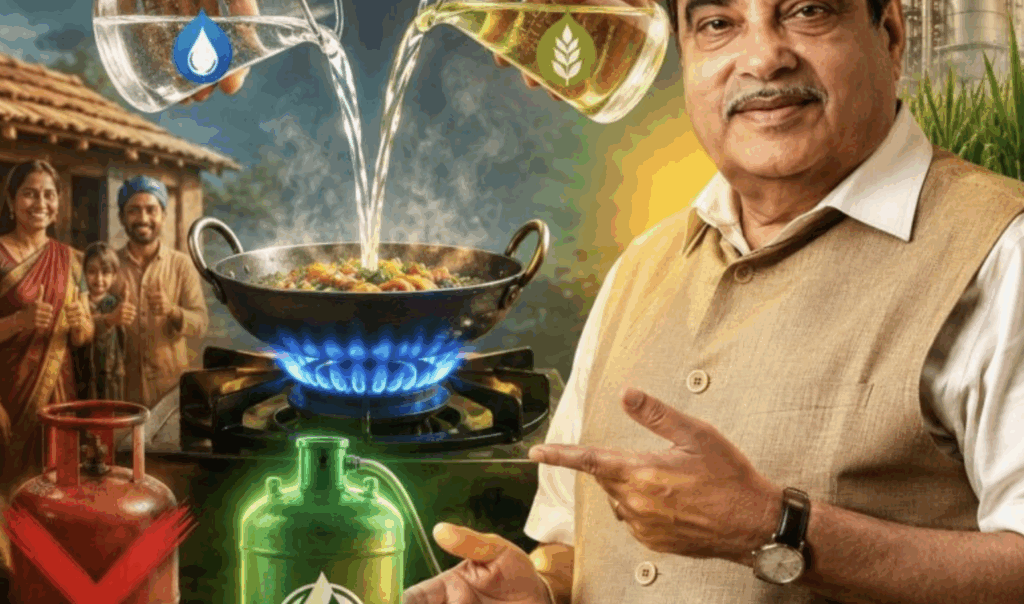

India’s push towards cleaner and more affordable energy solutions received a major boost with the launch of an ethanol-based cooking stove by Union Minister Nitin Gadkari. The innovative cooking solution is being positioned as a cost-effective alternative to traditional LPG cylinders and could play a significant role in reducing household fuel expenses while supporting the country’s biofuel ambitions.
The launch comes at a time when India is aggressively promoting ethanol as part of its broader strategy to reduce dependence on imported fossil fuels and strengthen domestic energy security.
A New Alternative To LPG
The ethanol stove operates using ethanol, a renewable fuel primarily produced from sugarcane, maize, and agricultural biomass. Unlike LPG, which depends heavily on imported crude oil and gas, ethanol can be produced domestically, making it a more sustainable and self-reliant energy source.
According to the proponents of the technology, the new stove can provide a clean and efficient cooking experience while significantly lowering fuel costs for households. The initiative aims to create an affordable cooking option for both urban and rural consumers.
Lower Cooking Costs For Households
One of the biggest attractions of the ethanol stove is its potential to reduce household energy expenses. Officials associated with the project claim that cooking with ethanol could be considerably cheaper than using LPG, especially as ethanol production scales up across the country.
For millions of Indian households, cooking fuel remains a significant monthly expense. A lower-cost alternative could help families save money while also diversifying India’s household energy mix.
Experts believe affordability will be a key factor in determining the adoption of ethanol-based cooking solutions.
Boost For Farmers And Rural Economy
The ethanol ecosystem also offers substantial benefits for the agricultural sector. Increased demand for ethanol can create additional markets for sugarcane, maize, and other agricultural feedstocks used in biofuel production.
This could generate new income opportunities for farmers and strengthen rural economies. Policymakers have repeatedly highlighted ethanol as a fuel that supports both energy security and agricultural growth.
A larger ethanol market could encourage investments in processing facilities, supply chains, and rural infrastructure.
Supporting India’s Green Energy Goals
The launch aligns with India’s broader sustainability objectives. Ethanol is considered a cleaner-burning fuel compared to many conventional fossil fuels, helping reduce emissions and support environmental goals.
The government has already promoted ethanol blending in petrol and encouraged the development of flex-fuel vehicles. The introduction of ethanol-based cooking solutions expands the role of biofuels beyond transportation and into everyday household applications.
A Step Towards Energy Independence
Supporters of the initiative believe ethanol stoves could contribute to India’s long-term vision of energy independence. By utilizing domestically produced fuel, the country can reduce exposure to global energy price fluctuations and strengthen self-reliance.
As production capacity grows and distribution networks expand, ethanol-based cooking could emerge as an important component of India’s future energy landscape.
Summary
Union Minister Nitin Gadkari has launched an ethanol-based cooking stove that promises lower cooking costs than LPG. The initiative supports India’s biofuel mission, reduces dependence on imported fossil fuels, and creates new opportunities for farmers through increased ethanol demand. If widely adopted, ethanol stoves could provide households with a cleaner, more affordable cooking solution while strengthening the country’s energy security.
Image Source

Comments are closed.