
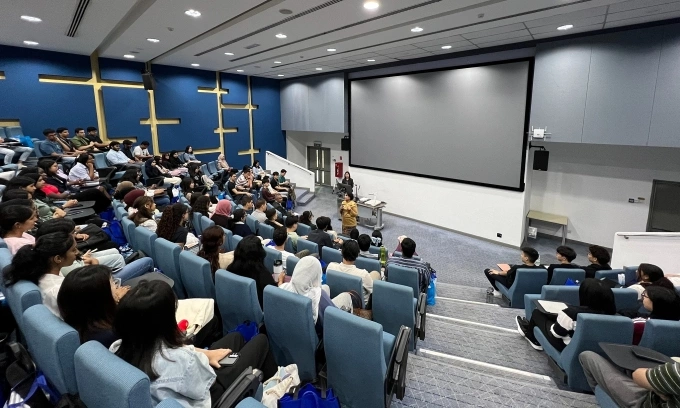

The University of Nottingham in China. Photo courtesy of the university |
The organization reported that more than 212,000 students in East Asia were enrolled in TNE programs, which are higher education programs, degrees, or courses provided in a country other than the one where the awarding institution is physically located, allowing students to earn international qualifications without relocating, provided by U.K. institutes.
This marks a 5.6% increase from the previous year, extending the post-pandemic growth trend in demand for British qualifications delivered overseas.
The study highlighted that TNE enrolments in East Asia remain heavily concentrated. Mainland China, Malaysia, Singapore, Hong Kong, and Vietnam together accounted for nearly 95% of all U.K. TNE students in the region in 2024/25.
Regional growth leaders
Among the region’s largest markets, China remained dominant with 94,700 students enrolled in U.K. TNE programs in 2024/25, accounting for nearly half of all East Asian enrolments.
The report noted that enrolments in China rose by 6,680 students over the year, although overall growth slowed to its weakest pace in a decade.
Malaysia came second by posting a major increase, adding 4,635 students to reach 46,415 enrolments.
Vietnam’s enrolments increased by 785 students to 13,285.
The report noted that enrolments in U.K. TNE programs in Vietnam have more than tripled since the Covid-19 pandemic, making the country a rising education hub in Southeast Asia. Currently ranking 14th globally in U.K. TNE enrolments, the report projected that, “Vietnam will likely overtake Hong Kong SAR as East Asia’s fourth largest TNE market in the coming years.”
Myanmar also saw a rapid recovery, with enrolments surging by 755 students, or 33%, returning to levels seen before the 2021 military coup.
Despite the continued growth, East Asia’s share of global U.K. TNE enrolments fell to 32% in 2024/25 as demand expanded even faster in regions such as South Asia and the Middle East.
However, East Asia still remains the largest region for U.K. TNE in the world. It is home to the single most important TNE market, China, and four of the 10 largest globally, which include Malaysia, Singapore, and Hong Kong.
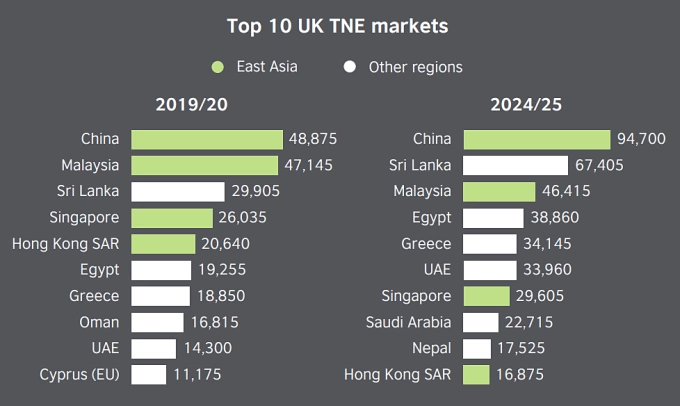 |
Graphics by British Council based on data from the Higher Education Statistics Agency. |
Staying local
The report found that students in East Asia increasingly prefer completing U.K. qualifications within the region rather than relocating to Britain. The steady rise in TNE enrolments since the pandemic has not translated into greater student mobility to the U.K.
Since 2019/20, enrolments in U.K. TNE programs in East Asia have increased by 36%, while direct enrolments in the U.K. have fallen by 3.3%. In 2024/25, for the first time, the number of students enrolled in U.K. TNE programs in East Asia nearly matched the number of East Asian students studying in the U.K. itself.
The relationship between TNE and U.K. mobility varies widely across the region. Three countries in particular stand out as regional TNE hubs—Malaysia, Singapore, and Vietnam—enrolling between three and four students in domestic U.K. TNE programs for every student they send abroad to the U.K.
Markets such as Taiwan, South Korea, and Thailand continue to send more than five times as many students to the U.K. as they enroll in TNE programs domestically.
According to the British Council, this trend indicates that U.K. universities will need to expand and adapt their overseas education models to meet growing demand from Asian students seeking British degrees without leaving their home region.
TNE is becoming increasingly important as traditional study destinations like the U.K., Canada, Australia, and the U.S. face backlash over immigration and enact tougher visa policies, experts said.
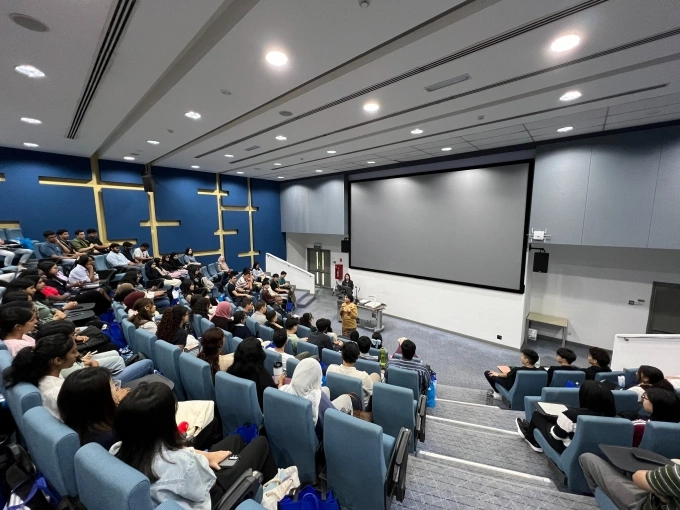 |
Students attend lectures at Newcastle University Medicine Malaysia. Photo courtesy of the university’s Facebook page |
Charles Cormack, chairman of Cormack Consultancy Group, which has worked with more than 1,000 universities on TNE since 1999, told Times Higher Education (THE) that universities in these “Big Four” countries are turning to TNE as a strategic solution. International students and their families now carefully weigh factors such as cost, safety, employability, and geopolitical risks, increasingly choosing alternative destinations like Malaysia, China, Thailand, and Singapore.
However, Cormack stressed that TNE is not a “quick financial fix.”
“Over more than two decades of working in and around TNE, I have seen many Western universities under financial pressure jump in with the wrong expectations,” Cormack said. “TNE will not rescue an institution next year. Success demands operational maturity, cultural intelligence, robust academic governance and, above all, a genuine commitment to collaboration.”
He advocated for more equitable models where both sides benefit, including reinvesting part of student fees into joint research, curriculum development, faculty exchange, and scholarships. He also emphasized the need for high academic quality and programs strictly aligned with local job markets.
Comments are closed.