
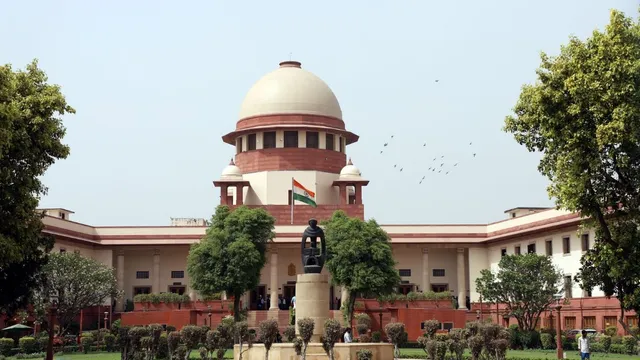

Read, Digital Desk : The Supreme Court on Wednesday upheld the eviction of a son from the house of his father, filed under the Maintenance and Welfare of Parents and Senior Citizens Act, 2007 and said that his claim over the said property be examined in civil proceedings. The top court dismissed a plea against the eviction order passed by the Rajasthan High Court in favor of his father.
A bench of Justices Vikram Nath and V. Mohana told the son that fighting with his father is wrong and said, “What kind of son are you? Fighting with your own father? This is very unfortunate. Go and take care of your father. Let him live in peace for whatever time he has left.”
When the counsel of the petitioner, Varun Bhati argued that his client also has right over the disputed property, Justice Nath flatly dismissed the argument, “No, that’s the next case.” The lawyer said that his client also has duty towards his wife and children, which was again dismissed.
What is the whole controversy?
The case relates to a dispute of an accommodation in Bilara in Rajasthan, from where his father moved the Maintenance Tribunal against his son alleging harassment, stating that he has a right to live in peace in his own house.
The Tribunal accepted the father’s petition in February, 2024, and directed his son to vacate the house. Subsequently, both single bench and a division bench of the Rajasthan High Court affirmed the said order and upheld the same.
I also have right on ancestral property
In his SLP before the Supreme Court, the son has claimed that the disputed house is an ancestral and undivided family property, and after his grandmother, in whose name the said property was purchased in the year 1986, the said property devolved upon more than one legal heirs. It could not have been said to be his father’s personal property only.
He has been residing there along with his family since many years and has right over the said property. He says that the said order of eviction takes away the only residence of him, his wife and children. He adds that the act for Maintenance of Parents should not be used as an alternate to civil court to settle issues such as properties dispute and inheritance.
The Supreme Court did not accept any argument
The petition also questioned the decision on the premise of the impact on the family of the petitioner (his wife and children) and the fact that a co-owner could not be dispossessed without having determined the ownership right of the disputed property.
However, the Supreme Court did not find any merit in any argument that was presented before it and ultimately dismissed the plea of the son, thereby finally affirming the order of eviction passed in the favor of the senior citizen father.

Comments are closed.