
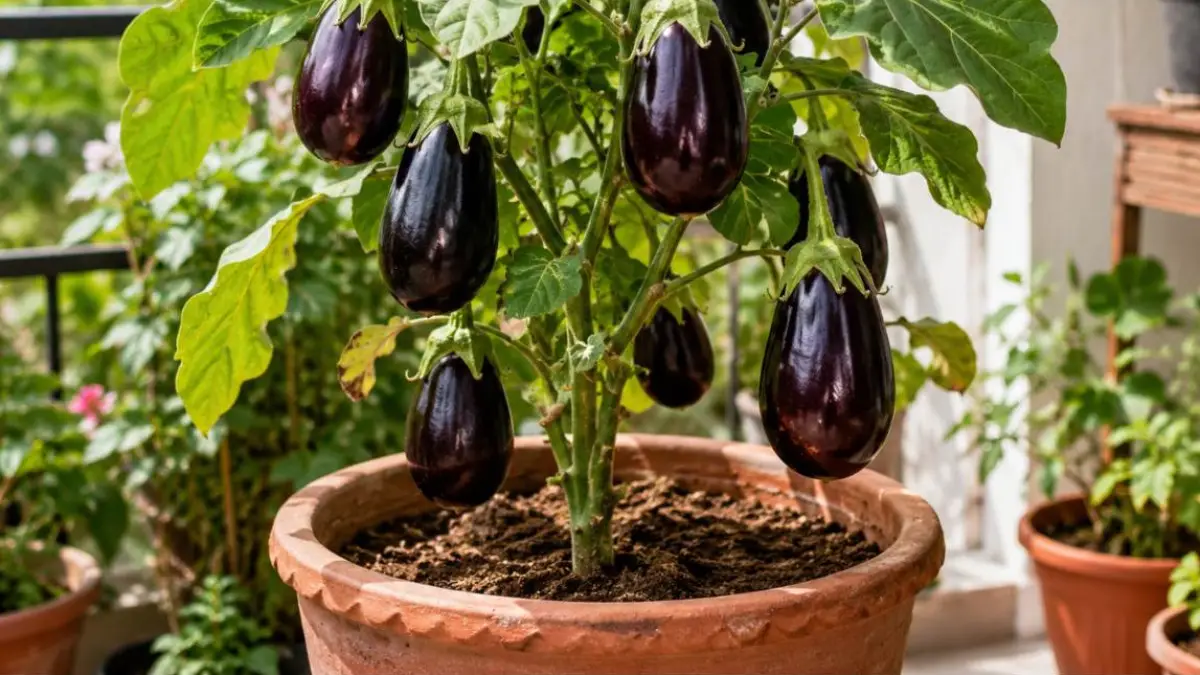

Brinjal Plantation: Nowadays the trend of kitchen gardening is increasing rapidly. People are enjoying fresh and chemical-free food by growing vegetables in their balconies, terraces and small empty spaces at home. If you are also thinking of growing vegetables at home, then brinjal can be a great option.
Brinjal is a vegetable which can be easily grown in relatively less space. With the right pot, good soil, and a little care, you can harvest fresh and delicious brinjals at home.
Choose the right pot
Brinjal plant requires adequate space for good root development. For this, choose a pot at least 12 to 15 inches deep and wide. There must be drainage holes at the bottom of the pot so that excess water can drain out and the roots are prevented from rotting.
method of preparing soil
For good production of brinjal, fertile and loose soil is necessary. For this, mix 50 percent normal garden soil, 30 percent rotten manure or compost and 20 percent sand or coco peat. This mixture will provide essential nutrients and better drainage to the plant.
How to plant a seed or plant
You can sow brinjal seeds directly in the pot or buy a ready-made plant from the nursery and plant it. Sow the seeds about half an inch deep and lightly irrigate. Germination usually takes 7 to 15 days.
If you are planting a prepared plant, then carefully plant it in the middle of the pot and press the soil lightly.
take care of the sun
Brinjal plants require at least 6 to 8 hours of direct sunlight daily. Therefore, keep the pot in a place where it gets adequate sunlight. Due to lack of sunlight, plant growth may be affected and fruits may become less.
Irrigation and fertilizer
Water the brinjal plant regularly, but do not allow the soil to become waterlogged. It is important to maintain soil moisture in summer.
Adding organic fertilizer or vermicompost every 15 to 20 days improves the growth of the plant and produces more fruits.
protection from insects
Brinjal plants can often be attacked by aphids and other pests. To prevent this, neem oil can be sprayed. By adopting organic measures, plants remain healthy and vegetables also remain safe.

Comments are closed.