
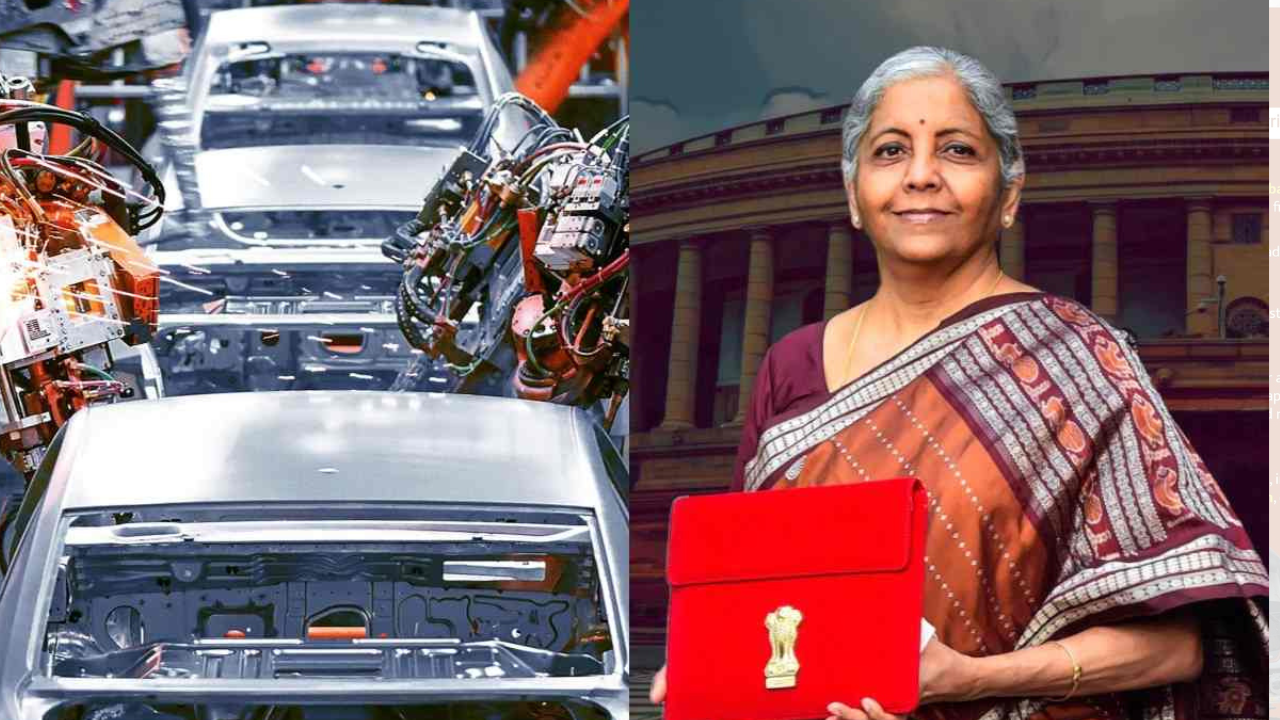
How much funding has the automobile sector received from the 2025-26 budget? Where was it spent and what did the auto industry get? Learn in detail

In the last few years, the central government has given a lot of encouragement to the automobile industry of India, both directly and indirectly. In particular, the Union Budget presented in Parliament on February 1, 2025 emphasized on electric vehicles, auto parts manufacturing, battery manufacturing and public transport. In the budget 2025-26, the government had also given a lot of priority to the automobile sector. Today, let us see here in detail how much money was received from this budget, what happened to it,
1) PM E-DRIVE for the plan ₹4,000 Crore
In the 2025-26 budget, the Government of India allocated ₹4,000 crore for the PM E-DRIVE (Pradhan Mantri Electric Drive Revolution in Innovative Vehicle Enhancement) scheme. This scheme is considered as the next phase of the earlier FAME scheme. Subsidies are being given for the purchase of electric two-wheelers, three-wheelers, buses, trucks and ambulances from this fund.
2) Automobile PLI for the plan ₹3,500 Crore
The government has retained a provision of ₹3,500 crore for the Production Linked Incentive (PLI) scheme to boost production in the automobile and auto-components sector. This amount is given as an incentive to vehicle manufacturers and auto parts companies for production based on advanced technology. The total duration of this scheme is FY23 to FY27 and the total expenditure is ₹25,938 crore.
Finance Minister Nirmala Sitharaman launched important initiatives of SIDBI for MSME development and modernization of rural industries
3) Battery and cell manufacturing
Government has provided separate funds to promote Advanced Chemistry Cell (ACC) battery production. The aim is to increase battery production in India to reduce imports and provide an indigenous supply chain to the EV industry.
Where did this money actually go??
Auto manufacturing companies: Companies like Tata Motors, Mahindra, Ashok Leyland, Bajaj Auto, TVS, Ola Electric received incentives for EV production and research.
Auto Parts Industry: Incentives under PLI were given to increase domestic production of engines, electronics, motors, powertrains, control units and other key components.
E-Bus Project: ₹1,310 crore has been allocated for the PM e-Bus Sewa scheme. This will help increase electric bus services in cities.
Charging infrastructure: Funds are being used to set up EV charging stations on highways, cities and public places. There is a special provision for this in the PM E-DRIVE scheme.
Sector Budget 2026: The government’s emphasis on the manufacturing sector! Pharmaceuticals, textile industry to sion industry will get a boost
Who benefits at the grassroots level??
- Direct subsidy to buyers of electric two-wheelers and three-wheelers.
- Electric buses available for public transport.
- New job creation in auto parts manufacturing.
- Savings in import costs due to increase in Indian production.
- Convenience of EV users with increase in charging stations.
Funding for the automobile sector in the Union Budget is not only for the vehicle manufacturing companies but for the entire vehicle ecosystem. ₹3,500 crore in PLI scheme, ₹4,000 crore in PM E-DRIVE and expenditure on e-bus and battery production reflect the government’s efforts to make India a global automobile and EV manufacturing hub. These schemes are benefiting industry, consumer, job market and environment at all levels.

Comments are closed.