
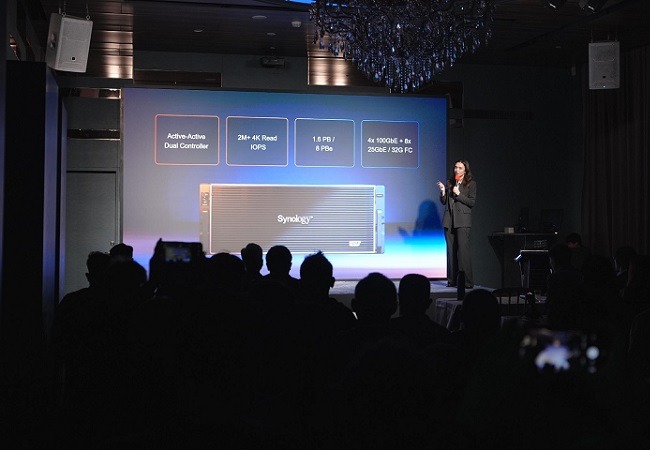

Storage and data management solutions provider Synology has unveiled the roadmap for the next generation of its DiskStation Manager (DSM) platform, marking a significant evolution from a storage operating system to an intelligent data platform designed to support private artificial intelligence (AI) workflows, enterprise-scale management, and enhanced governance controls.
The latest version of DSM is aimed at organisations seeking to adopt AI while maintaining full control over sensitive business data. The platform enables enterprises to transform internal data, system logs, and operational metrics into actionable insights without relying on external cloud providers, addressing growing concerns around data privacy, compliance, and escalating cloud costs.
“Enterprise AI adoption is no longer the challenge, data control is,” said Philip Wong, Chairman and CEO of Synology. “The next generation of DSM leverages over two decades of expertise to create an AI-ready platform that keeps organisations firmly in control of their data.”
Private AI Workflows Powered On-Premises
A key highlight of the update is its focus on fully on-premises AI deployment. Synology said the new DSM can convert existing business data into a private knowledge base that AI agents can securely access and analyse. The company’s Office Suite AI Assistant offers organisations an immediately deployable productivity tool, while Synology’s GPU-powered rack servers and dedicated AI appliances enable local AI inference without transferring data outside the organisation.
The platform also introduces DSM Agent, a new automation layer that assists administrators with system-wide management tasks and enables agentic workflows through integrated tools and skills. Built-in governance mechanisms and access controls provide IT teams with visibility into how AI systems interact with corporate data.
Enterprise Management at Scale
For large enterprises managing multiple Synology deployments, the new Cluster Manager centralises administration through a unified interface. By containerising storage services and applications into isolated workloads, organisations can perform fleet-wide workload migration, implement Quality of Service (QoS) policies, and strengthen operational resilience while reducing administrative complexity.
Meanwhile, Active Insight’s Mass Deployment capability is designed to accelerate system provisioning across distributed environments, helping enterprises bring new infrastructure online more efficiently.
Strengthening Security and Compliance
Synology has also expanded its security capabilities with more granular Role-Based Access Control (RBAC) and an enhanced Log Center, which consolidates operational and application logs into a single monitoring and auditing dashboard.
According to Bie-i Chu, the platform has been developed to address both AI and enterprise requirements.
“DSM is built for both AI and enterprise demands, enabling private AI workflows with full governance, fleet-scale management, and the security controls IT teams need for regulation and compliance requirements,” Chu said.
The company added that a built-in secure element and its ongoing FIPS 140-3 certification process are expected to provide additional assurance for organisations operating in highly regulated industries.
With enterprises increasingly seeking AI adoption without compromising data sovereignty, Synology’s latest DSM roadmap signals a strategic push into the emerging market for private, enterprise-ready AI infrastructure.

Comments are closed.