
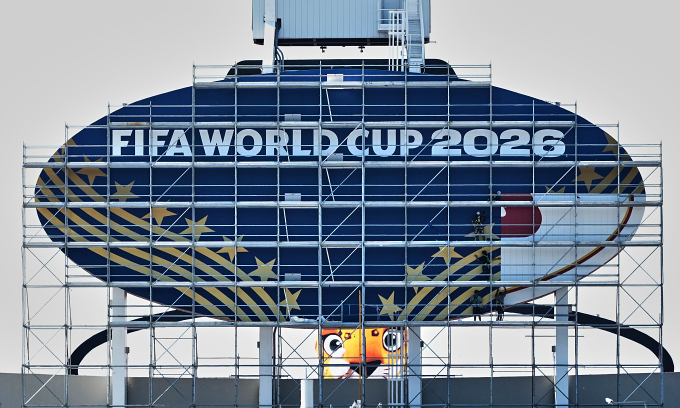

The 2026 FIFA World Cup, which officially kicked off on June 11, is being co-hosted by the U.S., Canada, and Mexico. While the tournament has expanded to 48 teams, fans from more than 25% of the participating nations faced high visa rejection rates, entry bans or stringent immigration policies from the U.S.
When the Iraq national team qualified for the World Cup in March, Abdulla Adnan spent US$1,800 on tickets for matches scheduled in Boston and Philadelphia. For Adnan, the prospect of supporting his national team live was a feeling that “no other feeling can compare to.” However, his journey to the U.S. was derailed by visa hurdles, BBC reported.
Following the conflict in the Middle East in late February, the U.S. suspended normal consular services in Iraq due to regional security concerns. Adnan attempted to apply for a visa at the U.S. embassy in neighboring Jordan, but staff refused his application because he is not a Jordanian citizen. Applying in Turkey would have taken an additional two weeks, forcing a devastated Adnan to abandon his travel plans.
U.S. President Donald Trump holds the FIFA World Cup trophy. Photo by AFP |
Currently, the U.S. maintains entry bans on four nations with teams competing in the 2026 World Cup: Haiti, Iran, Senegal, and Ivory Coast. So for Adnan, an Iraqi citizen, this was a surprise.
Julian Kouadio Adonis, a member of the Ivory Coast’s fan association, condemned the restrictions, saying it was “a form of segregation”.
“No European country has faced this kind of restriction,” he told BBC. Why Africa?”
Normally, the association would send a group of supporters to the World Cup, but they have decided to cancel their planned trip to the U.S.
The invisible gatekeeper
According to BBC analysis covering data from October 2024 to September 2025 of U.S. State Department, 11 of the 48 qualified countries face U.S. visa rejection rates exceeding 40%. This affected list includes Ecuador, Egypt, Haiti, Algeria, Uzbekistan, Cape Verde, Jordan, Iran, the Democratic Republic of Congo, Ghana and Senegal.
To mitigate the crisis, organizers introduced the “FIFA Pass” system, designed to prioritize embassy interview appointments for fans who purchased tickets directly through FIFA. However, Celine Atallah, a Massachusetts-based who runs an immigration law firm, warned that the system only accelerates the interview timeline and does not improve the actual chances of approval.
“The visa system is the invisible gatekeeper of the World Cup,” Atallah stated, emphasizing that the final authority remains with the U.S. government and Customs and Border Protection (CBP).
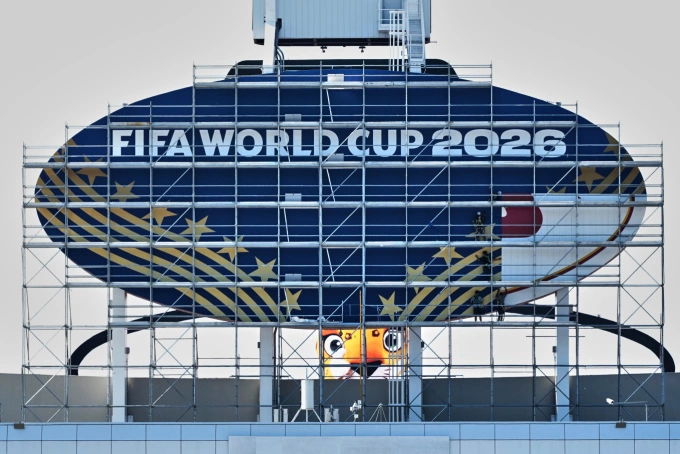 |
Workers cover the Kansas City Chiefs’ logo during the renovation of Arrowhead Stadium into Kansas City Stadium for the 2026 World Cup, June 8, 2026, in Kansas City, Missouri. Photo by AP |
In Jordan, where 57% of U.S. visa applications are rejected annually, Abu Kass, head of the national football fan association, arrived at the embassy in Amman with over 42 supporting documents. His application was still denied.
A spokesperson for the U.S. State Department noted that foreign fans do not need a FIFA Pass if they are citizens of Canada or one of the 42 visa-free nations, or if they already have a visa.
However, the department emphasized that they have to review every application carefully to ensure visitors do not pose a security threat to the U.S.
The U.S. Department of Homeland Security also cited severe concerns regarding visa overstays, pointing to data showing over 538,000 illegal overstays between October 2023 and September 2024. Strict immigration enforcement remains a central part of President Donald Trump’s 2024 re-election campaign, aimed at curbing illegal immigration.
Of the 104 matches, 78, including the final, are taking place on U.S. soil.
Co-hosts Canada and Mexico enforce their own immigration policies.
Canada recently restricted entry for individuals from countries impacted by the Ebola outbreak in Africa, affecting fans from World Cup participant DR Congo. While Canada did not publish specific rejection rates, its overall visa denial rate for 2025 stood at 54%.
Mexico, which requires applicants to apply in person at a consulate or embassy, presents a barrier. Eight participating nations – Cape Verde, DR Congo, Ivory Coast, Senegal, Uzbekistan, Bosnia and Herzegovina, Tunisia, and Iraq – do not have a Mexican diplomatic agency in their territory, leaving their fans with virtually no way to navigate the application process.
Comments are closed.