
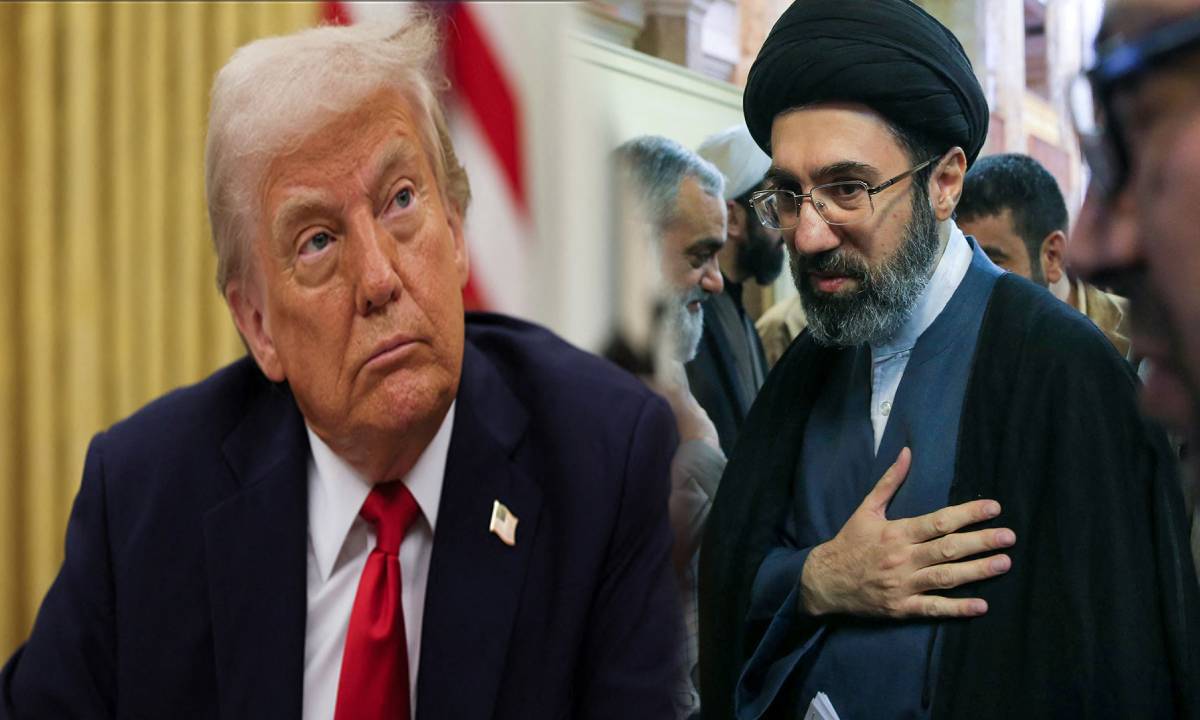

A new debate has started regarding the proposed peace agreement between America and Iran. The estimated economic value of this agreement is said to be at least 300 billion dollars. According to preliminary information published in Iranian media, Tehran has demanded economic guarantees related to reconstruction, relief from sanctions and access to its financial resources held abroad in exchange for an end to the war.
US President Donald Trump has already announced that “the deal with the Islamic Republic of Iran is now complete.” He called it a major diplomatic achievement that could stabilize energy markets and restore normal activities in Hormuz.
How is Iran viewing this agreement?
However, there is a clear difference between the interpretations of America and Iran regarding the economic aspects of the agreement. America is presenting this package as an investment and reconstruction program, while Iran is seeing it as compensation for the damage caused by the war. This difference further increases the political and economic importance of this agreement.
When will the agreement be signed?
The preliminary memorandum is likely to be signed in Switzerland on June 19. However, this document has not yet been made public and many of its points have not been independently confirmed.
Despite this, the discussion regarding the $300 billion reconstruction package has intensified. Now this agreement is not limited to just ceasefire, but has also started raising questions on Iran’s strategic position, economic pressure, political message and America’s negotiating position.
What are Iran’s main demands?
Iranian government news agency Mehr News Agency has been quoted as saying that Iran’s negotiators have demanded an important provision, under which the US and its allies will have to outline a reconstruction program worth at least $300 billion.
Along with this demand, Iran has also demanded the release of frozen assets worth $24 billion during the 60-day negotiation period. According to the report, half of this amount should be made available in the initial phase. Along with this, Iran has also demanded to suspend the sanctions on the sale of oil and petrochemical products and to restore full access to all its financial resources.
Why is it important for Iran to fulfill these demands?
Iranian media has described these demands as necessary steps to compensate for the damage caused by the war. Iranian officials have long said that lasting peace will not be possible without reparations for war damages. Some estimates put the war damage at up to $1 trillion.
What does the American side have to say?
On the other hand, in reports by US officials and Western media outlets, notably The New York Times, the amount of $300 billion has been presented as an “International Investment Fund” or reconstruction program. According to reports, America may try to take this process forward through private investment and international capital. This approach matches ideas previously suggested by Steve Witkoff and Jared Kushner, the Trump administration’s special envoy for Middle East affairs.
The two reportedly proposed that in the event of an agreement, real estate projects and investment funds could be promoted in Tehran. It is noteworthy that Jared Kushner is also the son-in-law of President Trump. While Iran is linking it to reconstruction and war compensation, America is presenting it as an investment-based economic revival program.
How does Trump’s Iran model match Gaza?
This approach is also believed to be similar to Trump’s earlier plan, in which he had talked about developing Gaza as an economic center or “Riviera”. This indicates that US negotiators prefer to pursue post-war reconstruction through private investment, real estate development and economic projects rather than through direct government reparations. However, Trump had also said in April that no large-scale advance cash payment would be made under any agreement.
Is this a sign of America’s strategic weakness?
According to analysts, this agreement gives Trump an opportunity to claim diplomatic success. This could secure maritime trade routes, normalize oil supplies and reduce pressure on global energy prices.
Trump recently wrote on the social media platform Truth Social, “Congratulations to all… Let the oil flow.” Through this message he presented the agreement as a form of global stability and economic relief.
Even if the US does not officially call this package “reparations”, the promise of such a huge post-war reconstruction investment indicates that Washington has had to adjust its strategy to suit the conditions on the ground.
Despite facing military pressure, Iran has made demands like sanctions relief and reconstruction assistance a part of the talks. Tehran says that without such economic guarantees, any peace agreement will not be sustainable.
What has been confirmed on the $300 program?
London-based TV network Iran International said in its report that the draft agreement has not been independently verified. US officials have also not publicly confirmed many key points including $300 billion. Earlier, Washington had dismissed some information related to the talks as “fabricated” or “distorted”. This uncertainty is further increasing the doubt regarding this entire agreement. Radical groups in Iran are criticizing the possible concessions, while according to some reports Israeli officials have raised objections to the provisions related to Lebanon.

Comments are closed.