
India’s Strategic Oil Reserves Cover Just 10 Days Of Imports, Far Behind Japan And South Korea’s 200-Plus Days Buffer: Report

India’s strategic petroleum reserves can cover only about 10 days of crude oil imports, significantly lower than the emergency stockpiles maintained by countries such as Japan and South Korea, according to a report that has reignited concerns about the country’s energy security.
The report released by Council on Energy, Environment and Water (CEEW) said other countries that rely heavily on crude imports, such as Japan and South Korea, maintain reserves sufficient for over 200 days.
India, the world’s third-largest oil importer and consumer, depends on overseas supplies for nearly 88 per cent of its crude oil requirements. The country imports more than 5 million barrels of crude oil every day, making it highly vulnerable to global supply disruptions and price shocks.
The country’s existing strategic petroleum reserve (SPR) facilities at Visakhapatnam, Mangaluru and Padur have a combined storage capacity of 5.33 million tonnes of crude oil, enough to provide around 9.5 to 10 days of consumption cover when fully stocked. These underground caverns can store roughly 39 million barrels of crude oil.
Huge Gap With Asian Peers
The contrast with other major Asian economies is stark. Japan and South Korea maintain emergency and commercial oil reserves sufficient to cover more than 200 days of imports, providing a much larger buffer against geopolitical shocks and supply disruptions.
Japan’s oil stockpiles are estimated to cover more than 200 days of consumption through a combination of government reserves, commercial inventories and joint stockpiling arrangements with oil-producing nations.
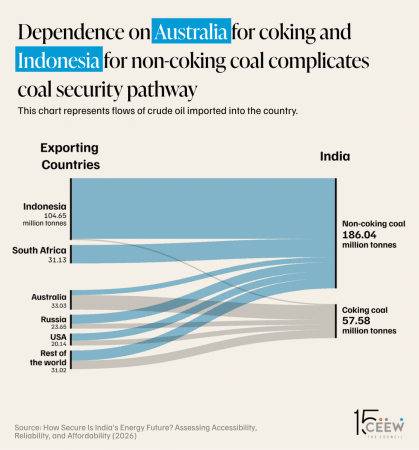
The CEEW study finds that over 85% of India’s crude imports come from just six countries, including Russia and West Asian countries, limiting flexibility during supply shocks.
Hemant Mallya, Fellow, CEEW, said, “Disruptions in crude oil, LNG, LPG, coal, or key shipping routes can quickly affect cooking costs, transport fuel prices, fertiliser subsidies, industrial competitiveness, and inflation. India’s next phase of energy security must move beyond securing fossil fuels to a clear transition plan: optimising gas system utilisation, avoiding further refinery expansion, accelerating viable EV adoption, electrifying industry, reconfiguring refineries for lower gasoline demand, and building resilient green technology supply chains.”
India is attempting to narrow the gap by expanding its strategic storage network. New facilities planned at Chandikhol in Odisha and Padur Phase-II in Karnataka are expected to add about 6.5 million tonnes of storage capacity, potentially doubling the country’s emergency reserve capacity in the coming years.
Govt Highlights Broader Fuel Availability
The government has argued that strategic reserves represent only one part of the country’s energy security framework. Officials have previously stated that refinery inventories, fuel stocks held by oil companies and cargoes in transit significantly extend India’s overall oil availability beyond the dedicated SPR facilities.
India has also diversified crude procurement in recent years, increasing purchases from Russia, the United States, West Africa and Latin America to reduce dependence on traditional Middle Eastern suppliers. The country now sources crude oil from around 40 nations.
However, energy security concerns remain elevated because roughly 40 per cent of global seaborne crude oil trade passes through the Strait of Hormuz, a vital chokepoint that continues to handle a significant share of India’s oil imports.
Economists estimate that every $10-per-barrel increase in crude oil prices can widen India’s current account deficit by 0.3-0.4 percentage points of GDP while adding to inflationary pressures, which underscores the importance of building larger strategic reserves against future energy shocks.

Comments are closed.