

His account of that journey, delivered in a graduation speech and posted online, has reopened a national argument over whether Singapore’s high-pressure school system gives up too early on students who bloom late, the South China Morning Post reported.
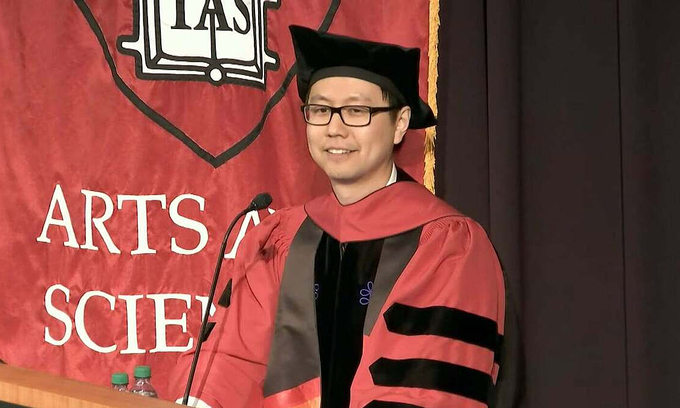
Joel Tan gave the student address at the Harvard Medical School-affiliated PhD programs hooding ceremony on May 28, where he received a PhD in biological and biomedical sciences.
Growing up in Singapore, he wanted to study biology but was told repeatedly that it was not a realistic path for him. His middle-school grades were judged too weak for the demands of biology classes, so he was channeled into physics and chemistry, the subjects he wryly called the “easier” sciences in a line that drew laughter from the room.
His performance suffered because he was never given the chance to study what actually interested him, he told the ceremony, and he left high school with grades of C and D.
For a while he believed the verdict himself. He recalled failing twice to win a place at a university in Singapore before deciding, on the third attempt, to leave the country and study abroad. The University of Toronto took him.
Toronto changed everything, he said. There he sat in his first biology class and found mentors, laboratories, and a research community that let him picture who he could become. He went on to a master’s degree, then to Harvard.
Joel Tan speaks at his PhD graduation ceremony at Harvard. Photo courtesy of Harvard Medical School/YouTube |
His doctoral research there uncovered a previously unknown anti-phage defense system in bacteria, which he named “Hai Long,” after a sea dragon associated with protection, according to Singapore news site The Online Citizen.
He will continue as a postdoctoral researcher focusing on neurodegeneration, Mothership reported.
“Talent is everywhere, opportunity is not,” he said.
“Someone opened a door that had been closed to me, and because of that, I eventually found my way here, to Harvard,” he said. A strong research cohort, he argued, needs “people who arrived here with perfect grades and people who needed that third chance,” because science gets stronger as more people are let in to contribute.
He admitted he once quietly looked things up during class, not yet knowing what a restriction enzyme was. The most important job for new PhDs, he told his peers, is to make sure others get the same chances they did, through patience rather than judgment, and to become the people who open doors for the next generation.
The speech landed on a nerve. Singapore’s school system posts world-leading results under relentless competitive pressure, and the argument it reignited is whether students whose ability surfaces later than their peers are quietly written off.
In the QS World University Rankings 2027, released June 18 by Quacquarelli Symonds, the National University of Singapore was the only Asian institution in the global top 10, though it slipped to 10th from 8th and remains the first Asian university ever to reach that tier.
Nanyang Technological University held its place at 12th. The list was led for a 15th year by the Massachusetts Institute of Technology, with the U.S. and the U.K. each taking four of the top 10 spots.
Not all the reactions were sympathetic. In comments on Mothership and The Online Citizensome Singaporeans disputed Tan’s description of physics and chemistry as the “easier” sciences, while others noted that going abroad for a degree is a route open mainly to families who can afford it.
Comments are closed.