
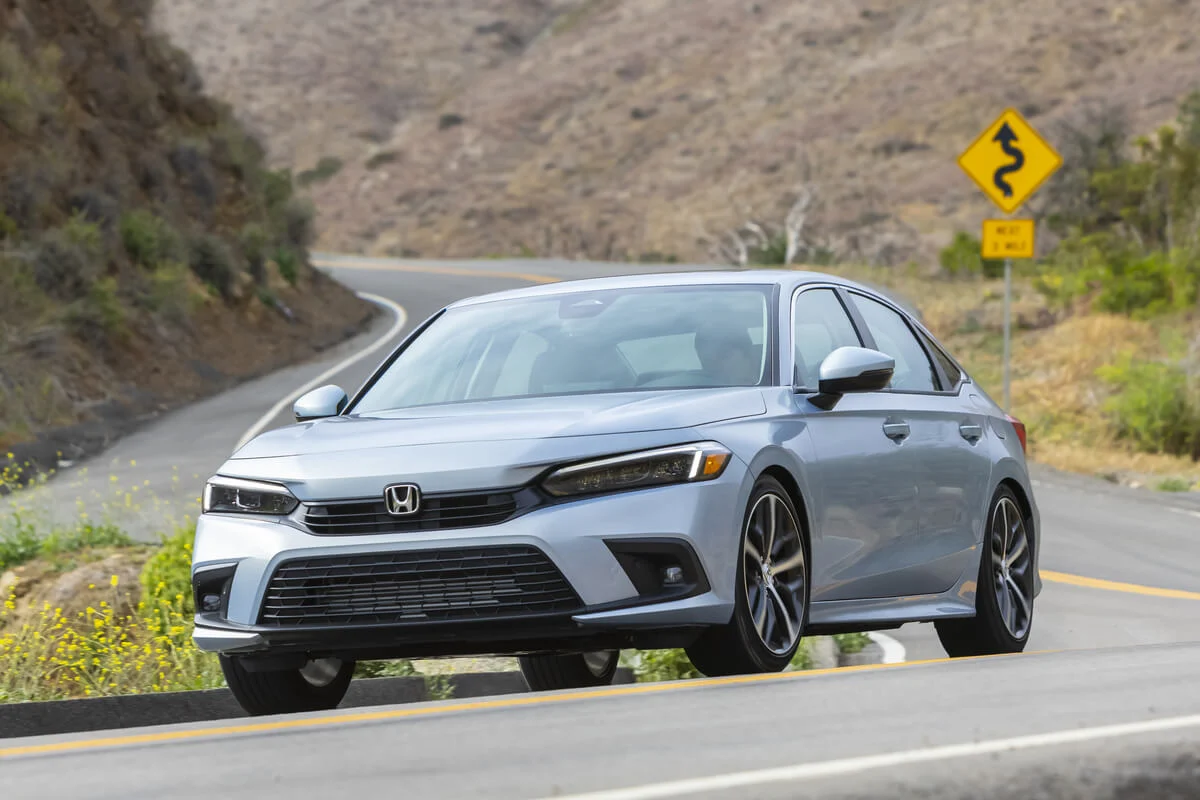

The Honda Civic has spent decades building a reputation as one of the safest bets in the compact-car market. It is affordable to run, easy to live with and widely known for lasting far beyond the point where many owners expect to trade in their vehicles.
So, how long do Honda Civics last? With regular servicing and sensible driving, many Civics can reach 200,000 miles, or around 320,000 kilometres. Some examples go further, crossing 250,000 miles with their original engine and transmission still in service.
Recent iSeeCars data estimates the average Honda Civic lifespan at nearly 167,000 miles, or about 14 years. It also found that the Civic has close to a 30 percent chance of reaching the 200,000-mile mark.
A Civic Can Be a Long-Term Car
Mileage alone does not decide whether a Civic is nearing the end of its life. A well-maintained 150,000-mile Civic can be a better purchase than a neglected 80,000-mile car.
The Civic’s long-running appeal comes down to a straightforward formula: efficient four-cylinder engines, generally durable mechanical components and a huge supply of replacement parts. Independent garages are familiar with the model, which can also help keep repair costs manageable as the car ages.
Older Civics have regularly appeared in long-distance reliability discussions. Consumer Reports has previously listed the Civic among cars commonly found with more than 200,000 miles, while noting that long-term ownership still depends heavily on regular maintenance.
What Usually Wears Out First?
Even dependable cars need attention as the odometer climbs. On a high-mileage Honda Civic, owners are more likely to spend money on wear-and-tear parts than on major engine failures.
Suspension components, engine mounts, wheel bearings, brakes, tyres and air-conditioning systems may need replacement over time. Rubber hoses, seals and bushings also become more vulnerable as the vehicle gets older.
Newer Civics bring more technology into the mix, which can create a different set of issues. Consumer Reports owner feedback for recent models has highlighted occasional complaints involving infotainment systems, connectivity, rattles and air-conditioning components.
That does not make the Civic unreliable. It simply means buyers should not assume that every issue on an ageing car will be mechanical.
Maintenance Makes the Difference
A Honda Civic that receives timely oil changes, fluid checks and scheduled inspections has a far better chance of reaching high mileage. Ignoring warning lights, delaying tyre replacements or driving with overheating issues can quickly turn a manageable repair into an expensive one.
Owners should follow the maintenance schedule in the owner’s manual, use the recommended engine oil and address unusual noises early. For used-car buyers, service records matter more than a low odometer reading without proof of care.
Transmission servicing is also important, particularly on automatic and continuously variable transmission models. A smooth-shifting gearbox and clean maintenance history are good signs when shopping for an older Civic.
The Bottom Line
A Honda Civic can realistically last 15 years or more when maintained properly. For drivers who want a practical car that does not demand constant attention, that remains a major part of the Civic’s appeal.
The best Civic is not necessarily the newest one or the one with the lowest mileage. It is the one that has been looked after consistently. With that foundation, a Civic can remain a dependable daily driver well past 200,000 miles.

Comments are closed.