
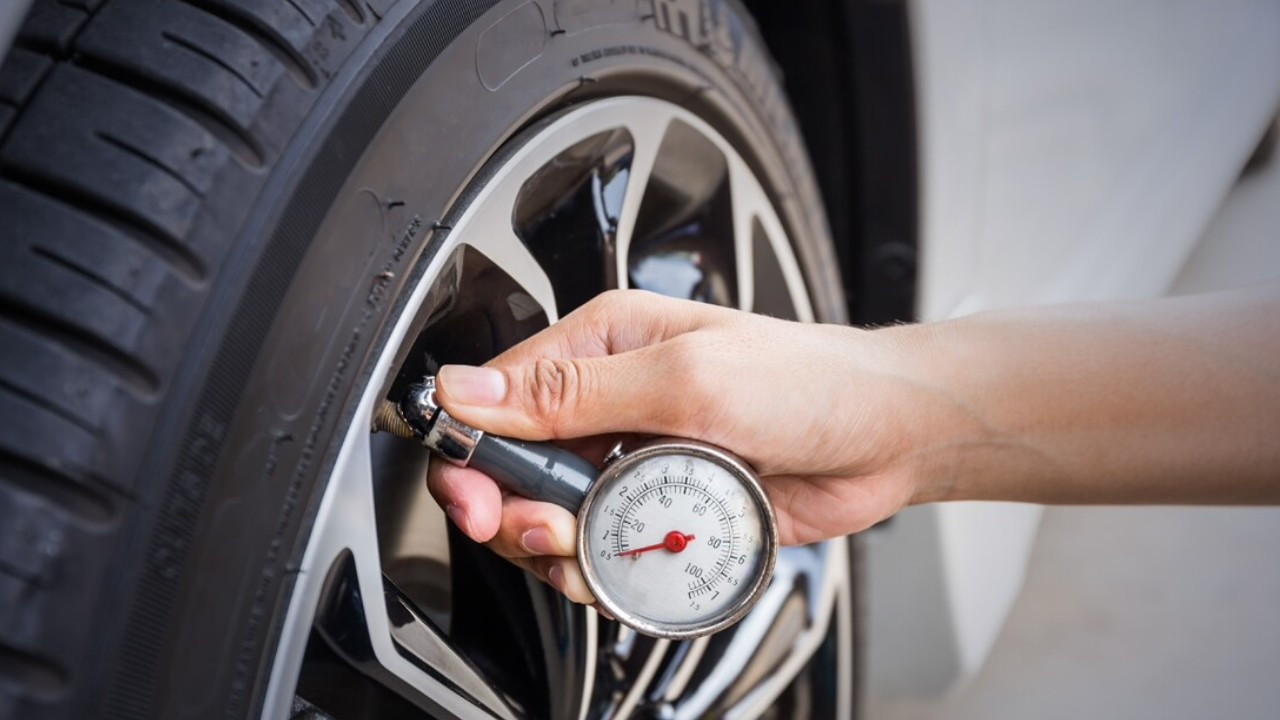
Less air reduces mileage, more air reduces grip; So how much ‘perfect’ air is required for a tire?

We spend thousands of rupees on car servicing, fill in good brands of petrol-diesel, but often neglect one small thing—the ‘tire pressure’. Having the right amount of air in your tires is not only essential for a smooth ride, but it is directly related to your pocket and your life.
Let’s understand in simple terms how low or high air pressure in tires affects the car,
1. Low air pressure– Hit the pocket and tire
Often we don’t inflate tires until they are completely punctured. But if the air pressure is less than a certain limit, the following major losses occur,
- Mileage decreases rapidly: When there is less air in the tire, the area of the tire touching the road increases. This increases friction and the engine has to exert more power to pull the car. As a result, the mileage of the vehicle decreases by 5 to 8 percent.
- Risk of tire blowout (Tire Burst): Less air makes the sidewalls of the tire more flexible and gets hotter while driving. There is a high risk of sudden tire burst due to overheating while driving at high speed on the highway.
- Early Tire Deterioration: Underinflated tires cause more wear on the edges and shorten their life by 30 to 40 percent.
The secret of the numbers on the tire! How to Identify the Right Tire for Safety and Better Mileage” Invitational
Some people think that overinflating a tire will get more mileage, but this thinking can be very dangerous:
- Road Grip Releases: Excess air causes the tire to inflate in the center and reduce its contact with the road. Due to this, there is a big risk of the car falling if the brakes are applied suddenly.
- More pitfalls: Tire stiffness causes the car to run like a stone or brick instead of a suspension. Even small shocks of potholes are directly felt by the passengers sitting in the car.
- Deterioration of the core: This causes the tire to wear out just by rubbing too quickly through the center.
What happens to electric cars when their batteries end? How will environmentally friendly disposal be done? find out
3. So what are the benefits of maintaining proper air pressure??
Keeping the exact pressure recommended by the company (eg 32 to 35 PSI) gives you 3 major benefits,
1. Best Mileage: As the engine is not stressed, the car gives a perfect mileage as specified.
2. Perfect Breaking: If the brakes are applied at the right time, the car stops safely in a minimum distance without skidding.
3. Tire Longevity: Tires last longer as they rub evenly on all sides.
Smart Driving Tip: Tire air should always be checked in ‘cold condition’. That is, the air should be checked before driving the car for 3-4 kilometers in a row or before leaving for a journey in the morning. Checking the air after the tire warms up after driving always shows 2-3 PSI higher pressure, which is incorrect.

Comments are closed.