
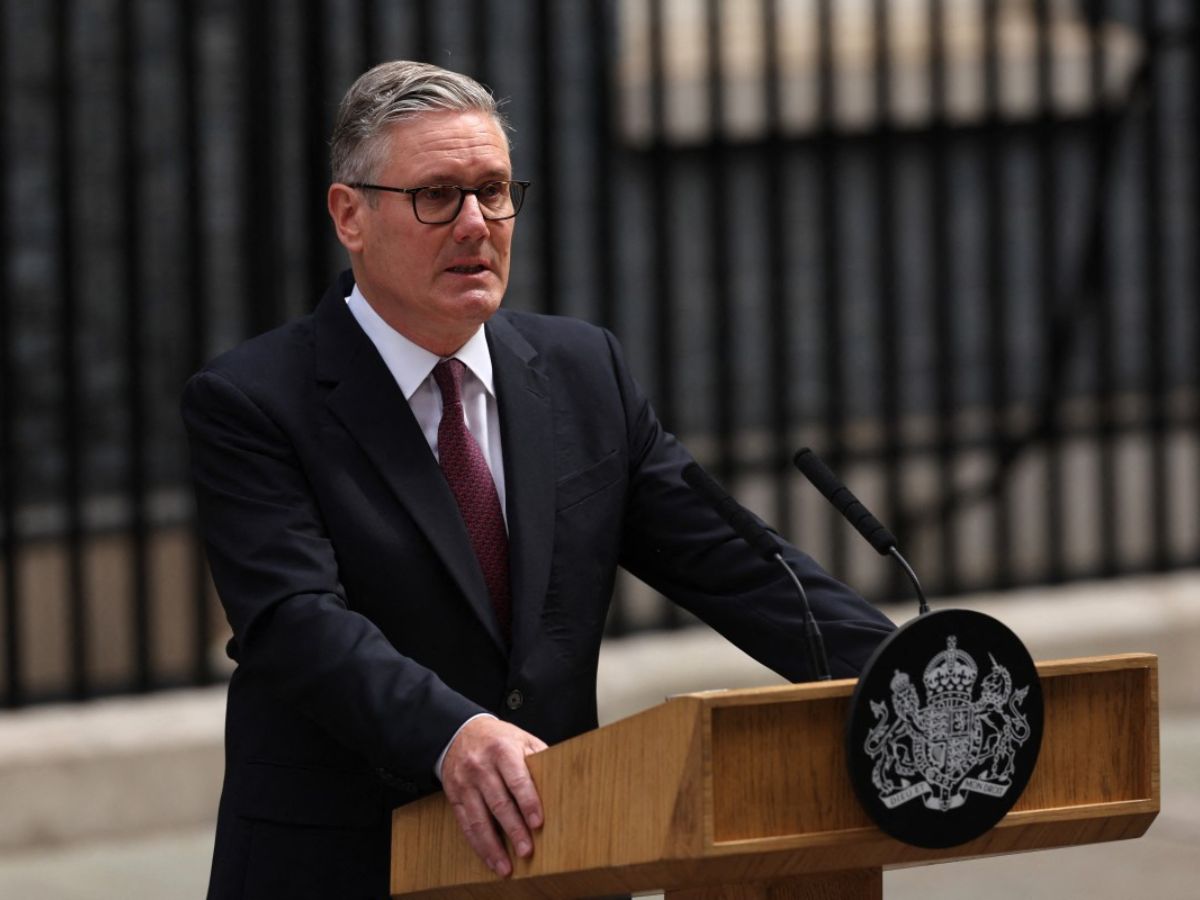

In an announcement made on Monday, British Prime Minister Keir Starmer declared that he is going to resign from his position as the leader of the ruling party of Britain, known as Labour Party, which will eventually bring about his resignation as the prime minister of Britain too. This resignation comes after a series of events following which Keir Starmer’s leadership career, which once started with a landslide parliamentary election win in 2024, has completely unraveled.
This comes after months of speculation regarding the future of Keir Starmer and following a political blow suffered by the latter due to Andy Burnham, who was the Greater Manchester mayor before. The latter emerged as a political winner in a parliamentary by-election in northwest England, giving him enough reason to stake claim to the party leadership.
From election triumph to mounting pressure: How Keir Starmer’s dominance began to unravel
In his visit to Downing Street on July 4, 2024, it would seem that Keir Starmer brought about a historic moment for the Labour Party. They won 211 seats more than they had won during the last election and secured an overwhelming majority in Parliament. This seemed to be a sign of change from many years of political unrest.
However, under the hood, there was something less to their performance than met the eye. As per reports, Labour Party saw its share of the vote grow by roughly 1.6%. The British electoral system took this small gain and amplified it to create a massive majority in Parliament. This was also possible because other parties lost some of their support. The people voted for Labour not out of loyalty but rather to see a change happen.
Why Keir Starmer struggled to turn electoral relief into lasting public support
The initial goodwill towards the government was beginning to wear off as the electorate sought tangible improvements in their standard of living. Though the new approach from the government was well received, many believed that important aspects such as cost of living, pay, and public services were not being improved fast enough.
Keir Starmer’s standing had become very poor by early 2026. Some polls were recording among the lowest approval levels in recent history for any British Prime Minister. His opponents had begun referring to him as a “dead man walking” as they believed that despite changing governments, people had not seen a change in their conditions.
Cabinet resignations and Andy Burnham challenge deepened Keir Starmer crisis
The pressure within Labour increased tremendously following the resignation of several senior ministers. The Health Secretary Wes Streeting quit his post, as well as several junior ministers. The Armed Forces Minister Al Carns quit due to disputes on the level of funding for the military, which further added to the impression that the government was failing to hold itself together.
On the other hand, Keir Starmer was under criticism for several reasons, such as for naming Peter Mandelson as the UK’s ambassador to the United States because of his previous dealings with Jeffrey Epstein. Stagnant economy and certain policies also contributed to lowering people’s trust in his leadership skills.
The final straw that broke the camel’s back was the political comeback of Andy Burnham. Burnham’s convincing performance during the by-election ensured him a straight entry to Westminster, giving him even more chances of becoming the next leader of the party. Reports indicated that a few dozen Labour MPs and some ministers were asking Keir Starmer to draw up a timeline for his exit.
What Keir Starmer leaves behind as Labour prepares for a new chapter
The resignation marks the end of one of the most spectacular political stories of contemporary British politics. The politician who achieved a resounding election victory and promised a renewal of the country found himself in revolt from within and faced his party’s leadership from inside.
Burnham emerges as one of the top contenders for the post of the party leader, which means that if he wins the fight, Britain will get its seventh Prime Minister within just ten years. And what is more, it seems that Labour faces not only a problem of electing another leader but also that of reestablishing the trust of those people who gave their mandate to Keir Starmer.
Also Read: Who Will Replace Keir Starmer? Meet The Labour Party Leader Set To Become Next UK Prime Minister
Khalid Qasid is a media enthusiast with a strong interest in documentary filmmaking. He holds a Master’s degree in Convergent Journalism from AJK MCRC. He has also written extensively on esports at Sportsdunia. Currently, he covers world and general news at NewsX Digital.
The post Keir Starmer’s Rise, Rule And Resignation: What Went Wrong? appeared first on NewsX.

Comments are closed.